 listicle
Are Used Commercial Stump Grinders Worth the Investment?
Last Updated: October 24, 2026
Quick Summary
Used commercial stump grinders deliver lower entry cost, slower depreciation, and faster payback than new units, keeping working capital free for crew, trucks, and marketing. Buy only machines with real maintenance records, inspect them carefully, and manage them like fleet assets rather than shed clutter.
- A used commercial grinder needs to run at least 40-60 hours per month to justify ownership over renting.
- Insist on a cold start and walk away from any machine that fails more than two inspection checks.
- Inspect teeth every 8-10 hours and grease daily to prevent small issues becoming expensive failures.
- Consignment lets you set a price floor and attracts targeted commercial buyers, protecting resale value.
- Auctions charge a buyer's premium of 10-15% plus a seller's commission of 10-20%.
Table of Contents
- Why Used Commercial Stump Grinders Make Financial Sense
- Commercial Stump Grinder Inspection Checklist: What to Verify Before You Buy
- How Stump Grinder Maintenance History Predicts Reliability
- Stump Grinder Fleet Management: Turning One Machine Into a Crew Asset
- Stump Grinder Auction vs. Consignment: Which Sale Channel Protects Your Investment?
- Buying vs. Renting: When Used Equipment Wins for Seasonal Crews
- Reserve a Used Stump Grinder Through Equipment Now Rental and Sales
- Frequently Asked Questions
Why Used Commercial Stump Grinders Make Financial Sense
The benefits of buying used commercial stump grinders start with capital.
At Equipment Now Rental and Sales, we see this constantly with landscaping crews across Southern Wisconsin and Northern Illinois.
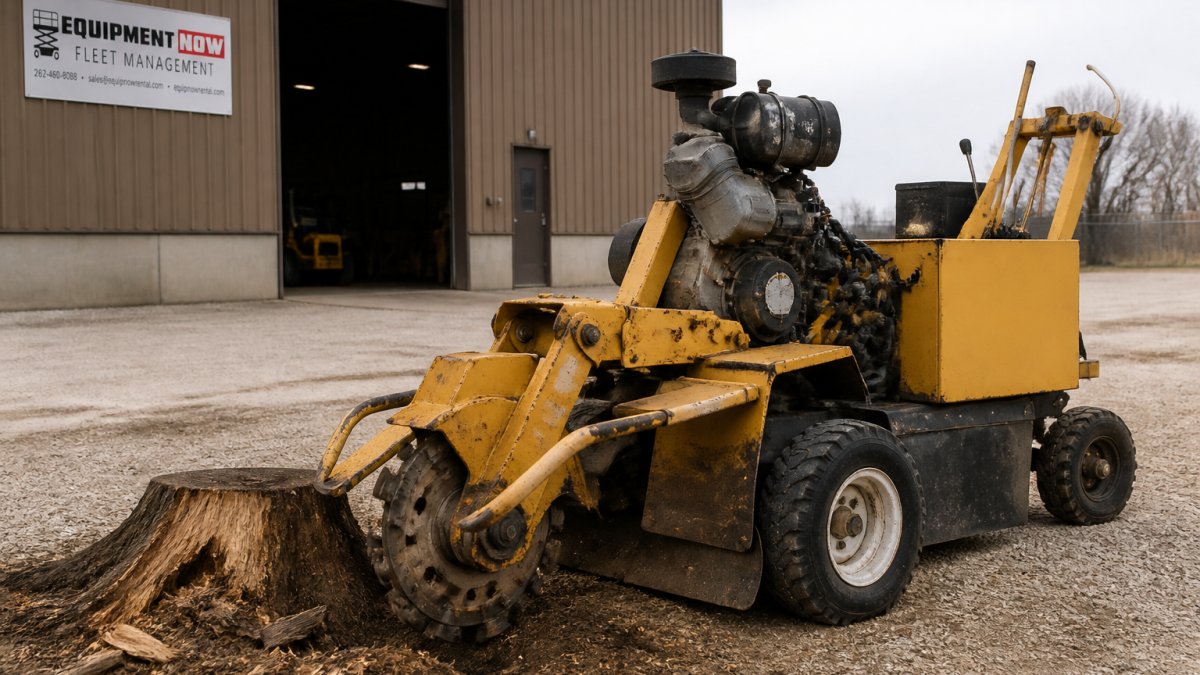
Used commercial stump grinders are heavy-duty machines with prior owners, resold through dealers, consignment lots, or private sales.
The financial case rests on three pillars:
- Lower entry cost. You preserve working capital for crew, trucks, and marketing.
- Slower depreciation. The steepest value drop happens in the first years of ownership. A used buyer sidesteps most of it.
- Faster payback. A lower purchase price means fewer billable stumps before the machine pays for itself.
For a deeper look at sourcing options, our guide on where to buy used construction equipment walks through the channels that consistently produce good machines.
Commercial Stump Grinder Inspection Checklist: What to Verify Before You Buy
A commercial stump grinder inspection checklist is a structured set of checks run on a used machine before purchase, covering the cutting wheel, engine, hydraulics, undercarriage, and safety systems to separate a sound machine from a money pit.
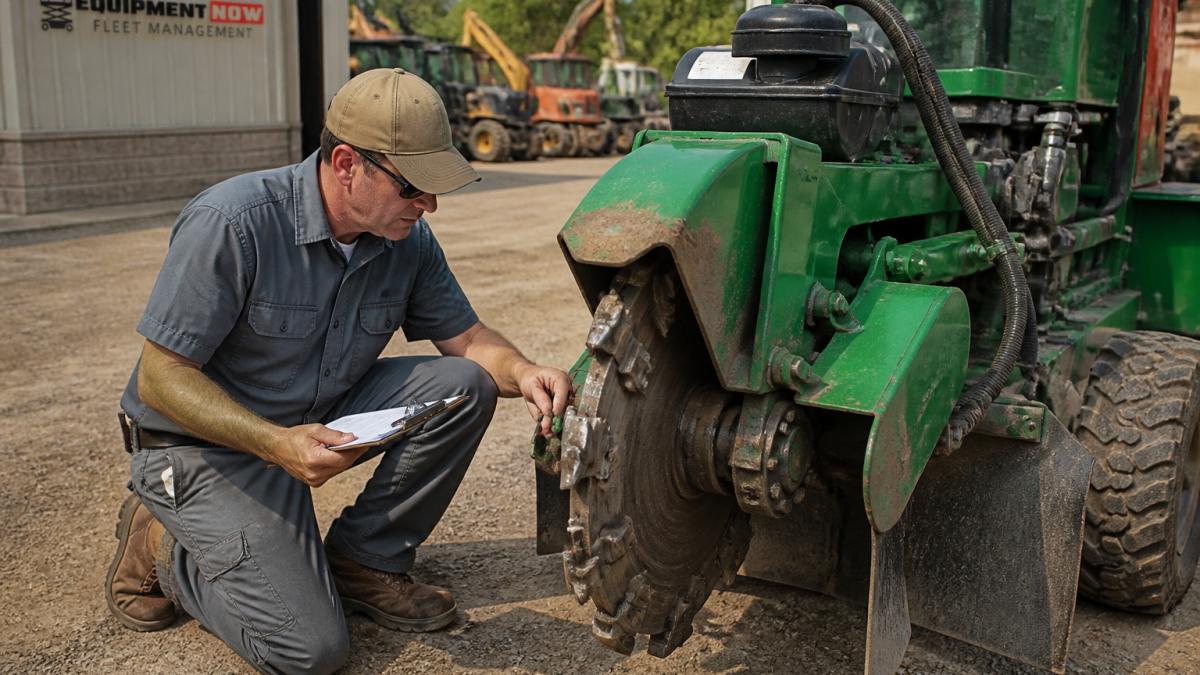
Run these checks in order, and walk away from any machine that fails more than two:
- Cutting wheel and teeth. Look for cracks, deep gouges, and worn pockets. Teeth are consumable, but a chewed-up wheel is not.
- Engine cold start. Insist on starting it cold. A warm engine hides hard-starting problems.
- Hydraulic leaks. Check hoses, fittings, and the reservoir area for weeping seals.
What most buyers miss is deferred maintenance hiding in plain sight. For a fuller walkthrough, see our guide on how to inspect heavy equipment before renting.
How Stump Grinder Maintenance History Predicts Reliability
Stump grinder maintenance history is the record of service, repairs, and part replacements a machine has received over its life.
Reliability rarely fails suddenly; it erodes. A machine with documented oil changes, greased bearings, and timely belt replacements keeps running.
Ask sellers for three things:
- Service invoices or a maintenance log
- The name of the shop that did the work
- Honest disclosure of any recurring issue
If the seller cannot produce records, price the machine as if it needs a full service immediately, that is how experienced buyers protect themselves.
Stump Grinder Fleet Management: Turning One Machine Into a Crew Asset
Fleet management is the difference between a used stump grinder that earns its keep and one that drains your bank account. For a small crew, it means treating a single grinder like a business asset rather than a tool in the shed. The benefits are concrete: lower cost per stump, fewer emergency repairs, higher resale value, and better deployment decisions.
The Real Cost of Idle Equipment
A stump grinder that sits idle between jobs is not just unproductive, it is a cost: capital tied up, insurance due, storage consumed, depreciation ticking. Equipment idle for more than a few weeks rarely justifies ownership unless it is a specialized tool you need on demand.
Start by tracking three numbers for each machine: engine hours per month, revenue generated per job, and maintenance cost per hour. Most contractors find that a used commercial grinder needs to run at least 40-60 hours per month to justify ownership over renting. If your machine is below that threshold, you either need to find more work for it or consider consignment.
Scheduling Maintenance by Hours, Not Memory
Stump grinders have predictable maintenance intervals: teeth inspected every 8-10 hours and replaced when worn, grease points daily, and belts, filters, and hydraulic fluid on manufacturer-specified schedules. A fleet management system logs engine hours and triggers reminders before small issues become expensive failures.
Consider the math: a set of teeth costs a few hundred dollars and an hour to replace, while a seized bearing from neglected greasing can cost thousands in parts, labor, and downtime.
Deploying Machines Across Jobs
Fleet management also means matching the machine to the job. A high-horsepower track-mounted grinder is overkill for small residential stumps and may damage lawns; a smaller wheeled unit is cheaper to transport but slower on large stumps.
Rotation matters too: spreading work across multiple machines evens out wear and reduces the risk of a single failure crippling your operation. With one grinder, rotation means scheduling it across properties to balance travel time and job size.
Tracking Cost Per Job
The most powerful fleet management metric is cost per stump or per job, including fuel, teeth, labor, transport, and a share of maintenance and depreciation. Knowing your true cost lets you price accurately and spot money-losing job types, small stumps, tight access, long travel, so you can decline them or price them appropriately.
How Fleet Management Boosts Resale Value
A machine with a documented fleet management history, service logs, hour meter records, maintenance invoices, commands a higher price at resale, because buyers pay for proof of care.
At Equipment Now Rental and Sales, our fleet management service covers acquisition, preventive maintenance scheduling, GPS tracking, compliance, cost analysis, and asset retirement, built for crews managing multiple properties who need visibility into every machine.
Stump Grinder Auction vs. Consignment: Which Sale Channel Protects Your Investment?
When it is time to sell a used commercial stump grinder, the channel you choose determines how much of your investment comes back. Auctions and consignment are the two main routes, but they work very differently. Auctions prioritize speed and liquidity; consignment prioritizes price and control. For a well-maintained commercial machine, consignment almost always returns more money and attracts better buyers.
How Auctions Work (and Where They Fall Short)
An auction sells your machine to the highest bidder on a fixed date. The auction house sets the terms, advertises the sale, and collects a buyer's premium (often 10-15% on top of the hammer price) and a seller's commission (often 10-20% of the final bid).
Auctions work when you need the machine gone immediately, when it is in poor condition and unlikely to attract retail buyers, or when you cannot store or market it.
How Consignment Protects Your Investment
Consignment is a partnership: you place your machine with a dealer or consignment lot, agree on a minimum price and commission structure, and the dealer markets it to targeted commercial buyers. You retain ownership until it sells and approve the final price; the dealer handles inspection, listing, buyer vetting, and paperwork, and you pay a commission only when the machine sells.
The key advantage is price control: you set a floor, and the dealer works to get the best price from a buyer who values condition and service history.
A Side-by-Side Comparison
| Factor | Auction | Consignment |
|---|---|---|
| Sale speed | Fast, fixed date | Flexible, market-paced |
| Price control | Low, set by bidders | Higher, seller sets floor |
| Buyer pool | Local room and online bidders | Targeted commercial buyers |
| Fees | Buyer's premium + seller's commission | Agreed commission, often lower total |
| Condition transparency | As-is, limited inspection | Full inspection and records available |
| Best for | Quick liquidation, project machines | Protecting resale value, well-maintained units |
The Hidden Costs of Auctions
Auctions look simple, but the costs add up: beyond the seller's commission, you may pay transportation to the auction yard, storage before the sale, and listing fees.
Consignment, by contrast, keeps the machine on your lot or the dealer's until it sells, with no transportation or storage overhead. The dealer markets it continuously, you can adjust the asking price on feedback, and you avoid a no-sale auction that can stigmatize a machine.
Why Consignment Wins for Commercial Equipment
Commercial stump grinders are specialized assets: the pool of buyers needing that size, power, and configuration is smaller than for general construction equipment. Consignment reaches those buyers directly through a dealer's network and marketing, and lets you present maintenance history, inspection results, and service records, the very things that justify a higher price.
At Equipment Now Rental and Sales, our consignment program is built for contractors who want to protect their equipment investment. For a deeper walkthrough, see our guide on maximizing returns on heavy equipment consignment.
Buying vs. Renting: When Used Equipment Wins for Seasonal Crews
Renting makes sense for one-off jobs and short bursts of work; buying wins when the machine runs often enough that rental fees stack up against a purchase price.
Seasonal crews sit right on that line. If the machine works most weeks of the growing season, ownership usually wins; if it sits idle for months, renting keeps cash free.
Ask three questions:
- How many stumps will we grind this season?
- How many weeks will the machine actually work?
- Can we keep it earning between our own jobs by taking on subcontract work?
If the answers point to steady use, a used commercial machine pays for itself faster than most crews expect. If the work is sporadic, our article on whether heavy equipment rental suits seasonal projects lays out the rental case honestly.
Reserve a Used Stump Grinder Through Equipment Now Rental and Sales
The math favors used commercial equipment for most working crews, lower entry cost, slower depreciation, faster payback, provided you inspect carefully, buy machines with real maintenance records, and manage them like fleet assets rather than shed clutter.
That is where we come in. Equipment Now Rental and Sales helps contractors and property managers across the region buy, rent, and manage equipment without the guesswork.
If you are ready to put a self-propelled grinder to work, you can reserve a used stump grinder through our online system and see exactly what is available for your project dates.
Frequently Asked Questions
What are the benefits of buying used commercial stump grinders?
Used commercial stump grinders lower the entry cost for landscaping crews that need a dedicated machine without paying new-equipment prices. You avoid the steep first-year depreciation that hits new units, and many used machines still have years of productive life left. Buying used also lets you step up to a heavier, self-propelled or track-mounted model that would otherwise be out of budget. Pair the purchase with a maintenance history review and an inspection checklist so you know exactly what you are getting before money changes hands.
What should I inspect before buying a used stump grinder?
Run through a commercial stump grinder inspection checklist: cutting wheel and teeth for cracks or excessive wear, belts and hydraulic hoses for fraying or leaks, engine hours and service records, frame welds for stress cracks, and tire or track condition. Start the machine cold and listen for unusual noise, then engage the cutter and watch for vibration. Check that safety guards, emergency stops, and shields are intact. A machine with a clean maintenance history and documented repairs is a safer bet than one sold as-is with no records.
Is it better to buy or rent a stump grinder for commercial work?
Renting makes sense for occasional single-stump jobs or when you need a larger machine for one project. Buying used wins when you have steady stump work, multiple stumps per week, or a seasonal backlog that keeps a machine busy. Ownership removes daily rental costs and lets you schedule jobs without waiting on availability. Factor in operating costs, maintenance, and storage. Many crews start by renting for specialty jobs and buy a used commercial grinder once the workload justifies it.
Should I sell used equipment through consignment or at auction?
Consignment usually nets a higher return because the seller or dealer markets the machine to qualified buyers and can present its maintenance history, while auctions tend to move equipment fast at whatever the room will pay. For a well-maintained commercial stump grinder, consignment gives you more control over price and timing. Auctions work when you need a quick sale and are willing to accept market-driven pricing. Compare fees, timelines, and the buyer pool before choosing a channel.
The challenge for most crews is not finding a used machine. It is finding one that was maintained, priced fairly, and backed by someone who will answer the phone after the sale. Equipment Now Rental and Sales makes that straightforward with online booking, real-time availability, and full fleet management support. Get started with Equipment Now Rental and Sales and put a dependable grinder to work on your next job.