 how-to
How to Inspect Heavy Equipment Before Renting
Table of Contents
- Why a Pre-Rental Inspection Protects Your Project and Your Wallet
- Your Heavy Equipment Rental Checklist: What to Bring and Check
- How to Document Equipment Damage Before You Sign
- Reading the Rental Agreement: Liability Clauses and Deposit Refund Terms
- The Benefits of Fleet Management Services for Rental Equipment
- Consignment Sales vs Equipment Auctions: Which Path Fits Your Business?
- Post-Inspection Negotiation: What to Do Before You Sign
- Conclusion
- Frequently Asked Questions
Last Updated: September 27, 2026
Why a Pre-Rental Inspection Protects Your Project and Your Wallet
Learning how to inspect heavy equipment before signing a rental agreement is one of the smartest habits a contractor can build. This guide from Equipment Now Rental and Sales walks through every step, from checking the undercarriage to reading the liability clause.
A thorough walk-around takes 30 to 45 minutes. That small window of time can save you days of downtime and thousands in repair disputes. Most rental problems start with damage nobody documented before the machine left the yard.
Here's what most guides get wrong: they treat inspection as a quick glance. Real inspection means photos, notes, and a signed condition report.
Below, we'll show you exactly what to check, how to document it, and how to negotiate before you sign.
Your Heavy Equipment Rental Checklist: What to Bring and Check
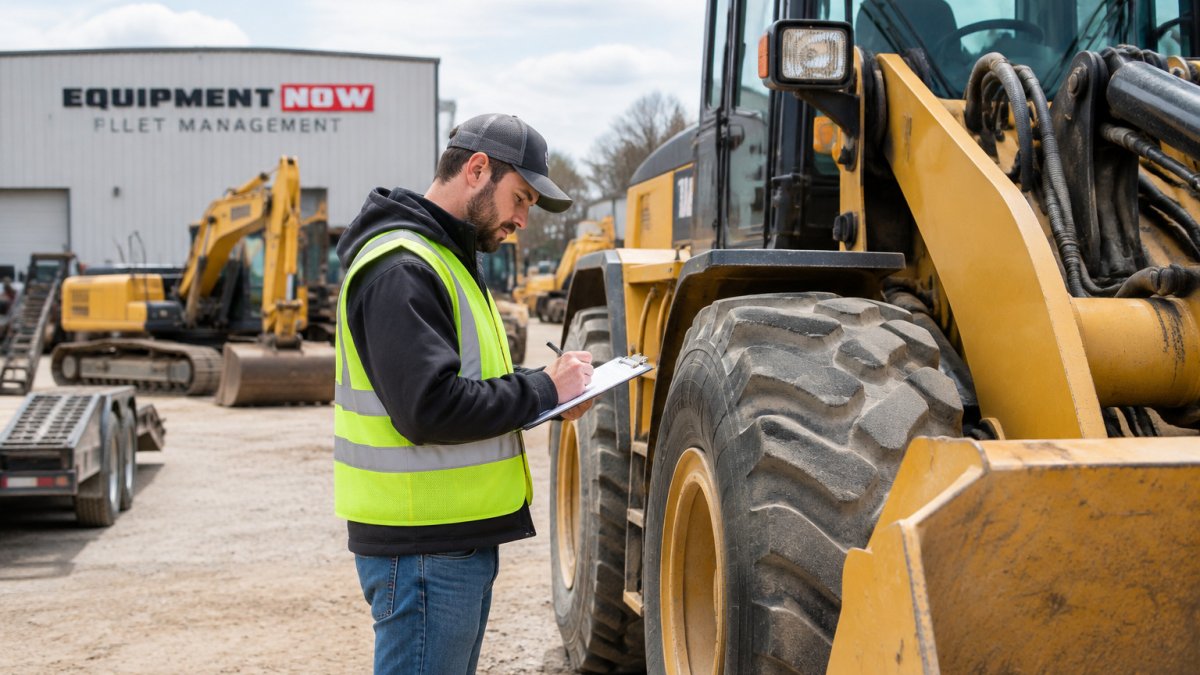
A solid heavy equipment rental checklist covers two phases: what you bring and what you verify. Bring a flashlight, a camera, a rag, and a copy of the rental agreement.
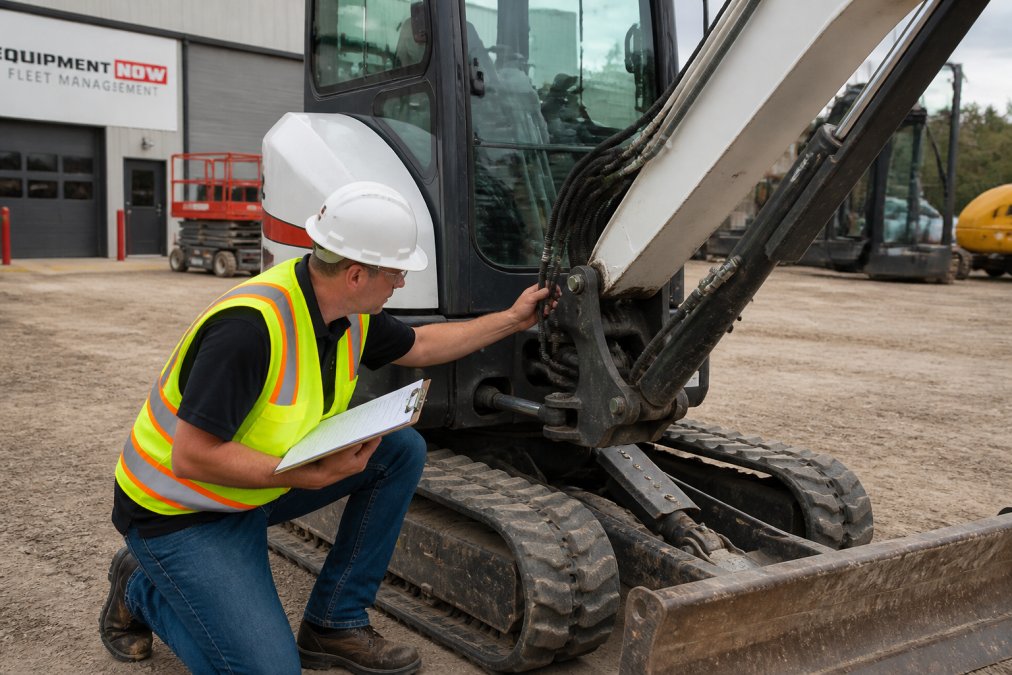
Physical Condition and Structural Integrity
Start with the frame and boom. Look for structural cracks, rust and corrosion, and any welded repairs that look fresh.
Check the operator manual against the machine's serial number. A mismatched manual often signals a swapped or rebuilt unit.
Walk the full machine. Note dents, bent guards, and cracked glass. Small damage today becomes your liability tomorrow.
Fluid Levels, Leaks, and Undercarriage Inspection
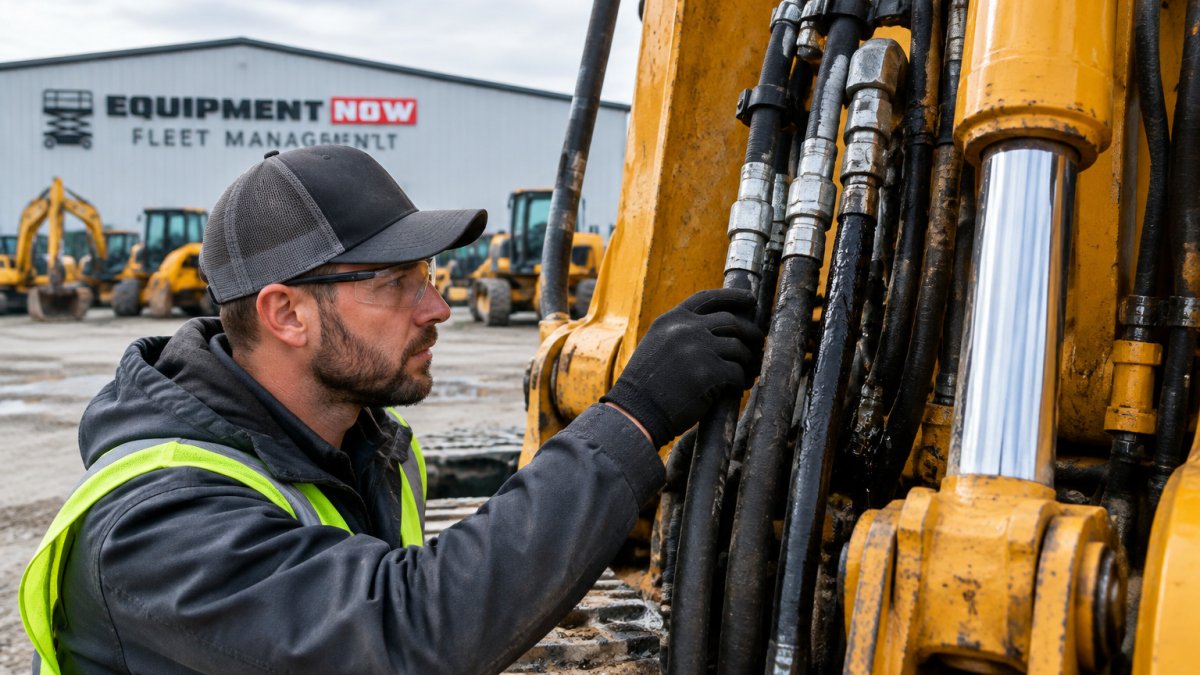
Hydraulic leaks are the number one hidden problem on used rental iron. Check the ground under the machine for fresh spots.
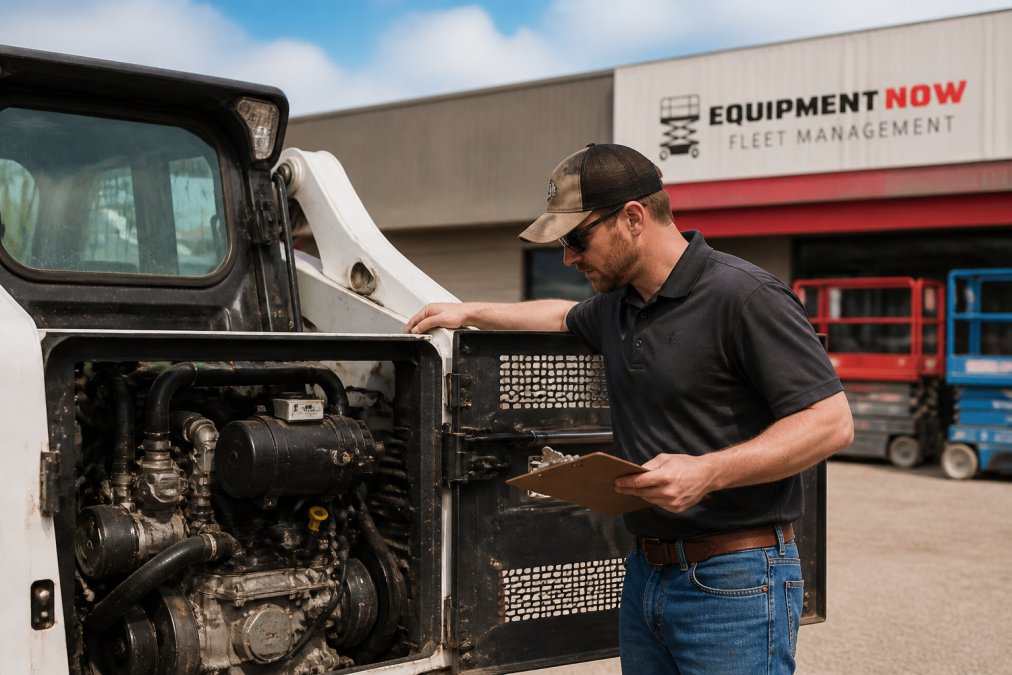
Pull the dipstick and check coolant, engine oil, and hydraulic fluid. Low levels can mean a slow leak the last renter ignored.
The undercarriage tells you how hard the machine has worked. Look at track tension, sprocket wear, and tire tread depth.
How to Document Equipment Damage Before You Sign
Documenting equipment damage before you sign means building a time-stamped, cloud-stored evidence file that both parties can open months later, not just snapping a few photos. Most guides stop at "take pictures." That advice fails the moment a dispute starts, because an unnamed photo on a phone proves almost nothing about when it was taken or which machine it shows.
Here is the standardized workflow that holds up.
Step 1: Capture the machine's identity first. Photograph the data plate, serial number, and hour meter before anything else. Every later photo inherits its meaning from those three shots. If the hour meter doesn't match the rental agreement, stop and resolve that before you continue.
Step 2: Shoot a fixed sequence, not a random walk. Walk the machine in one direction, front to back, top to bottom, and photograph each station from two angles plus one wide shot. A consistent sequence means you can prove you didn't skip a panel.
Step 3: Turn on location and time metadata. Most phone cameras embed GPS coordinates and a timestamp by default, but many users disable location for privacy. For a rental inspection, leave it on. A photo with embedded coordinates and a timestamp is far harder to challenge than one without.
Step 4: Upload to shared cloud storage the same day. Don't rely on your camera roll. Create a folder named for the machine and the pickup date, upload everything, and share the link with the rental company by email. That email creates a dated record neither side can quietly delete.
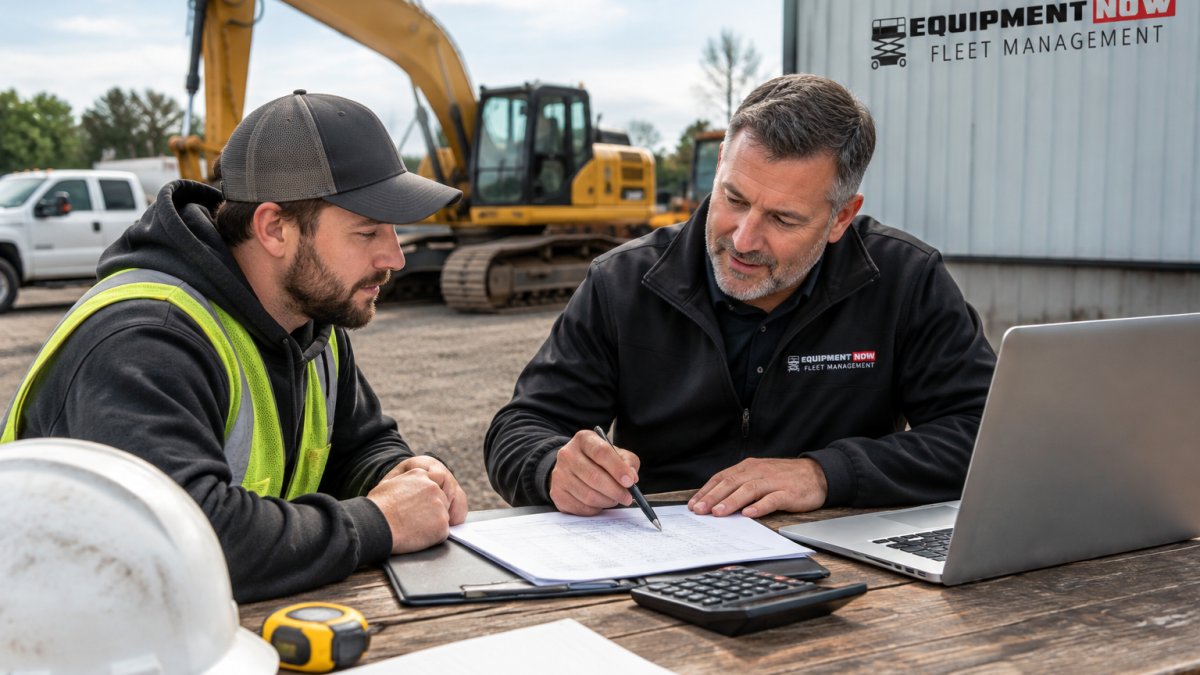
Step 5: Get the condition report countersigned. The rental yard's form is their document. Fill it out yourself, list every pre-existing defect, and ask for a signed or initialed copy before the machine leaves the yard. A countersigned report is the single strongest piece of evidence you can hold.
A file-naming convention does more work than most people expect:
2026-09-27-excavator-114-data-plate.jpg2026-09-27-excavator-114-hour-meter.jpg2026-09-27-excavator-114-hydraulic-hose-left.jpg2026-09-27-excavator-114-undercarriage-wide.jpg
When a dispute surfaces three months later, searchable names beat a camera roll of 400 unnamed images every time.
This is also where fleet management habits pay off. Businesses that already run a fleet management system are used to logging service hours, repair history, and condition notes in one place. That same discipline makes rental documentation almost automatic, and it protects resale value later when the machine moves to consignment instead of a rushed auction.
Reading the Rental Agreement: Liability Clauses and Deposit Refund Terms
The liability clause decides who pays when something breaks. Read it before you sign, not after.
Most contracts put wear and tear on the owner and abuse on the renter. The fight is always about which one happened.
Look for these terms:
| Contract Term | What It Means | What to Watch For |
|---|---|---|
| Liability clause | Who pays for damage | Damage vs. normal wear wording |
| Deposit refund terms | When you get money back | Condition report required at return |
| Maintenance duty | Who services the machine | Daily checks pushed onto renter |
| Damage waiver | Extra fee, limits your risk | Excludes abuse and negligence |
| Return window | Deadline for drop-off | Hourly late charges |
Insurance coverage matters too. Ask whether your general liability policy covers rented iron. Many don't.
The deposit refund almost always hinges on the condition report you signed at pickup. No report, no proof, no refund.
The Benefits of Fleet Management Services for Rental Equipment
The benefits of fleet management services go well beyond one rental. They change how a business buys, maintains, and retires equipment over years.
Fleet management handles equipment acquisition, preventive maintenance, GPS tracking, and compliance in one system. It also covers cost analysis and asset retirement.
For contractors running multiple jobs, this removes the guesswork.
Consignment Sales vs Equipment Auctions: Which Path Fits Your Business?
Consignment sales vs equipment auctions comes down to control and time. Consignment gives you pricing control. Auctions give you speed.
- Auctions: fast sale, less control, fee stacking
- Consignment: slower sale, better price, one commission
- Fleet management: not a sale method, but it protects resale value
Post-Inspection Negotiation: What to Do Before You Sign
- If the hour meter reads higher than the last logged service interval, ask why.
- If the log shows repeated hydraulic repairs, treat that as a pattern, not a one-off.
- If there is no log at all, that is itself information, and a reason to ask for a backup unit on standby.
This is the same logic that makes fleet management valuable over the life of a machine. Preventive maintenance on a schedule, logged in one system, produces exactly the service history that makes a machine easy to rent, easy to sell, and easy to defend in a dispute. It is also why consignment consistently outperforms auction for sellers: a machine with clean records and documented maintenance commands a real asking price, while the same machine pushed through an auction sells in minutes to whatever bid shows up that day.
Inspection findings are only worth what you negotiate with them. Ask for the log, lead with safety, get it in writing, and confirm the return terms before you sign.
Conclusion
A pre-rental inspection takes less than an hour and protects your whole project. The contractors who document everything, read the contract, and negotiate before signing are the ones who avoid deposit fights and mid-job breakdowns.
Frequently Asked Questions
What should I check before signing a heavy equipment rental agreement?
Before signing, walk around the machine and check for structural cracks, rust, and hydraulic leaks. Verify fluid levels, tire or track wear, and that all warning lights and controls respond correctly. Compare the machine's condition to its maintenance logs and the rental agreement terms. Take time-stamped photos of any pre-existing damage. Ask about the deposit refund process and liability clauses so you know what you are responsible for before you sign.
How do I document pre-existing damage on rental machinery?
Use time-stamped photos and video of every side of the machine, including the undercarriage, hydraulic hoses, and attachment points. Note the machine's service hours and any warning lights on the dashboard. Write a short description of each defect and have the rental agent sign or initial your notes. Email the photos to yourself and the rental company so there is a dated record. This protects your deposit refund if the company later claims you caused the damage.
What are common mechanical red flags in heavy equipment rentals?
Watch for hydraulic leaks under the machine, unusual engine noise, excessive black or blue exhaust smoke, and warning lights that stay on after startup. Check for structural cracks near welds, rust that flakes off, and uneven tire or track wear. Test control responsiveness and listen for grinding or squealing. If the operator manual is missing or maintenance logs are incomplete, treat that as a red flag and ask for service records before signing.
How does fleet management reduce the risk of renting faulty equipment?
Fleet management services track preventive maintenance schedules, service hours, and repair history for every machine. GPS tracking and compliance monitoring help ensure equipment is inspected and serviced on time. When a rental company uses fleet management, you are more likely to get a machine with verified maintenance logs and fewer surprise breakdowns. Ask whether the rental provider uses fleet management software and whether you can see the service history before you sign.