 how-to
What Causes Heavy Equipment Hydraulic Failure?
Quick Summary
Hydraulic failure is most often caused by contaminated fluid, overheating, pump wear, and seal, hose, or fitting failure. Dirt, metal particles, water, and air damage tight-fitting parts, while heat thins fluid and shortens seal life. Catching these causes early through regular fluid checks and inspections is the best way to prevent downtime.
- Contaminated fluid is the most common root cause of hydraulic system failure.
- Foamy, milky, or burnt-smelling fluid signals air, water, or heat damage.
- Internal seal leaks can cause drift without any visible fluid on the machine.
- Inspect hoses and fittings weekly and replace hoses that bulge or weep at the crimp.
- Fleet management software can log service intervals and flag overdue inspections.
Table of Contents
- Why Hydraulic Failure Is So Costly on a Job Site
- Hydraulic Fluid Contamination: The Most Common Root Cause
- Overheating and Fluid Temperature Problems
- Hydraulic Pump Failure Symptoms and What Causes Them
- Seal Failure, Leaks, Hoses and Fittings
- Hydraulic System Troubleshooting: A Step-by-Step Diagnostic Workflow
- Heavy Equipment Hydraulic Maintenance That Prevents Failure
- Scheduling Your Next Hydraulic Inspection or Fleet Review
- Frequently Asked Questions
What Causes Heavy Equipment Hydraulic Failure?
Last Updated: November 7, 2026
Why Hydraulic Failure Is So Costly on a Job Site
Hydraulic failure stops work fast. When a loader or excavator goes down, the crew waits, the schedule slips, and the cost climbs. Knowing the common causes is the first step toward keeping machines running.
Hydraulic systems power almost every major function on heavy equipment. They lift, dig, steer, and swing. When one part fails, the whole machine can lose performance.
Unplanned downtime can cost far more than routine service. A single failed hose can idle a crew for a full day. Fleet management programs that track service intervals can help catch small problems early.
Downtime adds up quickly:
- Idle crews still get paid
- Rental or replacement machines may be needed
- Project deadlines can slip, adding penalty risk
- Repairs made in a rush often cost more
Hydraulic Fluid Contamination: The Most Common Root Cause
Contaminated fluid is one of the most common reasons hydraulic systems fail. Dirt, metal particles, water, and air all damage the tight-fitting parts inside pumps, valves, and cylinders.
Think of the fluid as the system's lifeblood. Once it is dirty, every component it touches begins to wear.
Common contaminants include:
- Dirt particles that scratch valve spools and piston rods
- Metal particles from worn pumps and gears
- Water, which reduces lubrication and can cause rust
- Air, which creates foam and cavitation in the pump
Watch out: skipping fluid changes to save time almost always costs more in pump repairs later.
Good habits help keep fluid clean. Keep caps and fittings sealed when not in use, store fluid in covered containers, and replace filters on schedule. Regular fluid sampling can also reveal contamination before it causes damage.
Overheating and Fluid Temperature Problems
Overheating breaks down hydraulic fluid. Hot fluid thins out, loses its ability to lubricate, and can form varnish that clogs valves. Over time, heat shortens the life of seals and hoses.
Common causes of overheating include:
- Running the machine at high load for long periods
- Blocked or dirty coolers
- Low fluid level
- Hydraulic relief valves stuck open
A machine running hotter than usual, slower response, or a burnt smell are signs to stop and check the cooling system.
Hydraulic Pump Failure Symptoms and What Causes Them
The pump is the heart of the hydraulic system. When it weakens, the machine loses power and speed. Recognizing pump trouble early can save a costly rebuild.
Common warning signs include:
- Whining or knocking noises from the pump area
- Slow or jerky movement of attachments
- Loss of lifting power under normal loads
- Foamy or discolored fluid
Most pump failures trace back to contamination, cavitation from low fluid or air leaks, or overheating. Fixing the root cause matters more than replacing the pump alone. Otherwise the new pump can fail just as quickly.
Seal Failure, Leaks, Hoses and Fittings
Seals, hoses, and fittings are the most visible parts of a hydraulic system, and they fail often. A small weep at a fitting can turn into a major leak under pressure, and an internal seal failure can rob a cylinder of force without spilling a drop.
External versus internal leaks. An external leak is visible: fluid on a hose, a fitting, or the ground. An internal leak is hidden: fluid bypasses a worn piston seal or valve spool inside the component, so the machine loses force or drifts while the outside stays dry. Internal leaks are harder to spot and often show up as slow movement, drift, or a cylinder that creeps under load.
Look for these common problems:
- Worn cylinder seals causing drift or slow rod movement
- Cracked or bulging hoses
- Loose or damaged fittings
- Hoses rubbing against frames or moving parts
Why seals fail. Seals fail for predictable reasons: contamination scratches the sealing surface, heat hardens the elastomer, pressure spikes deform the seal, and incompatible fluid swells or shrinks it. A seal that fails repeatedly usually points to a root cause upstream, such as dirty fluid or overheating, rather than a bad seal.
Hose and fitting failure mechanisms. Hoses fail from abrasion, flex fatigue, pressure spikes, and heat. A hose that bulges or weeps at the crimp is close to failure and should be replaced, not patched. Fittings fail from vibration, over-torque, and mismatched threads or seat angles. Incompatible parts can leak or fail under pressure even when they look correct.
Repair versus replace. A weeping fitting can often be re-torqued or resealed. A cracked or bulging hose should be replaced. A cylinder with a worn seal can be resealed if the rod and bore are within specification; a scored rod or bore usually means replacement. Continued operation with a known leak risks secondary damage to the pump and valves as fluid level drops and contamination enters.
Replace hoses and seals before they fail completely. Use parts that match the machine's specifications.
For more on tracing and fixing leaks, see our guide on how to troubleshoot hydraulic system leaks.
Hydraulic System Troubleshooting: A Step-by-Step Diagnostic Workflow
A calm, methodical approach beats guessing. The goal is to move from what the operator sees to the most likely root cause without opening the system or loosening a fitting under pressure. A fixed sequence can catch many faults before any wrench is turned.
- Confirm the symptom and when it appears. Note whether the problem is slow movement, loss of force, drift, noise, overheating, or a visible leak. Record whether it happens cold, hot, under load, or only in one function. A fault that appears only after the machine warms up points toward fluid viscosity, a sticking valve, or a worn pump, while a fault present from a cold start points toward contamination, a clogged filter, or a misadjusted relief valve.
- Check fluid level and condition. Look for low fluid, dirt, water, foam, or a burnt smell. Foamy fluid suggests air ingress or a low level; milky fluid suggests water; dark fluid with visible particles suggests component wear.
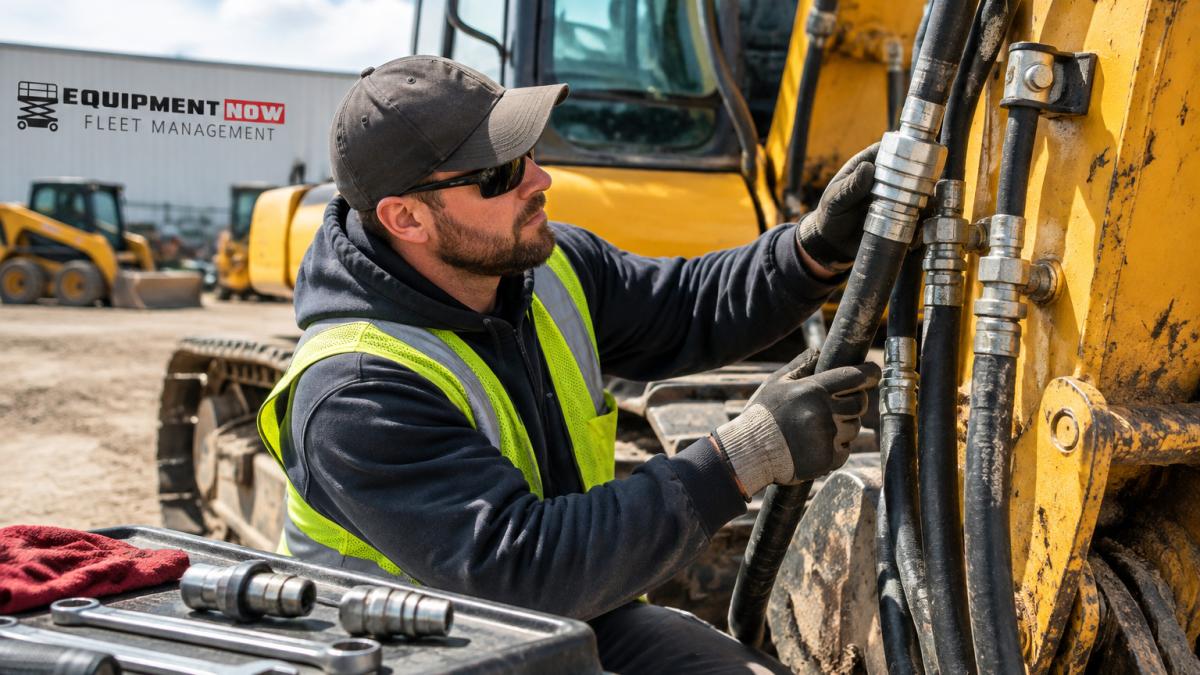
- Inspect for leaks with the system safely depressurized. Check hoses, fittings, cylinders, and the pump case drain. Never check for leaks with bare hands, since pressurized fluid can inject under the skin.
- Check temperature. Note whether the problem appears only after the machine warms up, and compare the reading against the manufacturer's normal operating range.
- Listen and watch under load. Identify whining, knocking, or hissing noises and note which function triggers them. A whine that rises with load often points to pump wear or cavitation; a knock can indicate a loose component or a failing pump.
- Compare with specifications. Use the manufacturer's service data for relief pressure, flow, and filter intervals where available.
Symptom-to-cause matrix. Use this to narrow the fault before calling a technician:
- Slow movement across all functions: low fluid, clogged filter, worn pump, or a relief valve stuck open.
- Slow movement in one function only: a sticking valve spool, a worn cylinder seal, or a collapsed hose on that circuit.
- Loss of lifting force under normal load: worn pump, incorrect relief pressure, or internal leakage in the cylinder.
- Drift or creeping cylinders: worn piston seals or a leaking holding valve.
- Noise (whine or knock): cavitation from low fluid or air ingress, worn pump internals, or a loose pump mount.
- Overheating: blocked cooler, low fluid, or a relief valve stuck open.
- Foamy or discolored fluid: air ingress, water contamination, or fluid breakdown from heat.
Machine-specific differences. The same symptom can point to different causes by machine type. On excavators, swing and travel circuits often show seal and valve wear first, while boom and arm drift usually trace to cylinder seals. On wheel loaders, lift and tilt circuits take the most abuse, and hose routing near the articulation joint is a frequent leak point. On dozers, blade tilt and ripper circuits run at high pressure and are prone to fitting and hose failures. Treat the matrix as a starting point, not a diagnosis.
Safety comes first. Shut down the machine, relieve stored pressure, and never check for leaks with bare hands. Operator troubleshooting has limits. When in doubt, call a qualified technician.
!A technician in work gloves checking a hydraulic hose and fitting on an excavator at a job site in daylight
The symptom-to-cause matrix below helps narrow a hydraulic fault before calling a technician.
| Symptom | Likely cause |
|---|---|
| Slow movement across all functions | Low fluid, clogged filter, worn pump, or relief valve stuck open |
| Slow movement in one function only | Sticking valve spool, worn cylinder seal, or collapsed hose |
| Loss of lifting force under normal load | Worn pump, incorrect relief pressure, or internal cylinder leakage |
| Drift or creeping cylinders | Worn piston seals or leaking holding valve |
| Whine or knock from pump area | Cavitation from low fluid or air ingress, worn pump internals, or loose mount |
| Overheating | Blocked cooler, low fluid, or relief valve stuck open |
| Foamy or discolored fluid | Air ingress, water contamination, or heat breakdown |
Heavy Equipment Hydraulic Maintenance That Prevents Failure
Prevention costs far less than repair. A steady maintenance routine catches most problems before they start.
Build these habits into your schedule:
- Check fluid level and condition before each shift
- Replace filters at manufacturer intervals
- Inspect hoses and fittings weekly
- Clean coolers and radiators regularly
- Sample fluid periodically to track contamination
Preventive maintenance also helps you plan. Scheduling a service during a slow week can be easier than scrambling after a breakdown. For a broader routine, see our preventive maintenance guide for heavy machinery and our construction equipment maintenance guide.
Scheduling Your Next Hydraulic Inspection or Fleet Review
Keeping hydraulic systems healthy takes tracking, not just good intentions. Fleet maintenance software can log service intervals, flag overdue inspections, and show which machines need attention first.
Fleet management also supports consignment sales, which can be a smarter way to retire aging machines than auctions.
Ready to plan your next inspection? Equipment Now Rental and Sales offers fleet management support including preventive maintenance, GPS tracking, and cost analysis. Explore fleet management support with us to see how we can help keep your equipment working.
BUTTON: Plan Your Fleet Review CARD_TITLE: Is your hydraulic fleet due for service? CARD_TEXT: Equipment Now Rental and Sales helps track maintenance and plan fleet reviews.
Frequently Asked Questions
What is the most common cause of hydraulic failure?
Fluid contamination is widely considered the leading cause. Dirt, metal particles, water and air that enter the system wear pumps, valves and seals faster than anything else. Regular fluid sampling, correct filter changes and sealed reservoirs are the most effective defenses. Contamination often shows up first as slow or erratic movement, so checking fluid condition early can prevent a much larger repair bill later on the machine.
What are the symptoms of a failing hydraulic pump?
Common hydraulic pump failure symptoms include whining or cavitation noise, slow or weak cylinder movement, overheating, and pressure that drops below the machine's specified range. Foamy or discolored fluid can also point to aeration or internal wear. Because these signs overlap with other problems, a pressure test and a fluid check should come before replacing the pump, which avoids unnecessary parts costs.
How do you troubleshoot a hydraulic system?
Start with the simplest checks: fluid level, fluid condition, visible leaks and filter condition. Then confirm operating temperature and pressure against the manufacturer's specifications. Inspect hoses and fittings for abrasion and loose connections. Isolate circuits one at a time to find which component is responsible. Stop if you are unsure or if stored pressure is present, and bring in a qualified technician for internal repairs.
How can hydraulic system failure be prevented?
Prevention centers on clean fluid, controlled temperature, and routine inspection. Change filters and fluid at the intervals in the equipment manual, keep reservoirs sealed, and address small leaks before they grow. Avoid running machines beyond rated load for long periods, since this drives heat and wear. Logging hours, fluid tests and repairs makes it easier to spot trends across an entire fleet.