 listicle
Common Lockout Tagout Violations to Avoid
Table of Contents
- Why Lockout Tagout Violations Matter for Your Operation
- Failure to Develop Machine-Specific Energy Control Procedures
- Inadequate Employee Training and Certification in Lockout Tagout
- Skipping Periodic Inspections and Safety Audits
- Using Lockout Tagout Procedure Templates for Compliance
- How Fleet Management Supports Lockout Tagout Safety Compliance
- Fleet Turnover Strategy: Consignment Sales vs. Equipment Auctions
- Frequently Asked Questions
Last Updated: October 4, 2026
Why Lockout Tagout Violations Matter for Your Operation
Lockout tagout violations represent one of the most serious compliance gaps in industrial and construction operations. When energy control procedures break down, the consequences aren't abstract, they're injuries, citations, and operational shutdowns that disrupt your entire workflow. At Equipment Now Rental and Sales, we work with contractors and fleet managers across Wisconsin and Illinois who understand that lockout tagout violations don't happen in a vacuum. They cascade. One procedural gap exposes your team to hazardous energy, triggers regulatory enforcement, and compounds when equipment moves between operators or sites.
The OSHA standard governing this area, OSHA 1910.147 lockout/tagout regulation, sets the baseline for energy control procedures. But compliance isn't just about checking a box. It's about building a safety culture where every authorized employee knows the stakes and follows machine-specific protocols every single time.
This guide covers the seven most common lockout tagout violations we see in the field, why they happen, and how to prevent them. We'll also show how proper fleet management and equipment acquisition strategies support sustainable safety compliance across your entire operation.
Failure to Develop Machine-Specific Energy Control Procedures
The biggest mistake teams make is treating lockout tagout as a one-size-fits-all process. A hydraulic excavator has different energy sources than a pneumatic nail gun, and a conveyor belt system has different isolation points than a punch press.
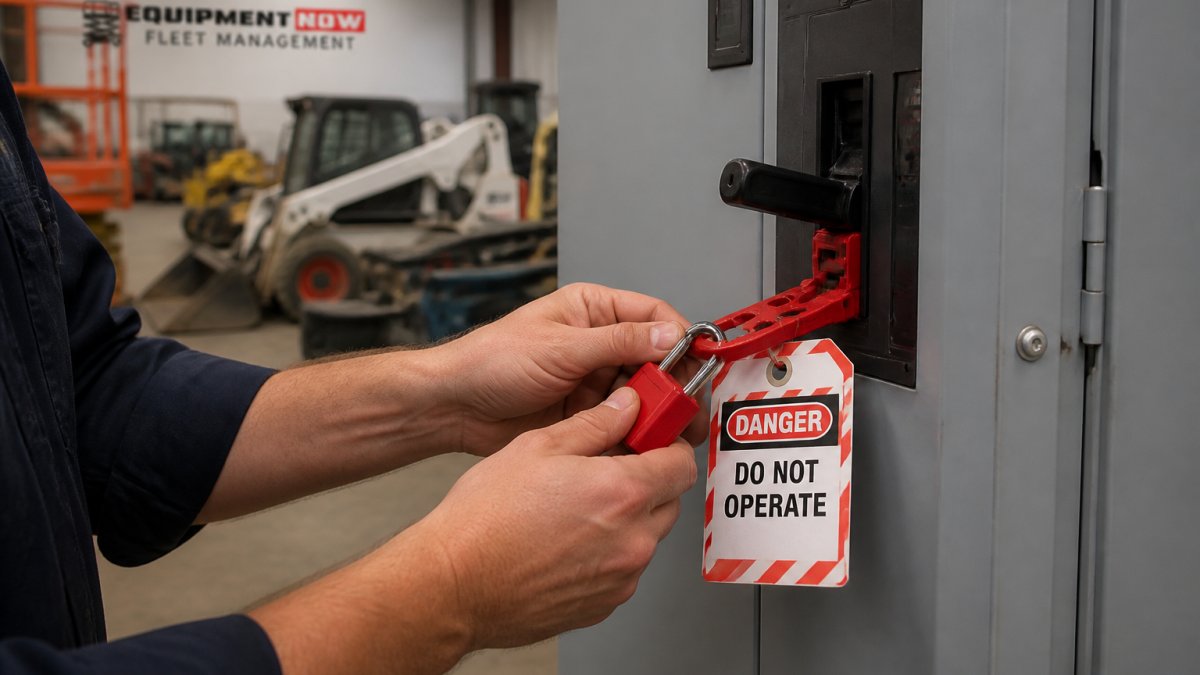
Machine-specific procedures must identify every energy source: electrical, hydraulic, pneumatic, thermal, gravitational, and stored energy. They must name the exact disconnect switch, padlock placement, and verification steps for zero energy state.
Common gaps include:
- Listing energy sources without isolation points
- Failing to account for residual energy after shutdown
- Missing steps to verify zero energy state before work begins
- No clear procedure for multi-source machines
Assign one person to audit each machine and document its specific energy control procedure with photos of disconnect switches and lockout points. Train every operator using that specific procedure, not a generic template.
Inadequate Employee Training and Certification in Lockout Tagout
Training failures are the second-most common violation. One-time orientation doesn't stick, employees forget steps, skip verification, or develop bad habits without consistent reinforcement.
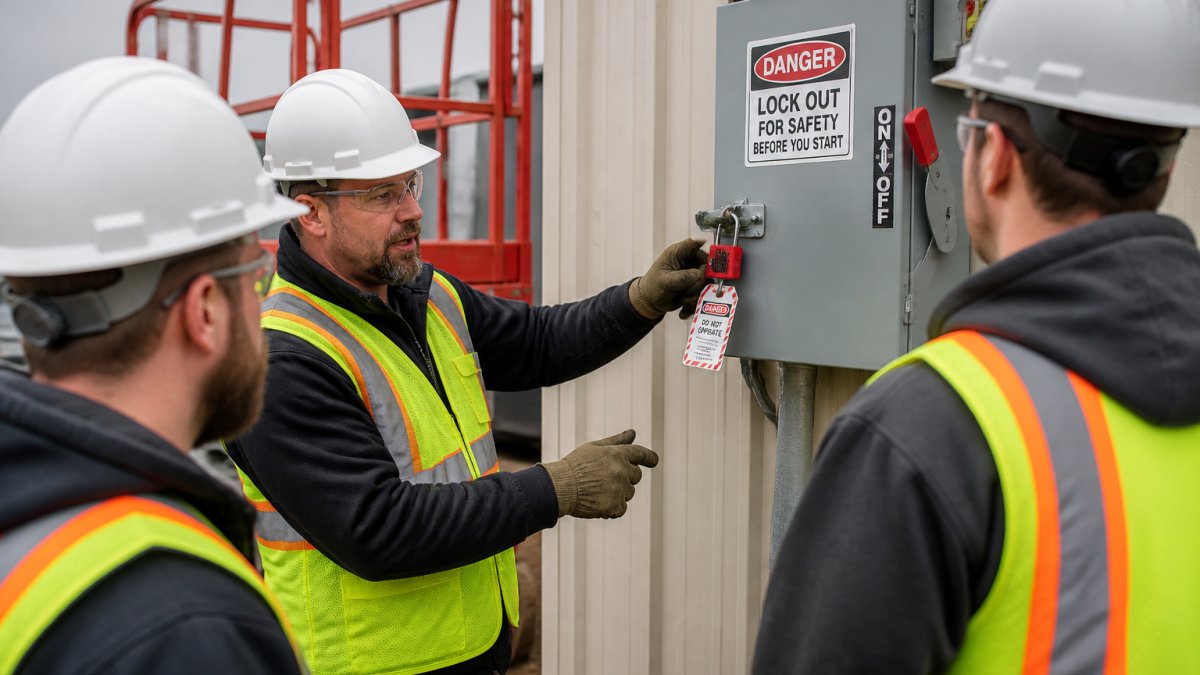
Effective training must cover hazard identification, machine-specific procedures, lock and tag application, zero energy verification, and failure response. Affected employees (those near energized equipment) need different training than authorized employees, many teams skip this distinction. Authorized employees should be formally certified after demonstrating competency, with annual retraining and documentation of all sessions.
Skipping Periodic Inspections and Safety Audits
Procedures drift as equipment changes, new operators arrive, and maintenance modifies machines. Inspection failures stem from the gap between what inspectors see and what they understand.
OSHA requires annual inspections, but compliance risk emerges between audits when machines are modified without procedure updates, new operators receive abbreviated training, or locks corrode unnoticed.
Inspections often become checkbox exercises where inspectors confirm locks are present but don't verify the right locks are on the right isolation points, or that procedures match actual practice.
Effective periodic inspections require three layers:
Layer 1: Documented Inspection Protocol Create machine-specific inspection checklists tied to energy control procedures. Verify that energy sources are isolated at named points, locks and tags are applied correctly, equipment hasn't been modified, and authorized employees can explain the procedure.
Layer 2: Competency-Based Verification During inspections, have authorized employees walk through the lockout process on the actual machine. Watch them identify energy sources, locate isolation devices, and apply locks. Hesitation, skipped steps, or incorrect lock application reveal training gaps that document review misses.
Layer 3: Modification Tracking Maintenance work is the hidden driver of procedure obsolescence. Assign one person to review maintenance work orders monthly and flag any that affect energy control. Update procedures before the machine returns to service.
Inspection records create a timeline showing when problems were discovered and how quickly they were fixed. Quarterly audits catch drift before it becomes a hazard and demonstrate good-faith compliance efforts.
Fleet management systems simplify this by building inspection schedules into service agreements and documenting findings centrally. The system tracks audits, flags overdue inspections, and alerts you to patterns across multiple sites.
Using Lockout Tagout Procedure Templates for Compliance
Templates are a starting point, not a finish line. The real failure is assuming that filling one out equals compliance. Teams deploy procedures that look complete on paper but fail in practice.
A supervisor downloads a template, assigns someone to fill it out, and assumes the work is done. The person may guess at energy sources or copy language from similar machines without verification. When an operator follows the procedure for the first time, they discover gaps, missing isolation points, unclear language, or steps that don't match the physical machine.
A generic template covers structure but misses machine-specific details. It should prompt you to fill in machine name, all energy sources, isolation device locations, zero energy verification steps, lockout points, tag placement, authorized employee responsibilities, affected employee restrictions, and failure response. But completing the template is only 40% of the work, the remaining 60% is validation and testing.
Validation Step 1: Physical Walk-Through Take the completed template to the actual machine with an authorized employee who operates it regularly. Have them point to each isolation device, explain verification methods, and demonstrate zero energy verification. If they hesitate, do something different, or can't find a listed isolation point, update the procedure.
Validation Step 2: Energy Source Verification Have a qualified person (equipment manufacturer's technician or certified safety professional) review the procedure and confirm all energy sources and residual energy pathways are identified. This step often reveals critical gaps.
Validation Step 3: Procedure Testing Under Load Run the machine through a normal cycle, then perform lockout exactly as written. Verify every isolation point can be locked, zero energy state can be confirmed, and the machine cannot be accidentally energized. Rewrite any unclear steps.
Validation Step 4: Training and Feedback Train authorized employees on the actual machine and observe them perform lockout independently. Collect feedback on unclear or impractical steps and update the procedure accordingly.
A procedure is only compliant when tested on actual equipment, validated by someone with technical knowledge, and successfully executed by authorized employees. Templates that skip validation are the source of most OSHA citations.
Digital LOTO management systems can enforce this validation workflow. Instead of allowing a procedure to be marked "complete" after the template is filled out, the system requires sign-off from both the procedure author and an authorized employee who has tested it on the actual machine. The system tracks which machines have validated procedures and which are still pending testing.
Consignment sales and fleet management also reduce template risk. When equipment is managed through a professional provider, procedures can be validated before the equipment enters your fleet. This can reduce the chance of deploying an incomplete or untested procedure.
How Fleet Management Supports Lockout Tagout Safety Compliance
This is where most contractors miss an opportunity. Equipment management and safety compliance are deeply connected. When you rent or lease equipment through a structured fleet management program, you gain built-in compliance advantages that ownership often misses.
A professional fleet management service handles preventive maintenance on a documented schedule. That maintenance creates records showing equipment is properly serviced and energy systems are functioning correctly. When a machine is well-maintained, energy isolation works reliably. When maintenance is sporadic, isolation devices fail, and that's when violations happen.
Fleet management also simplifies equipment turnover. Instead of holding onto aging machines that develop hidden defects, you rotate them out on a predictable schedule. Newer equipment has clearer energy systems, easier isolation points, and better documentation. Your authorized employees face fewer surprises and fewer workarounds.
Equipment Now Rental and Sales includes compliance tracking as part of our fleet management service. We document equipment specifications, maintenance history, and energy control procedures for every machine. When equipment rotates through your operation, the compliance record follows it.
GPS tracking on managed equipment also supports safety audits. You know exactly which machines are on which sites, who's operating them, and when they were last serviced. This visibility makes it easier to conduct periodic inspections and verify that lockout tagout protocols are being followed consistently across your fleet.
Fleet Turnover Strategy: Consignment Sales vs. Equipment Auctions
How you acquire and retire equipment affects your long-term compliance burden. Many contractors default to equipment auctions when they need to upgrade or downsize. Auctions are fast and feel economical, but they create hidden costs in compliance and safety.
When you sell equipment through an auction, you lose control of the narrative. The buyer may not understand the machine's energy control procedures. They may not know about past maintenance issues or modifications. If that equipment later causes an injury at another site, your documentation and procedures won't follow it, and liability questions can still reach back to you.
Consignment sales offer a better path. Through a consignment arrangement, you work with a trusted equipment partner who understands your machines and their compliance requirements. The partner documents the equipment's history, maintenance records, and energy control procedures before passing it to the next user. The buyer gets complete information about how to operate the machine safely.
More importantly, consignment sales through a professional fleet management provider like Equipment Now Rental and Sales can create a documented chain of custody. Every machine can have a compliance file that moves with it, and future operators can have access to the energy control procedures, maintenance history, and safety protocols.
Consignment also allows you to phase out equipment strategically. Instead of selling aging machines in bulk at auction, you rotate them through consignment, ensuring they go to operators who understand their quirks and limitations. Newer machines stay in your fleet longer, reducing the compliance complexity of managing a mixed-age equipment base.
Consignment sales can offer advantages. When a buyer gets complete documentation and confidence in the machine's condition, it can help offset the cost of maintaining proper compliance records throughout the equipment's lifecycle.
Lockout tagout violations cluster around the same root causes: incomplete procedures, insufficient training, inconsistent inspections, and poor equipment management. Fixing them requires discipline, documentation, and a commitment to machine-specific safety protocols. Equipment Now Rental and Sales helps contractors and fleet managers build that discipline through professional fleet management that includes compliance tracking, preventive maintenance, and documented equipment history. When you're ready to upgrade your equipment strategy and strengthen your safety foundation, reach out to discuss how our fleet management service can support compliance and reduce operational risk.
| Common Violation | Root Cause | Prevention Step |
|---|---|---|
| Generic procedures | One-size-fits-all approach | Document machine-specific energy sources and isolation points |
| Training gaps | One-time orientation only | Conduct annual retraining and certify authorized employees |
| Missed inspections | No audit schedule | Perform quarterly safety audits and document findings |
| Residual energy ignored | Incomplete energy assessment | Verify zero energy state using machine-specific procedures |
| Inadequate lockout points | Procedure doesn't match equipment | Test procedures on actual equipment before deployment |
Frequently Asked Questions
What are the most common lockout tagout violations under OSHA 1910.147?
The most frequently cited violations include failure to develop machine-specific energy control procedures, inadequate employee training, lack of periodic inspections, improper application of locks and tags, and failure to verify zero energy state before work begins. OSHA cites lockout tagout violations across all industries because the standard applies wherever hazardous energy sources exist. Each violation carries significant penalties and, more importantly, puts workers at serious risk of injury or death from unexpected machine startup.
How should I use lockout tagout procedure templates to ensure compliance?
Procedure templates provide a starting framework, but they must be customized for each specific machine and energy source in your operation. Generic templates miss critical details about your equipment's unique hazards, energy isolation points, and residual energy concerns. Develop machine-specific procedures by documenting all energy sources, identifying proper disconnect switches, specifying the exact locks and tags required, and defining verification steps. Have authorized employees and affected employees review procedures before implementation. Update templates whenever equipment changes or new hazards are identified.
Why is professional fleet management important for lockout tagout safety?
Professional fleet management ensures every piece of equipment in your operation receives preventive maintenance, compliance audits, and proper documentation. A managed fleet system tracks maintenance schedules, identifies aging equipment needing retirement, monitors compliance training completion, and maintains detailed records of all equipment-specific safety procedures. Equipment Now's fleet management service includes compliance oversight.
Should we sell used equipment through consignment or auction?
With consignment, you retain ownership until sale, can ensure proper documentation of maintenance and safety compliance is transferred, and avoid the rushed liquidation environment of auctions where equipment condition details may be overlooked. Equipment Now handles consignment sales for fleet turnover.