 how-to
Where to Buy Used Construction Equipment: 2026 Guide
Table of Contents
- Where to Buy Used Construction Equipment: Your Main Options
- Why Consignment Beats Auctions for Heavy Equipment
- The Used Construction Equipment Inspection Checklist
- The Benefits of Fleet Management Services When Buying Used Equipment
- Financing, Leasing, and Certified Pre-Owned Programs
- How to Avoid Scams When Buying Used Machinery Online
- Shipping, Logistics, and Local Support
- Frequently Asked Questions
Last Updated: September 18, 2026
Where to Buy Used Construction Equipment: Your Main Options
Finding where to buy used construction equipment in 2026 means weighing three main channels: consignment dealers, online marketplaces, and fleet management partners. This guide from Equipment Now Rental and Sales breaks down each path so you can avoid the costly mistakes that trip up most buyers.
The stakes are higher than most contractors realize. A machine with hidden hydraulic problems or a worn undercarriage can eat thousands in repairs before it ever turns a profit. Yet the right pre-owned excavator, skid steer, or dozer can deliver years of reliable service at a fraction of new pricing.
Below, we'll show you exactly how to evaluate each channel and what to inspect before you commit.
Why Consignment Beats Auctions for Heavy Equipment
Consignment puts your equipment in front of motivated buyers without the pressure and fees of a live auction. For sellers, that means better returns.
Auctions move fast. You bid against strangers, often without a proper inspection window, and you inherit whatever problems come with the lot. Consignment works differently. The seller lists through a dealer who handles viewings and answers questions.
The practical advantages stack up:
- Time to inspect. Consignment sales let you schedule a viewing, run diagnostics, and ask about maintenance history.
- Transparent condition. Sellers who consign want top dollar, so they document service records and repairs.
- No bidding wars. You negotiate a fair price instead of chasing a hammer price past your budget.
- After-sale support.
For heavy machinery, those differences matter. An auction win on a machine with a cracked undercarriage isn't a deal. It's a liability.
The Used Construction Equipment Inspection Checklist
A used construction equipment inspection checklist is the single most important tool you bring to any purchase. It turns a gut-feel decision into a documented one, and it gives you use when negotiating price.
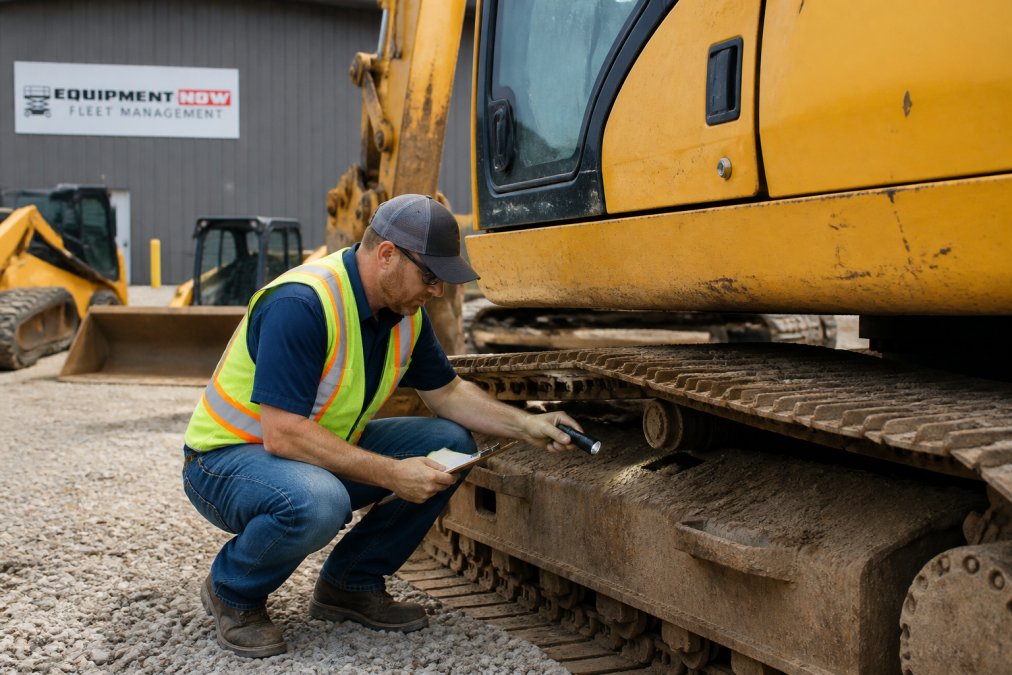
Undercarriage, Engine Hours, and Hydraulics Checks
Start with the undercarriage on tracked machines. It's the most expensive wear item and the hardest to fake. Look for even wear across the tracks, check for cracked links, and inspect the sprockets for sharp edges that signal replacement is near.
Engine hours tell you how hard the machine has worked, but they don't tell the whole story. A machine with low hours and heavy idle time can be in worse shape than one with higher hours spent actually working. Cross-check hours against the maintenance records.
Then move to the hydraulics. Check for leaks at every cylinder, hose, and fitting. Operate the machine through its full range and listen for whining or hesitation. Contaminated hydraulic fluid is a warning sign that filters haven't been changed on schedule.
Maintenance Records and Equipment Appraisal
Ask for the full maintenance history before you talk price. A seller who keeps records is usually a seller who took care of the machine. Look for oil change intervals, filter replacements, and any major repairs.
An independent equipment appraisal gives you a baseline value. It costs money upfront, but it protects you from overpaying on a machine that looks clean and isn't. Use the appraisal to anchor your offer.
The Benefits of Fleet Management Services When Buying Used Equipment
The benefits of fleet management services go well beyond tracking vehicles. A good fleet partner handles acquisition, preventive maintenance, GPS tracking, compliance, and cost analysis, so you buy the right machine and keep it running.
This is where most buyers leave money on the table. They focus on the purchase price and ignore everything that happens after. Fleet management flips that thinking. It treats a used machine as an asset with a lifecycle, not a one-time transaction.
Equipment Now Rental and Sales built its Fleet Management Service around exactly this problem. The service covers equipment acquisition, preventive maintenance scheduling, GPS tracking, compliance, cost analysis, and asset retirement. For contractors juggling multiple machines across job sites, that structure removes the guesswork from when to repair and when to replace.
| Fleet Management Function | What It Does | Why It Matters |
|---|---|---|
| Equipment acquisition | Sources the right machine for the job | Avoids overbuying capacity |
| Preventive maintenance | Schedules service before breakdowns | Cuts downtime on site |
| GPS tracking | Monitors location and usage | Prevents theft and misuse |
| Cost analysis | Tracks spend per machine | Reveals true ownership cost |
| Asset retirement | Plans end-of-life replacement | Protects resale value |
Total Cost of Ownership and Depreciation
Purchase price is only the entry fee. Total cost of ownership includes fuel, maintenance, repairs, insurance, and the depreciation that hits every machine the moment it leaves the lot.
Depreciation on construction equipment is steep in the first few years, then flattens. That curve is why buying pre-owned makes sense for many contractors. Someone else absorbed the sharpest drop, and you get a machine that still has productive years left.
Fleet management software tracks these numbers for you. When you know what each machine costs per operating hour, you can decide whether to keep it, repair it, or retire it.
Financing, Leasing, and Certified Pre-Owned Programs
Financing and leasing spread the cost of a used machine over time, while certified pre-owned programs add a warranty and inspection layer. Each option fits a different cash flow situation, and the right choice usually comes down to how long you plan to keep the machine and how much downtime you can absorb.
Leasing suits contractors who need a machine for a defined project or season. You make predictable payments and hand it back at the end, which keeps capital free for payroll and materials. The trade-off is that you build no equity, and end-of-term charges for excess wear or over-hours can surprise you if you haven't tracked usage. Financing suits buyers who plan to keep the machine long-term and want to build equity. A down payment is typically required, and the machine serves as collateral, so the lender will want to see maintenance records and a clear title.
Certified pre-owned programs sit in the middle. The dealer inspects the machine, repairs what's needed, and backs it with a limited warranty.
Ask these questions before choosing:
- What's the total cost over the term, not just the monthly payment?
- What happens at the end of a lease if the machine is damaged or over the hour limit?
- Does the certified pre-owned warranty cover hydraulics and undercarriage?
- Are there penalties for early payoff?
- How does the lender or lessor want maintenance documented?
- Can the machine be inspected by a third party before funds release?
For buyers who want to compare structures side by side, the Consumer Financial Protection Bureau's guidance on vehicle financing explains how installment financing and leasing differ in ways that apply to equipment as well.
How to Avoid Scams When Buying Used Machinery Online
Scam prevention in online machinery sales starts with one rule: never send money before you've seen the machine in person or through a verified third party. Online listings attract fraud because the sums are large and the buyers are often far away.
Red flags to watch for:
- Prices far below market. A dozer listed at half its value is bait.
- Pressure to wire funds. Legitimate sellers don't demand immediate wire transfers.
- No physical address. A dealer without a verifiable location is a risk.
- Stock photos only. Real sellers photograph the actual machine, including flaws.
- Refusal to allow inspection. Walk away immediately.
Shipping, Logistics, and Local Support
Before you finalize any purchase, confirm these logistics details:
- Total operating weight and dimensions, including any attachments
- Whether the machine runs and drives onto a trailer or needs to be winched
- Permit requirements for oversize loads on your route
- Insurance coverage during transit and who holds it
- Delivery site access, gate width, ground conditions, and overhead clearance
Equipment Now Rental and Sales serves contractors, landscapers, and property managers across Southern Wisconsin and Northern Illinois with equipment rental, sales, and fleet management. The online booking and payment system shows real-time availability, so you can reserve a machine for your project window instead of calling around. For buyers who need ongoing fleet support, the management service handles acquisition, maintenance, GPS tracking, and compliance in one place.
Frequently Asked Questions
What should you inspect before purchasing used heavy equipment?
Check undercarriage wear, engine hours, hydraulic leaks, and fluid condition first. Ask for maintenance records and an inspection report, and confirm the equipment appraisal matches the asking price. Start the machine cold, test every function, and look for cracks or welds on the frame. A pre-purchase inspection by a third-party mechanic is worth the cost on any machine over 5,000 operating hours.
What are the benefits of buying used construction equipment through consignment?
Consignment lets you buy from an owner who still has a stake in the machine's reputation, often with maintenance records. You can inspect the equipment in person, negotiate terms, and avoid the bidding pressure of an auction.
How does fleet management support the acquisition of used machinery?
Fleet management services track engine hours, schedule preventive maintenance, and analyze total cost of ownership across your machines. That data shows which used models hold up and when to retire an asset, so your next purchase is based on real operating costs rather than guesswork. GPS tracking and compliance support also protect resale value when you sell.
Why choose a local equipment partner over national online auctions?
A local partner lets you inspect the machine, verify maintenance records, and get support after the sale. Buying local also means a relationship you can call when something breaks mid-project.