 ultimate-guide
Is Heavy Equipment Rental Good for Seasonal Projects?
Table of Contents
- Why Heavy Equipment Rental Makes Sense for Seasonal Projects
- Heavy Equipment Rental Tax Advantages Contractors Should Know
- Benefits of Fleet Management Services for Growing Operations
- Total Cost of Ownership vs. Rental ROI: Crunching the Numbers
- Insurance, Liability, and Maintenance for Seasonal Rentals
- Consign Equipment vs Auction: Which Exit Strategy Wins?
- Planning Peak Season Demand and Off-Season Storage
- Frequently Asked Questions
Last Updated: September 23, 2026
Why Heavy Equipment Rental Makes Sense for Seasonal Projects
Heavy equipment rental is the practice of paying for short-term access to construction and landscaping machinery instead of buying it outright, and for seasonal work it is usually the smarter financial call. At Equipment Now Rental and Sales, we see contractors every spring facing the same decision: buy a machine that sits idle for five months, or rent one that shows up when the ground thaws.
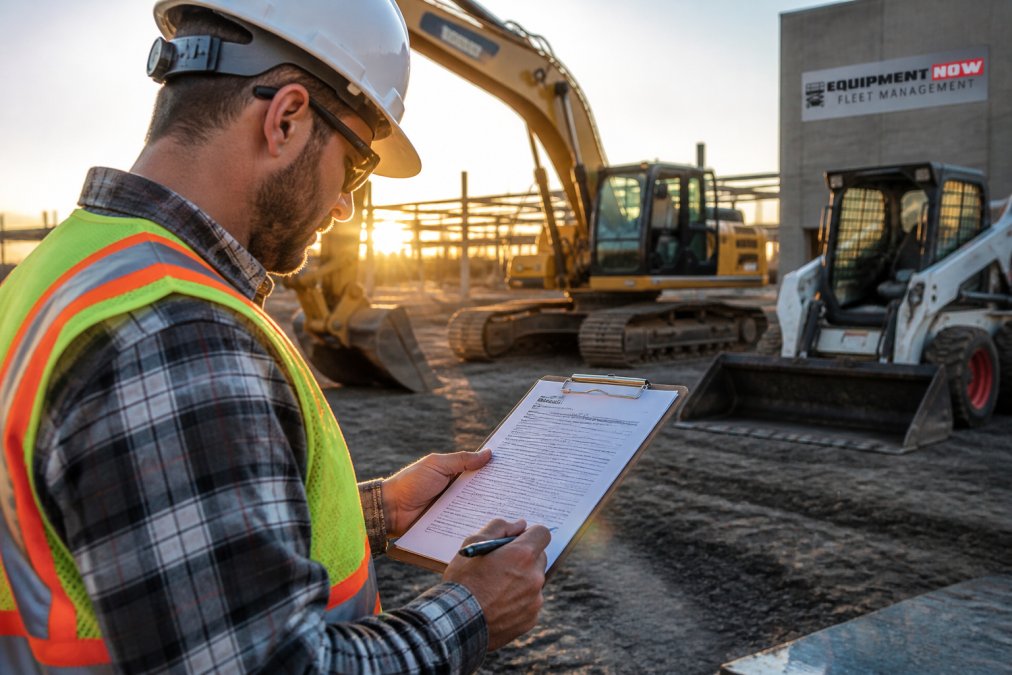
The Financial Case: CapEx vs. OpEx
Buying equipment is a capital expenditure. You commit cash upfront, carry it as a depreciating asset, and absorb the financing cost whether the machine works or not. Renting is an operating expense. It hits your books as a project cost, scales with your workload, and disappears when the job ends.
Pros and Cons of Renting for Seasonal Work
Renting is not automatically right for everyone. Here is the honest breakdown.
Pros:
- No large upfront purchase or loan
- Maintenance and repairs typically fall to the rental provider
- Access to newer machines with current technology
- Equipment variety matched to each project type
- Predictable, project-based costs
Cons:
- No equity built over time
- Rental availability can tighten during peak season
- Repeated rentals over many years can eventually exceed purchase cost
- You follow the provider's terms on damage and fuel
Heavy Equipment Rental Tax Advantages Contractors Should Know
Heavy equipment rental tax advantages come mainly from how rental costs are classified: as a deductible operating expense rather than a depreciating asset. When you buy a machine, you generally recover its cost over time through depreciation. When you rent, the full rental payment for a qualifying business use is typically deductible in the year you incur it.
A few practical notes:
- Keep rental agreements and invoices organized by project
- Separate business use from any personal use
- Confirm how your provider documents delivery and fuel charges
Benefits of Fleet Management Services for Growing Operations
The main benefit of fleet management services is that they turn a scattered pile of equipment decisions into one coordinated system. Acquisition, preventive maintenance, GPS tracking, compliance, cost analysis, and asset retirement all get handled under one roof instead of landing on your desk at 6 a.m.
The operational wins show up quickly:
- Fewer surprise breakdowns because maintenance is scheduled, not reactive
- Clear visibility into which machines earn their keep
- Better use across multiple job sites
- A documented retirement plan for aging assets
When Fleet Management Beats One-Off Rentals
Fleet management makes sense once you're juggling several machines, multiple crews, or a mix of owned and rented equipment. One-off rentals still work fine for a single weekend job. But when you're coordinating equipment across several properties or projects, the coordination itself becomes the job.
Total Cost of Ownership vs. Rental ROI: Crunching the Numbers
The right way to compare buying and renting is total cost of ownership against rental return on investment, and most contractors skip this step entirely. TCO for an owned machine includes the purchase price, financing interest, insurance, maintenance, repairs, fuel, storage, and depreciation. Rental ROI weighs the rental cost against the revenue that machine generates in the weeks you actually use it.
The TCO Line Items You Must Include
When you own, every one of these hits your books whether the machine runs or not:
- Acquisition cost, purchase price plus any financing interest
- Insurance, annual premium on the asset, not just liability
- Maintenance and repairs, filters, fluids, wear parts, hydraulic lines, undercarriage
- Fuel, often the largest variable cost per hour
- Storage, yard space, security, or a rented lot
- Depreciation, the quiet cost that shows up when you sell or trade
- Downtime, the revenue you lose when a machine is down and no replacement is on site
A Simple ROI Comparison You Can Run This Week
The catch is use. A machine you run 40 hours a week justifies ownership. A machine you run 40 hours a season rarely does. Renting lets you match cost to actual use instead of to a hopeful projection.
Where Fleet Management Changes the Math
If you own several machines, the TCO calculation gets messy fast because maintenance, tracking, and compliance costs scatter across crews and job sites. That is where fleet management services earn their keep: they consolidate acquisition, preventive maintenance, GPS tracking, compliance, cost analysis, and asset retirement into one system, so your TCO numbers are based on real data instead of guesswork.
Insurance, Liability, and Maintenance for Seasonal Rentals
Insurance and liability for seasonal rentals are usually shared between renter and provider, and the split is spelled out in your rental agreement. In most arrangements the provider carries insurance on the machine itself, while you carry liability for how it's operated and for damage caused by misuse.
Who Handles Repairs and Downtime?
Routine maintenance and mechanical repairs typically fall to the rental provider, which is one of the clearest advantages of renting. If a machine fails mid-project, a reputable provider swaps it out rather than leaving you stranded.
Consign Equipment vs Auction: Which Exit Strategy Wins?
When you're ready to sell equipment, consignment generally beats auction for most owners. Consignment means a dealer sells the machine on your behalf for an agreed commission, and you keep control over the asking price. Auction means the gavel decides, often on a day that suits the auction house rather than your schedule.
Here is how the two compare:
| Factor | Consignment | Auction |
|---|---|---|
| Price control | You set the target | Market decides |
| Timeline | Flexible, can wait for the right buyer | Fixed sale date |
| Fees | Commission on sale | Buyer's premium and seller fees |
| Best for | Well-maintained, desirable machines | Quick liquidation, bulk lots |
Why Consignment Usually Beats Auction
The core difference is who controls the outcome. In consignment, you and the dealer agree on a target price and a commission structure before the machine is listed. The dealer has an incentive to get the best price because their commission scales with the sale. In auction, the seller pays fees regardless of outcome, and the final price is whatever the room will bear on a single day.
A few concrete advantages of consignment:
- Price control, you can decline a low offer and wait for a better one
- Marketing reach, the dealer lists the machine to their buyer network, not just the auction crowd
- Inspection and paperwork, the dealer handles condition reports, title work, and financing coordination
- Timing, you can list in the off-season when buyers are planning, not just when the auction house schedules a sale
When Auction Still Makes Sense
Auction still has a place: clearing out non-running units, liquidating an entire yard, or when you need cash this month. If a machine won't start or has been cannibalized for parts, an auction buyer may pay more than a consignment buyer who wants a turnkey unit. But for a machine you maintained and want a fair return on, consignment is the better exit.
How Fleet Management Supports Your Exit Strategy
If you run a fleet, the decision to consign or auction shouldn't be a scramble at the end of a season. Fleet management services track each asset's hours, maintenance history, and cost-per-hour, so you know which machines are worth consigning and which are ready for auction. That data also gives consignment buyers confidence: a machine with a documented service history typically commands a stronger offer than one with no records.
Planning Peak Season Demand and Off-Season Storage
Peak season demand is the single biggest scheduling risk in seasonal work. Everyone needs the same machines at the same time, and the best equipment goes first. Reserve early, ideally weeks before your first job, so availability is locked to your project rather than to whoever calls next.
A simple seasonal plan:
- Map your busiest weeks and the machines each one needs
- Reserve rentals before the season starts
- Confirm delivery windows and site access
- Line up off-season storage or return dates
- Review last season's use before you commit again
Frequently Asked Questions
Is it cheaper to rent or buy heavy equipment for a short-term project?
For short-term projects, renting almost always costs less upfront because you avoid the full purchase price, depreciation, storage, and maintenance. Buying makes sense only when you have consistent year-round work that keeps the machine busy. Run a total cost of ownership comparison: add purchase price, insurance, repairs, and storage against the rental rate for your expected rental duration. If your project runs under a few months, rental usually wins on cash flow.
How do heavy equipment rental tax advantages work for contractors?
Rental payments are typically treated as a deductible operating expense in the year you incur them, which can simplify your taxes compared to depreciating a purchased asset over several years. Because you are not carrying a large capital expenditure on your books, your taxable income picture stays cleaner. Talk to your accountant about how this applies to your specific business structure and project schedule.
What are the benefits of fleet management services for a seasonal operation?
Fleet management services handle equipment acquisition, preventive maintenance, GPS tracking, compliance, and cost analysis so you are not juggling those tasks yourself. For seasonal work, this means machines are ready when peak season hits and properly stored or retired when demand drops. It also gives you asset utilization data so you can decide whether to rent, buy, or consign equipment based on actual usage rather than guesswork.
Should I consign equipment or sell at auction after a project ends?
Consignment often nets a higher return because the seller sets a target price and the equipment is marketed to buyers looking for that specific machine. Auctions move fast but can push prices down when multiple similar units sell the same day. If you have well-maintained equipment with documented service history, consignment usually delivers a better outcome. Auction works better when you need a quick sale and are willing to accept a lower price.