 ultimate-guide
Heavy Equipment Winterization: 2026 Best Practices
Table of Contents
- Heavy Equipment Winterization Checklist: Essential Steps Before the First Freeze
- Cold Weather Equipment Maintenance: Fluids, Batteries, and Daily Inspections
- Heavy Equipment Winter Storage: Protecting Assets During Downtime
- Fleet Preventive Maintenance: How a Managed Program Prevents Winter Downtime
- Consign Your Equipment Instead of Auctioning It: A Smarter Winter Exit
- Common Winterization Mistakes That Cost Contractors Money
- Conclusion: Build a Winterization Routine That Pays Off Year After Year
- Frequently Asked Questions
Last Updated: October 7, 2026
Heavy Equipment Winterization Checklist: Essential Steps Before the First Freeze
Heavy equipment winterization is the process of preparing machines for freezing temperatures so they start reliably, avoid costly damage, and hold their value through the off-season. This guide from Equipment Now Rental and Sales covers the best practices for heavy equipment winterization that keep contractors running when the mercury drops.
Cold weather does not forgive neglect. A machine that ran fine in October can crack a block, gel its fuel, or kill a battery by the first hard freeze. Below, we walk through the exact steps we recommend, plus the fleet management habits that prevent winter downtime in the first place.
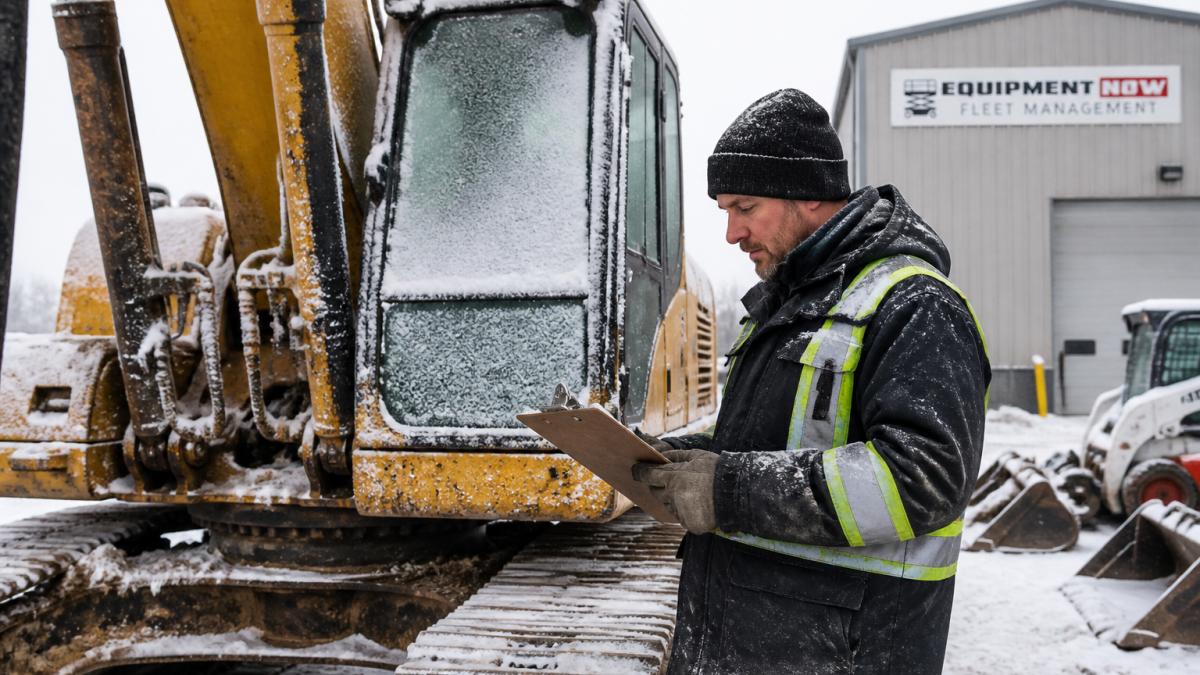
A practical heavy equipment winterization checklist covers the essentials:
- Test coolant concentration and top off with the correct mix
- Check the diesel fuel for cold-flow additives or switch to a winter blend
- Load-test the battery and clean terminals
- Verify hydraulic fluid viscosity for low temperatures
- Inspect and grease all fittings and seals
- Check tire pressure and tread for cold-weather traction
- Service the block heater and confirm it works
- Store the machine with a full tank to limit condensation
Cold Weather Equipment Maintenance: Fluids, Batteries, and Daily Inspections
Cold weather equipment maintenance comes down to three systems that fail first: fuel, batteries, and hydraulics. Get those right, and most winter breakdowns never happen.
Diesel Fuel and DEF: Cold Flow and Storage
Diesel gels in cold weather when paraffin wax crystallizes and blocks the filter. Use a winter-blend fuel or add a cold-flow treatment before temperatures drop, and keep the tank full to reduce condensation. Diesel exhaust fluid freezes around 12°F, so store DEF indoors and never dilute it. A frozen DEF tank can crack, and that repair is far more expensive than a jug of fresh fluid.
Battery Care: Testing, Charging, and Warming
Cold weather cuts a battery's cranking power and slows the chemical reaction inside it. Load-test every battery before winter, clean and tighten the terminals, and keep a trickle charger on machines that sit. A battery that starts a truck in July can fail at 10°F because the engine oil is thicker and demands more cranking amps.
Hydraulic Fluid Selection for Winter
Hydraulic fluid thickens as temperatures fall, which slows response and strains the pump. Check your machine's spec for the correct winter viscosity and switch before the cold sets in. Cold hydraulic oil that is too thick can cavitate the pump on startup, and that damage is permanent.
| System | Winter Risk | Recommended Action |
|---|---|---|
| Diesel fuel | Gelling, filter blockage | Winter blend or cold-flow additive |
| DEF | Freezing near 12°F | Store indoors, never dilute |
| Battery | Lost cranking power | Load-test and trickle charge |
| Hydraulic fluid | Thickening, pump strain | Switch to winter-grade viscosity |
Heavy Equipment Winter Storage: Protecting Assets During Downtime
Heavy equipment winter storage protects the machine's value during months it is not working. Where and how you store it matters as much as how you prep it.
Indoor vs. Outdoor Storage
Indoor storage shields a machine from snow, ice, and temperature swings, but it costs more and space is limited. Outdoor storage works if you block the machine off the ground, cover sensitive components, and keep the fuel tank full. The trade-off is exposure: UV, moisture, and rodents do more damage outdoors. For high-value machines, indoor storage usually pays for itself in avoided repairs.
Fuel Tank Management and Starting Intervals
A full tank limits condensation, which is the main cause of fuel contamination during storage. Start the machine periodically, let it reach operating temperature, and cycle the hydraulics to keep seals lubricated and batteries charged. Short idling sessions do more harm than good because they never burn off moisture in the oil. Run it long enough to warm fully, or leave it alone.
Fleet Preventive Maintenance: How a Managed Program Prevents Winter Downtime
Fleet preventive maintenance is a scheduled program of inspections, servicing, and repairs that catches problems before they cause breakdowns. A managed program tracks every machine's service history, flags upcoming needs, and handles winterization on a calendar instead of a scramble.
This is where Equipment Now Rental and Sales changes the math for contractors. Our Fleet Management Service covers equipment acquisition, preventive maintenance, GPS tracking, compliance, cost analysis, and asset retirement. Instead of one person remembering which machine needs a battery test and which needs a coolant flush, the system tracks it. GPS tracking shows where assets sit and how they are used, and cost analysis reveals which machines are worth keeping and which should be retired.
For a landscaping crew or a municipal fleet manager, that visibility is the difference between a smooth spring startup and a month of emergency repairs.
Consign Your Equipment Instead of Auctioning It: A Smarter Winter Exit
Consigning equipment instead of auctioning it gives sellers more control over price and timing. An auction forces a sale on the auctioneer's schedule, often in a slow winter market when buyers are scarce and bids are low. Consignment lets you set a realistic asking price and wait for the right buyer.
Auction fees also add up fast: seller's commission, listing fees, and transport costs all come out of the final hammer price. Consignment typically involves a single agreed commission, and you keep the machine until it sells. If it does not move, you still own an asset rather than a receipt for less than it was worth.
For contractors trimming a fleet before spring, consignment is the smarter exit. You avoid the winter auction glut, you keep pricing control, and you do not fire-sale a machine that still has years of service left. Equipment Now Rental and Sales handles consignment as part of its sales and fleet services, so you get straight answers on value and a fair process from listing to sale.
Common Winterization Mistakes That Cost Contractors Money
The most expensive winterization mistakes are the ones that look like shortcuts. Skipping the coolant test, running summer hydraulic fluid, or leaving a battery untended all save an hour in the fall and cost thousands in the spring.
- Using straight water or a weak coolant mix, which cracks the block when it freezes
- Ignoring the fuel filter, which then plugs with wax on the first cold start
- Leaving tires underinflated, which flat-spots and cracks rubber in freezing temperatures
- Storing a machine dirty, since mud and debris trap moisture against metal
- Forgetting the DEF tank, which freezes and cracks if left full outdoors
Conclusion: Build a Winterization Routine That Pays Off Year After Year
The contractors who sail through winter are not lucky. They follow a routine, and they let a system track it for them. If managing that routine across a fleet sounds like a second job, that is exactly what Equipment Now Rental and Sales is built for.
Our Fleet Management Service handles equipment acquisition, preventive maintenance, GPS tracking, and cost analysis so nothing slips through the cracks, and our consignment program gives you a smarter way to move machines you no longer need. Get started with Equipment Now Rental and Sales and keep your fleet ready for the first freeze and every one after it.
Frequently Asked Questions
How do you winterize heavy equipment?
Start with a full fluid check: test antifreeze, switch to winter-grade diesel or add anti-gel, and verify hydraulic fluid viscosity. Inspect and charge batteries, grease all fittings, and clean or replace air filters. Park equipment on a firm surface, block it if needed, and either store indoors or cover it. A written heavy equipment winterization checklist keeps every machine on the same schedule and prevents missed steps that lead to cracked blocks or dead batteries.
What should be included in a heavy equipment winterization checklist?
A solid checklist covers coolant strength, diesel anti-gel treatment, battery load test, tire pressure, hydraulic fluid condition, grease points, air intake, exhaust covering, and undercarriage cleaning. Add fuel tank level, DEF concentration, and block heater function. For heavy equipment winter storage, include parking surface, cover or shelter, and a start-up interval. Fleet preventive maintenance software can turn this checklist into automated work orders so nothing gets skipped.
Should heavy equipment be stored with a full fuel tank in winter?
Yes. A full tank reduces condensation, which prevents rust and fuel contamination. Fill it after the final use and add a diesel anti-gel treatment. For heavy equipment winter storage, a full tank plus a stabilizer keeps fuel fresh for months. If the machine has DEF, check its concentration and store it according to the manufacturer's cold-weather guidance.
How often should equipment be started during winter storage?
Start equipment every two to four weeks and let it reach operating temperature for at least 15 minutes. This circulates oil, charges the battery, and prevents seals from drying out. If you cannot run it, use a battery maintainer and consider a block heater. Heavy equipment winter storage without periodic start-ups risks flat spots on tires, seized components, and dead batteries. A fleet preventive maintenance schedule automates these reminders.
How can fleet management help prevent winter equipment downtime?
A fleet management program tracks maintenance intervals, battery health, and fluid conditions across every machine. It schedules winterization tasks before the first freeze, stores service history, and flags overdue items. With GPS and telematics, you can monitor equipment even during storage. For contractors managing multiple machines, fleet preventive maintenance reduces emergency repairs and extends asset life. It also provides cost analysis to decide when to consign or retire a unit.
Why consign equipment instead of sending it to auction?
Consignment typically nets a higher return because you set the asking price and sell directly to a buyer, rather than accepting whatever the auction block brings. You avoid auction fees and the risk of a low bid on a slow day. Consignment also lets you present maintenance records, which builds buyer confidence. For equipment you no longer need after winter, consignment through a dealer with fleet management experience can be simpler and more profitable than auction.