 ultimate-guide
7 Benefits of Professional Fleet Management for Residential Projects
Last Updated: October 25, 2026
Quick Summary
Professional fleet management lowers operating costs, prevents downtime through preventive maintenance, and gives real-time visibility of every machine. It also improves driver safety, tracks cost per project, and supports consignment sales that protect resale value better than auctions.
- Track fleet use to stop renting or buying machines that sit idle half the season.
- Preventive maintenance schedules spread service across planned windows and keep vehicle availability high.
- Start cost measurement with cost per operating hour and utilization rate.
- A machine below roughly half utilization on a project is usually a candidate to rent instead of own.
- Consignment lets the seller set a realistic asking price and accept, counter, or wait.
Table of Contents
- Why Residential Projects Need Professional Fleet Management
- Benefit 1: Lower Operating Costs Through Fleet Use
- Benefit 2: Equipment Fleet Maintenance That Prevents Downtime
- Benefit 3: Construction Equipment Tracking and Real-Time Visibility
- Benefit 4: Safer Drivers and Neighborhood-Friendly Job Sites
- Benefit 5: Project-Level Cost Measurement and ROI
- Equipment Consignment Sales: A Better Path Than Auctions
- Choosing a Fleet Management Service for Residential Work
- Frequently Asked Questions
Why Residential Projects Need Professional Fleet Management
Residential work punishes loose fleet habits. A single machine down on a tight street can stall a whole crew. Professional fleet management is the coordinated handling of equipment acquisition, maintenance, tracking, and disposal so every machine is ready when a project needs it.
Below, we break down seven benefits of professional fleet management for residential projects, then explain why consignment sales usually beat auctions when it's time to move equipment on.
The Hidden Costs of Managing Equipment Yourself
The sticker price of a machine is rarely the real cost. What drains budgets is everything around it: unplanned repairs, idle equipment sitting on a trailer, fuel burned on inefficient trips, and the hours your best lead spends chasing parts instead of running the job.
A common mistake is treating fleet costs as a purchase decision rather than an operating one. In practice, the small leaks matter more than the big invoice.
Benefit 1: Lower Operating Costs Through Fleet Use
The first gain is straightforward: higher use means fewer machines earning their keep poorly. Fleet use is the share of available equipment actually deployed on billable work. When you track it, you stop renting or buying machines that sit idle half the season.
- Pros: Lower cost per job, less duplicate equipment, clearer decisions about what to own versus rent.
- Cons: Requires honest tracking and the discipline to act on the numbers.
Route Optimization and Fuel Efficiency on Tight Streets
Residential streets are not highway lanes. Dead-end cul-de-sacs, parked cars, and low branches make every extra trip expensive. Route optimization and dispatch planning cut fuel consumption and delivery times by grouping stops and matching machine size to access. For more tactics on trimming these costs, see our guide to managing construction fleet costs.
Benefit 2: Equipment Fleet Maintenance That Prevents Downtime
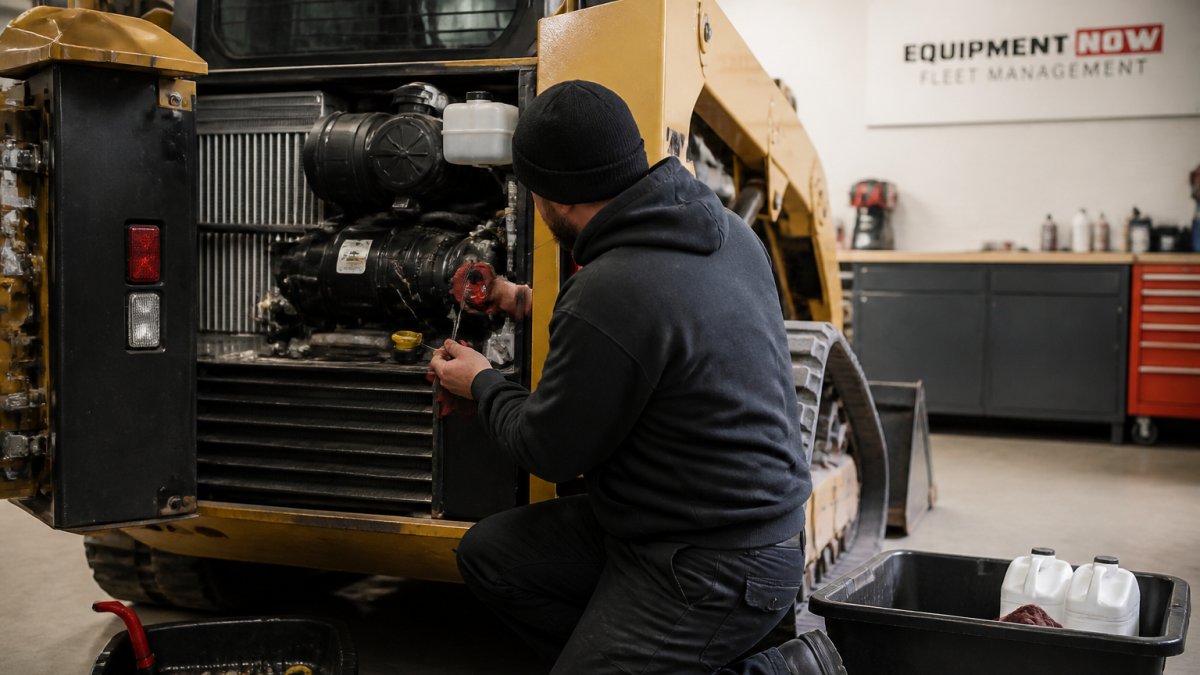
Downtime is the silent budget killer on residential jobs. Equipment fleet maintenance run on a preventive schedule catches worn parts before they fail on site, rather than after a machine has blocked a driveway for a day.
Preventive Maintenance Schedules vs. Reactive Repairs
Reactive repairs cost more and always arrive at the worst moment. Preventive maintenance schedules spread service across planned windows, keep vehicle availability high, and protect fleet reliability. If you are building a program for heavier machines, our preventive maintenance guide for heavy machinery covers schedules and practices in detail.
Benefit 3: Construction Equipment Tracking and Real-Time Visibility
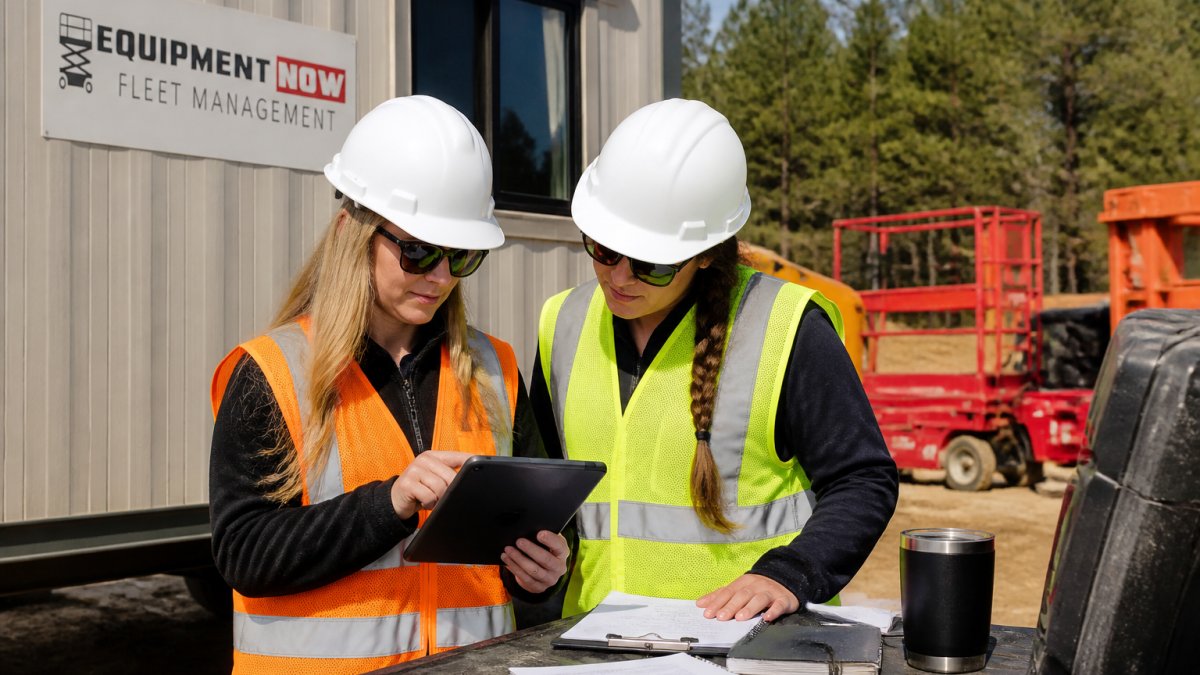
Construction equipment tracking answers a simple question: where is every machine right now? Real-time visibility through telematics and GPS removes the guesswork, so dispatch sends the nearest available unit instead of calling around.
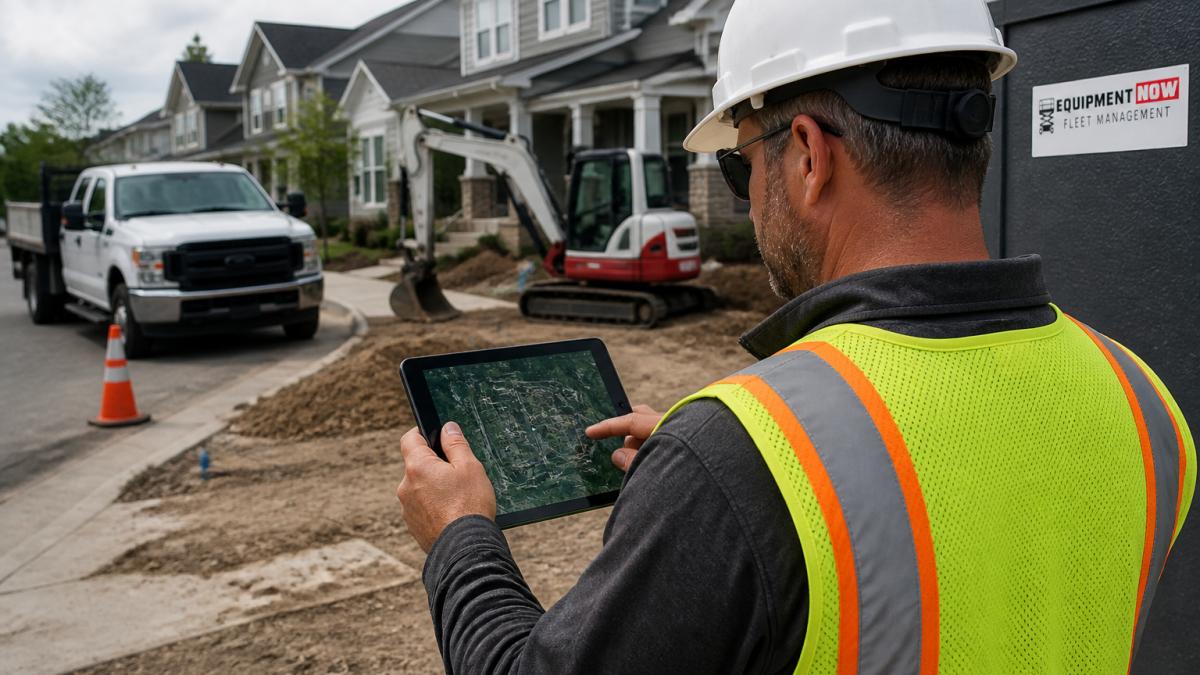
Asset visibility also changes how you plan. When you can see use and location together, you schedule with confidence and stop paying for equipment you already own but cannot find.
Benefit 4: Safer Drivers and Neighborhood-Friendly Job Sites
Driver safety is a neighborhood issue as much as a fleet one. Residential projects put your vehicles beside children, pets, and parked cars, so driver behavior monitoring and advanced driver assistance systems do real work here.
Driver Behavior Monitoring and Advanced Driver Assistance Systems
Monitoring harsh braking, speeding, and excessive idle time gives you something to coach against. Advanced driver assistance systems add a second layer of protection in tight spaces. The payoff is fewer incidents, lower risk management exposure, and a site that residents are glad to see finish.
Benefit 5: Project-Level Cost Measurement and ROI
Most contractors know their monthly fleet spend but not their cost per project. That gap matters on residential work, where a single job can run for weeks, share equipment with two other sites, and absorb fuel and maintenance that never get assigned to the right cost code. Project-level measurement fixes that by tying every gallon, service hour, and repair ticket to a specific job.
A Practical Framework for Tracking Fleet Cost Per Project
A workable framework rests on five metrics, each captured at the project level rather than the company level:
- Cost per project. Total fleet spend assigned to a job, including rental fees, fuel, maintenance, tires, and operator time tied to equipment movement.
- Cost per operating hour. Total cost divided by billable machine hours. This is the number that exposes an underused machine faster than any monthly total.
- Utilization rate. Billable hours divided by available hours. A machine below roughly half utilization on a project is usually a candidate to rent instead of own.
- Fuel cost per unit of work. Fuel spend divided by yards moved, loads hauled, or square feet prepped, so you can compare jobs of different sizes.
- Downtime hours and cost. Hours a machine sat idle waiting on a part or a repair, multiplied by the crew cost standing behind it.
A common pattern is to start with cost per operating hour and utilization, because those two numbers alone reveal whether a machine is earning its keep on a given project.
Turning Fleet Reporting Into a Decision Tool
Once those numbers exist, fleet reporting stops being a monthly invoice review and becomes a pricing and acquisition tool. You can see which project types carry the fleet, which machines never pay back their ownership cost, and where a rental would beat a purchase. That is also the point where a professional fleet management service earns its fee: the provider supplies the tracking data, maintenance records, and cost analysis, and you use them to right-size the fleet for the next project rather than the last one.
Equipment Consignment Sales: A Better Path Than Auctions
When a machine has outlived its usefulness on residential work, how you sell it matters as much as when. Equipment consignment sales let a seller set a realistic asking price and sell through a managed process, rather than accepting whatever the gavel brings on a given day. For residential contractors, the difference shows up in cash flow, in the timing of the next acquisition, and in how much control you keep over the sale.
Why Equipment Auction Alternatives Protect Your Cash Flow
Auctions concentrate risk. You commit to a sale date, accept the highest bid in the room, and pay seller fees regardless of outcome. If the right buyer is not in the room that day, the machine sells below its working value.
The trade-off is time. Consignment is not instant liquidation, and it requires a realistic ask. A machine priced above the market will sit, and storage or listing time eats into the return. The practical rule is to price from recent comparable sales, not from what you paid or what you hope to recover.
How Consignment Works in Practice
A managed consignment process typically runs through five steps:
- Inspection and valuation. The provider inspects the machine, documents condition and hours, and recommends an asking price based on comparable sales.
- Listing and marketing. The machine is listed to buyers in the relevant equipment class, with photos, service records, and hours disclosed up front.
- Buyer inspection. Interested buyers inspect before committing, which reduces post-sale disputes and returns.
- Negotiated sale. Offers are evaluated against the ask, and the seller decides whether to accept.
- Settlement and title transfer. The provider handles paperwork, lien checks, and payment, and the seller receives proceeds minus the agreed consignment fee.
That structure protects resale value in a way a fixed-date auction cannot, and it gives the seller a documented sale price to use when planning the next purchase.
Consignment vs. Auctions vs. Trade-In for Residential Equipment
| Approach | Control Over Price | Timing | Best For |
|---|---|---|---|
| Auction | Low, set by the room | Fixed sale date | Fast liquidation when speed matters more than price |
| Consignment | Higher, seller sets ask | Managed, flexible | Protecting resale value and funding the next acquisition |
| Trade-in | Negotiated | Immediate | Replacing equipment with the same dealer |
For most residential contractors, consignment is the better default for machines that still have working life left, because it puts a floor under expectations and gives buyers time to inspect. Auctions make sense mainly when a machine must move off the books quickly, and trade-ins make sense when the replacement is coming from the same source.
To get the most from a sale, read our guide to maximizing returns on heavy equipment consignment.
Choosing a Fleet Management Service for Residential Work
A provider should match your actual mix: mowers and trimmers for seasonal landscaping, compact earthmoving for tight lots, and aerial equipment for reach. Ask how maintenance is scheduled, how tracking data reaches you, and whether the service covers acquisition through asset retirement.
At Equipment Now Rental and Sales, our fleet management service covers equipment acquisition, preventive maintenance, GPS tracking, compliance, cost analysis, and asset retirement, so you can focus on the build. You can review our fleet management offering and get in touch. For readers new to the concept, our overview of the benefits of fleet management for construction makes the broader case.
Residential projects reward contractors who treat equipment as a managed asset rather than a series of one-off purchases. If you want lower operating costs, fewer breakdowns, and a cleaner exit when equipment reaches the end of its lifecycle, Equipment Now Rental and Sales can help.
Frequently Asked Questions
What does fleet management include for residential contractors?
Professional fleet management for residential contractors typically covers equipment acquisition, preventive maintenance scheduling, GPS tracking and construction equipment tracking, compliance paperwork, cost analysis, and asset retirement. It also includes driver safety programs and reporting on fuel consumption, utilization, and downtime. For a contractor juggling several home-building or landscaping jobs, the service acts as a single point of control for every machine and vehicle, so nothing sits idle or breaks down mid-project. Equipment Now Rental and Sales bundles these services for contractors and property managers across Southern Wisconsin and Northern Illinois.
How does equipment consignment work for contractors?
With equipment consignment sales, you hand your used machine to a provider who lists, markets, and sells it on your behalf. You keep ownership until it sells and typically pay a commission from the sale price rather than an upfront fee. Compared with an auction, consignment usually gives you more control over timing and the minimum price you will accept, and it avoids the rushed, as-is environment of auction day. Ask the provider how they price, where they list, and what happens if the item does not sell within an agreed window.
Is consigning equipment better than selling it at auction?
For many contractors, yes. Auctions can move equipment fast, but final prices swing with the crowd and you have little say over the outcome. Equipment consignment sales let you set a floor, market to targeted buyers, and time the sale around your cash flow needs. Consignment also tends to produce steadier returns on specialized residential equipment like compact track loaders and landscaping attachments, because the buyer pool is narrowed to people who actually need that machine. Weigh the commission against the auction fee and the risk of a low final bid.
How can fleet management reduce equipment downtime on a residential project?
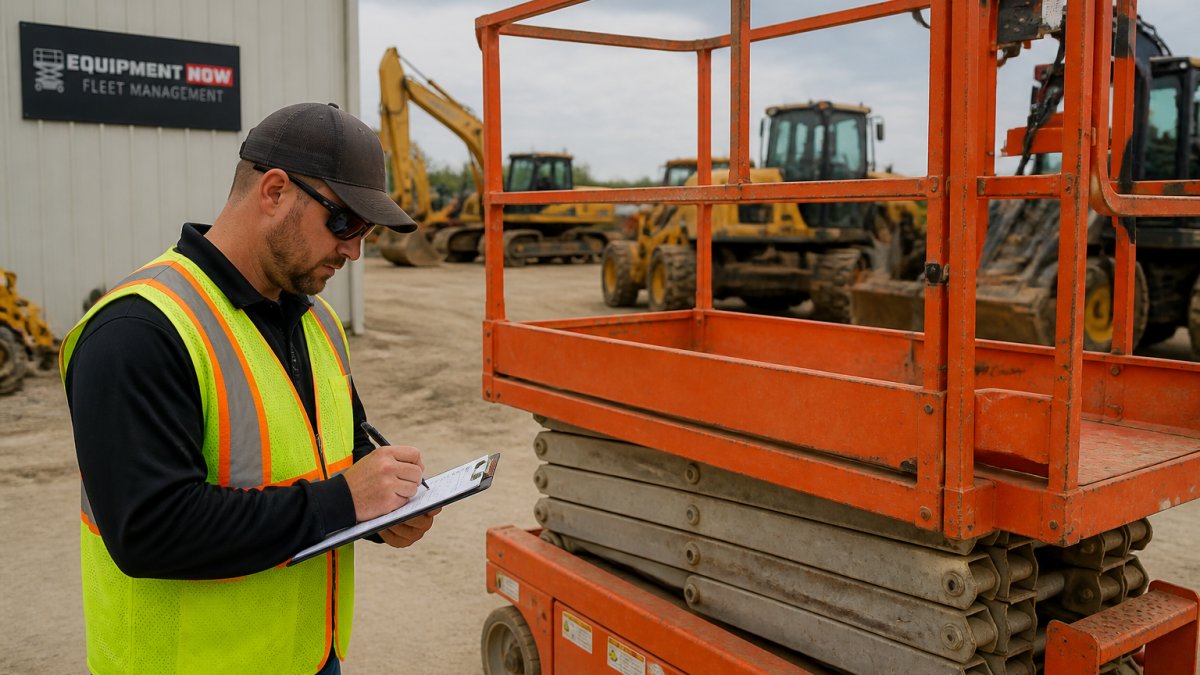
Downtime usually comes from missed service intervals, unreported damage, or machines sitting on the wrong job. A fleet management system addresses all three: preventive maintenance schedules trigger service before failures, vehicle inspections catch problems early, and construction equipment tracking shows exactly where each asset is so it can be redirected to the site that needs it. Real-time visibility also supports faster dispatch and scheduling when a machine goes down. The result is higher vehicle availability and fewer days lost waiting on repairs.