 blog
7 Ways to Manage Construction Fleet Costs
Table of Contents
- 1. Implement Preventive Maintenance Schedules
- 2. Deploy GPS Tracking and Real-Time Monitoring
- 3. Monitor Driver Behavior and Idle Time
- 4. Optimize Fuel Management and Consumption
- 5. Use Professional Fleet Management Services
- 6. Choose Equipment Consignment Over Auctions
- 7. Manage Parts Inventory and Asset Lifecycle
- Frequently Asked Questions
Last Updated: September 25, 2026
To manage construction fleet costs effectively is one of the biggest challenges contractors face. Equipment downtime, fuel waste, and unexpected maintenance bills can quickly erode your profit margins. The good news: systematic approaches to fleet management deliver measurable results.
This guide from Equipment Now Rental and Sales breaks down seven practical strategies to manage construction fleet costs and improve operational efficiency. Whether you manage a small crew or a large fleet, these methods help you take control of expenses and optimize how your equipment works for you.
1. Implement Preventive Maintenance Schedules
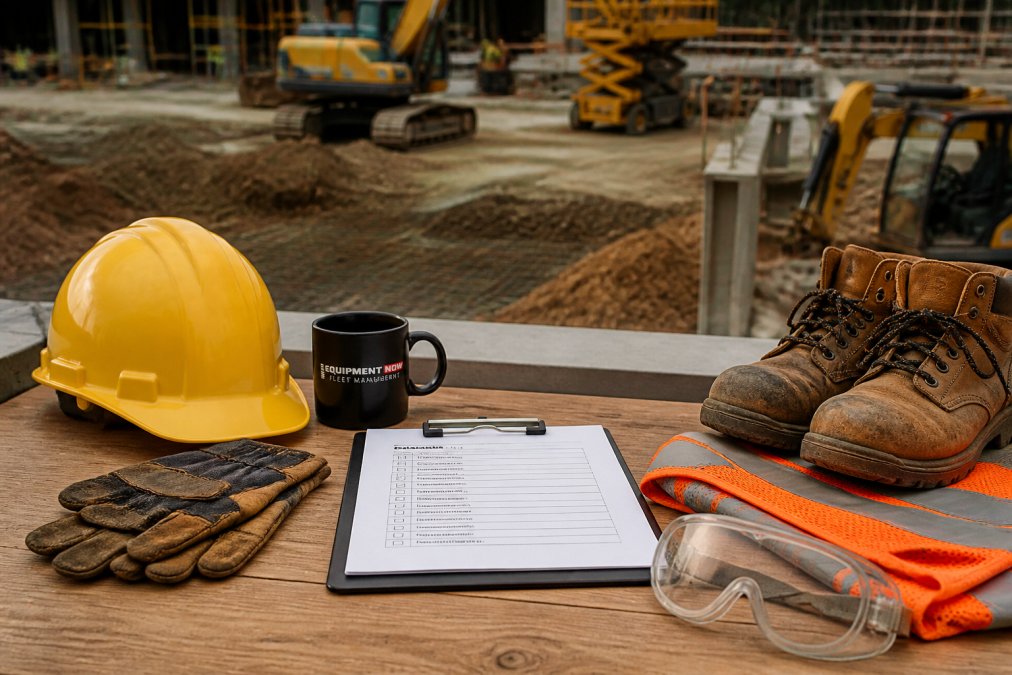
Preventive maintenance is the foundation of cost control. Regular inspections catch small problems before they become expensive repairs that sideline your equipment.
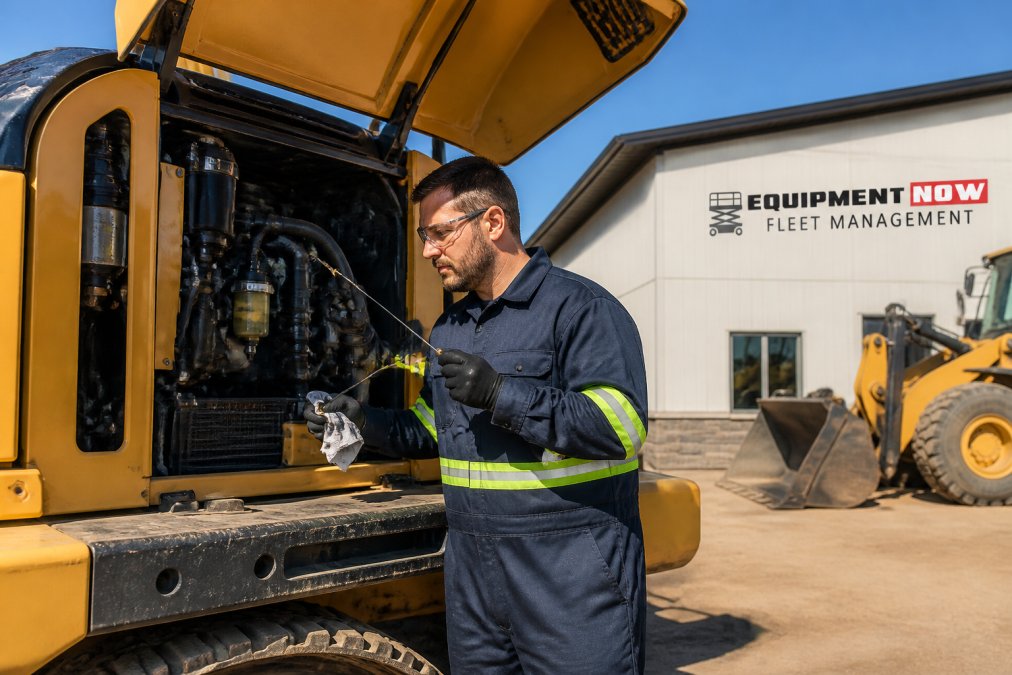
A solid preventive maintenance schedule includes:
- Daily checks: fluid levels, tire pressure, visible damage
- Weekly inspections: belts, hoses, battery condition, safety systems
- Monthly reviews: filter changes, lubrication points, wear patterns
- Quarterly deep dives: major component function, calibration checks
Equipment that receives regular maintenance runs longer and costs less to operate. Breakdowns in the field are expensive, not just for repairs, but for lost productivity and crew delays. Investing in scheduled maintenance can lead to significant cost savings.
Document everything. Keep maintenance logs that show what was done, when, and by whom. This creates a clear asset lifecycle record and helps you spot patterns. When you're ready to retire or resell equipment, detailed maintenance history adds significant value.
2. Deploy GPS Tracking and Real-Time Monitoring
GPS tracking and telematics systems give you visibility into where your equipment is, how it's being used, and when maintenance is needed.
Real-time monitoring helps you:
- Locate equipment instantly across job sites
- Track idle time and equipment use rates
- Monitor fuel consumption patterns
- Receive alerts when equipment operates outside normal parameters
- Schedule preventive maintenance based on actual usage, not just calendar dates
Many contractors underestimate how much idle time costs. Equipment running unnecessarily burns fuel and accelerates wear. With telematics data, you see exactly when machines are sitting idle and can take action. Deploying tracking systems can help reduce idle time.
The data also reveals which operators are running equipment efficiently and which need additional training. This insight helps you improve driver behavior across your fleet.
3. Monitor Driver Behavior and Idle Time
Driver behavior directly impacts fuel consumption, equipment wear, and maintenance costs. Aggressive acceleration, excessive idling, and poor handling increase operating expenses.
Focus on these behaviors:
- Excessive idling: Equipment running without productive work wastes fuel
- Rapid acceleration: Hard starts accelerate engine wear and fuel consumption
- Rough handling: Aggressive operation increases component stress
- Improper warm-up: Cold starts without adequate warm-up shorten equipment life
Training programs that address these behaviors typically deliver measurable results. Operators who understand the cost impact of their actions often self-correct. Recognition programs for efficient operators reinforce good habits across your team.
Idle time is particularly wasteful. Unnecessary idling can account for a notable portion of a fuel budget. Simple policies, like shutting down equipment after 5-10 minutes of inactivity, recover significant costs.
4. Optimize Fuel Management and Consumption
Fuel is often the second-largest operating expense after equipment acquisition. Small improvements in fuel efficiency compound quickly across a fleet.
Strategies to reduce fuel consumption:
- Monitor fuel consumption metrics against equipment type and usage
- Identify inefficient units before they drain your budget
- Implement fuel card controls to prevent unauthorized purchases
- Schedule equipment maintenance to peak efficiency standards
- Train operators on fuel-efficient operation techniques
- Route jobs to minimize equipment movement between sites
Fuel fraud is a real concern for large fleets. Fuel cards with usage controls and monitoring help prevent unauthorized fill-ups and theft. Track fuel purchases against equipment hours to spot anomalies.
Regular maintenance keeps engines running at peak efficiency. A poorly maintained engine consumes more fuel and produces lower output. Filters, spark plugs, and fuel injectors all affect consumption rates.
5. Use Professional Fleet Management Services
Professional fleet management services handle the operational complexity of maintaining equipment, tracking maintenance, managing compliance, and optimizing costs.
Benefits of professional fleet management include:
- Centralized maintenance scheduling and execution
- Compliance tracking for safety and regulatory requirements
- Cost analysis and reporting to identify savings opportunities
- Asset tracking and use optimization
- Predictive maintenance based on equipment performance data
- Equipment retirement planning and asset disposition
At Equipment Now Rental and Sales, our Fleet Management Service handles equipment acquisition, preventive maintenance, GPS tracking, compliance, cost analysis, and asset retirement. This approach frees your team to focus on building your business rather than managing equipment logistics.
Professional services also provide access to expertise you may not have in-house. Fleet managers understand maintenance best practices, compliance requirements, and cost optimization strategies that take years to develop independently.
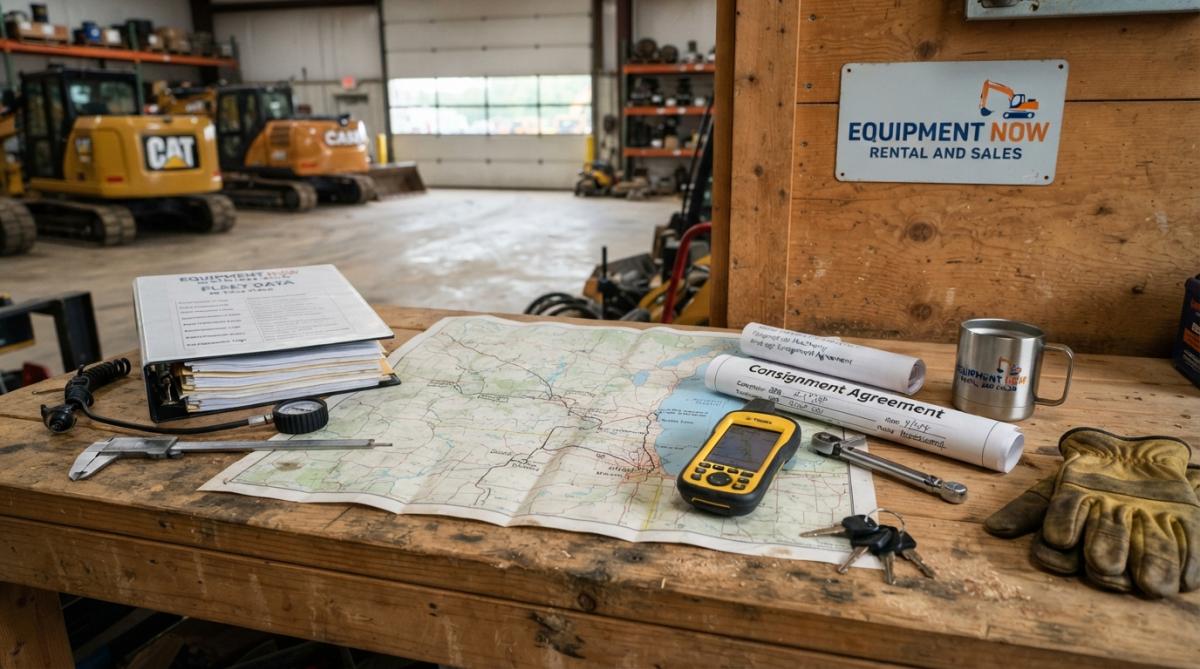
6. Choose Equipment Consignment Over Auctions
How you acquire and retire equipment significantly impacts total cost of ownership. Consignment arrangements offer distinct advantages over auction-based approaches.
Equipment consignment benefits:
- Predictable equipment availability matched to your seasonal needs
- No upfront capital tied up in equipment purchases
- Professional maintenance included in the arrangement
- Flexible terms that scale with your business
- Simplified equipment retirement and replacement
- Access to well-maintained, reliable equipment
Auctions require significant upfront capital and carry risk. You're buying equipment sight-unseen or with limited inspection time. Maintenance history is often unclear. Once you own it, all maintenance and repair costs fall on you.
Consignment arrangements with professional providers like Equipment Now Rental and Sales transfer maintenance responsibility and equipment risk to the provider. You get the benefits of professional fleet management and equipment without the capital burden.
The flexibility matters too. As your work changes seasonally or your crew grows, consignment arrangements adjust to match your actual needs. You're not stuck with equipment you've outgrown or carrying excess capacity during slow periods.
7. Manage Parts Inventory and Asset Lifecycle
Strategic parts inventory management prevents emergency purchases at premium prices and reduces equipment downtime.
Effective inventory management involves:
- Maintaining stock of high-wear items (filters, belts, hoses, spark plugs)
- Tracking parts usage patterns to forecast needs
- Establishing relationships with reliable parts suppliers
- Organizing storage to enable quick access and prevent loss
- Retiring obsolete parts and equipment systematically
Emergency parts purchases can be more expensive than planned procurement. When equipment breaks down and you need a part immediately, suppliers know you have limited options. Bulk purchases of commonly used items at predictable prices protect your budget.
Asset lifecycle planning ensures you retire equipment at the right time. Equipment that's past its prime becomes a cost center, frequent repairs, high fuel consumption, and unreliable operation offset any savings from avoiding replacement. A clear retirement strategy, supported by maintenance records and use data, helps you make this decision objectively.
Professional fleet management services handle parts sourcing, inventory management, and asset retirement as part of their comprehensive approach. This eliminates the administrative burden and ensures you're buying at optimal pricing.
Managing construction fleet costs requires attention to maintenance, monitoring, and strategic equipment decisions. The approaches covered here, from preventive maintenance to consignment arrangements, work together to reduce expenses and improve reliability.
Equipment Now Rental and Sales provides the fleet management expertise and equipment access to implement these strategies. Our comprehensive Fleet Management Service includes preventive maintenance, GPS tracking, compliance management, and asset optimization. Partner with us to manage your fleet efficiently and focus on growing your business. [CTA: RENT A PRODUCT]
Frequently Asked Questions
How can preventive maintenance reduce construction fleet operating costs?
Preventive maintenance stops small problems before they become expensive repairs. Regular inspections catch worn parts, fluid leaks, and mechanical issues early. When you follow a construction equipment preventive maintenance checklist, you avoid unexpected breakdowns that halt job sites and require emergency repairs. Equipment that runs smoothly also uses fuel more efficiently, further lowering total cost of ownership. Most contractors find that scheduled maintenance costs far less than reactive repairs and unplanned downtime.
Why is equipment consignment better than auction for managing fleet turnover?
Equipment consignment vs auction offers significant financial and operational advantages. With consignment, you avoid the auction fees, transportation costs, and unpredictable sale prices that come with auctions. A consignment partner handles marketing and sales while you retain ownership until the equipment sells, giving you control over pricing and timing. You also avoid the rush to liquidate equipment quickly just to recover cash. Consignment lets you focus on your business while a professional manages the sale process efficiently.
What role does GPS tracking play in controlling construction fleet expenses?
GPS tracking provides real-time visibility into equipment location, usage patterns, and idle time. You can identify which assets are underutilized and make better decisions about fleet size. Tracking also prevents fuel theft and unauthorized use, reducing operating expenses. When you know exactly where equipment is and how it's being used, you can optimize job site assignments, reduce unnecessary movement between sites, and catch maintenance issues faster through telematics data. This operational visibility directly lowers fuel consumption and equipment downtime.
How do professional fleet management services help manage construction fleet costs?
The benefits of professional fleet management services include expert asset acquisition, preventive maintenance coordination, compliance management, and retirement planning. A professional fleet manager analyzes your total cost of ownership, identifies cost reduction opportunities, and handles vendor relationships. They ensure equipment is maintained consistently, reducing unexpected failures. They also manage depreciation strategies and can help with tax incentives. By outsourcing fleet oversight to specialists, you avoid costly mistakes and keep your team focused on construction work rather than equipment logistics.