 blog
Best Stump Grinder Attachments for Skid Steers: 2026 Guide
Table of Contents
- Why Skid Steer Stump Grinder Attachments Beat Standalone Machines for Fleet Owners
- Skid Steer Stump Grinder Hydraulic Flow Requirements: What Your Machine Must Deliver
- Stump Grinder Attachment Compatibility: Quick-Attach, Weight, and Lift Capacity
- Standalone Stump Grinder vs Skid Steer Attachment: Which Makes Sense for Your Operation?
- Key Features to Compare Across Stump Grinder Attachments
- Used Stump Grinder Attachment for Sale: What to Inspect Before You Buy
- Fleet Management and Consignment: Smarter Alternatives to Auctions
- Conclusion
- Frequently Asked Questions
Last Updated: October 13, 2026
Why Skid Steer Stump Grinder Attachments Beat Standalone Machines for Fleet Owners
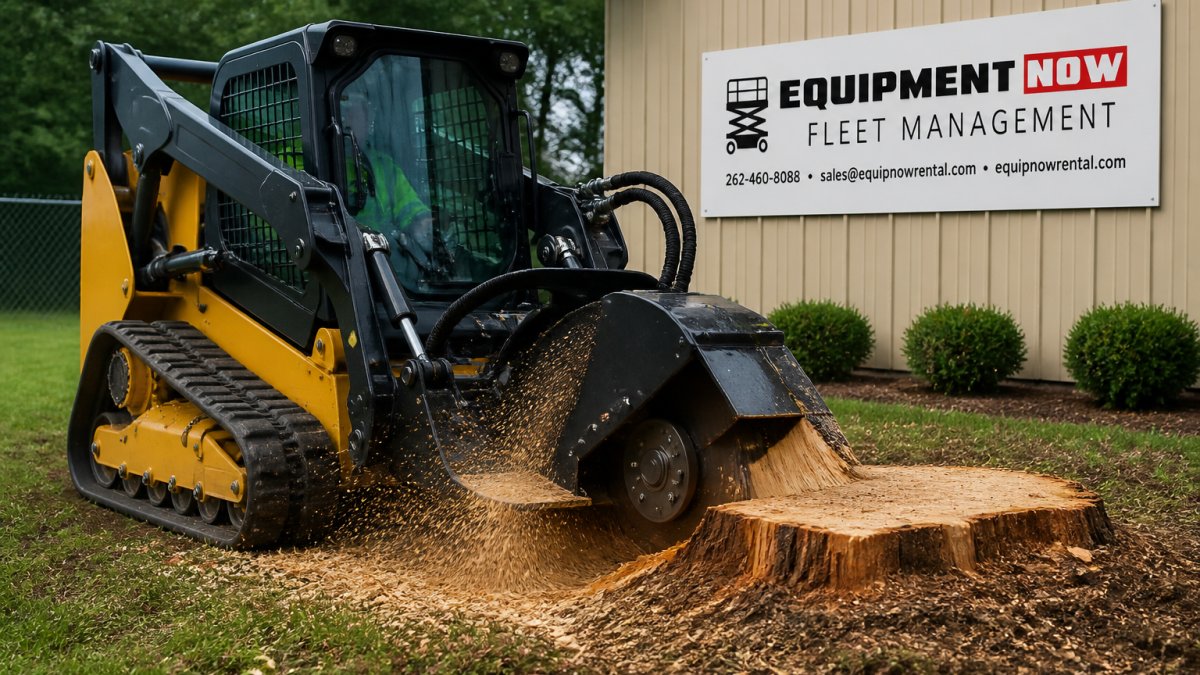
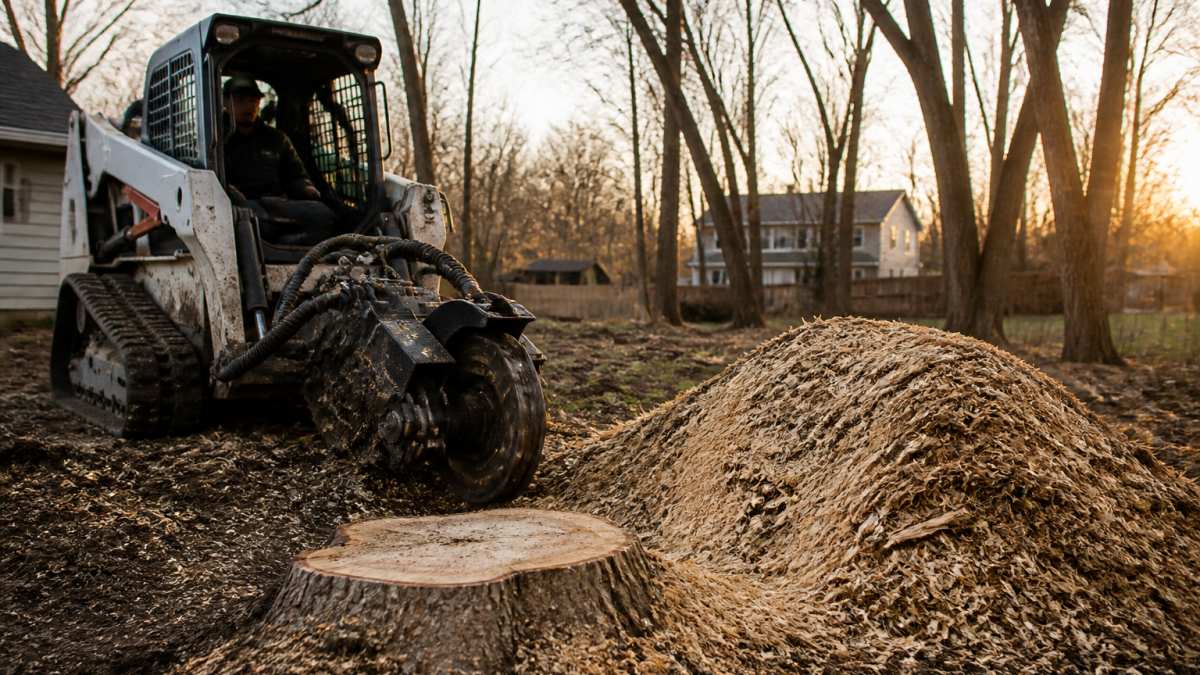
The best stump grinder attachments for skid steers turn a machine you already own into a stump removal tool without adding a second engine, a second trailer, or a second maintenance schedule.
This guide from Equipment Now Rental and Sales covers what actually decides performance, from hydraulic flow to tooth design to quick-attach fit.
The Hidden Costs of Standalone Stump Grinders
A dedicated stump grinder carries its own engine, its own hydraulic system, and its own failure points. That means a second machine to insure, store, fuel, and repair.
The bigger cost is idle time. A standalone unit sits unused between stump jobs while your skid steer works every day.
Consignment changes that equation further. Selling a standalone grinder through an auction means paying seller fees, waiting for a sale date, and accepting whatever the gavel brings. Consigning through a dealer who sells equipment daily puts your machine in front of buyers who are actively shopping.
Skid Steer Stump Grinder Hydraulic Flow Requirements: What Your Machine Must Deliver
Hydraulic flow requirements are the single most common reason a stump grinder attachment underperforms. The attachment only cuts as fast as your machine can feed it oil.
Two numbers decide everything: flow, measured in gallons per minute, and operating pressure. A grinder rated for high-flow hydraulics will starve on a standard-flow machine, spinning slowly and burning through teeth.
Standard-Flow vs High-Flow Hydraulics
Standard-flow machines typically deliver enough flow for light residential stumps up to roughly 12 inches. High-flow machines push considerably more oil and drive larger cutting wheels through bigger wood faster.
Match the attachment to the machine, not the other way around:
- Standard-flow: small stumps, occasional use, tight budgets
- High-flow: commercial land clearing, large stump diameter, daily production
- Auxiliary hydraulics: confirm your machine has the circuit and the couplers
Stump Grinder Attachment Compatibility: Quick-Attach, Weight, and Lift Capacity
Attachment compatibility comes down to three checks: mounting plate pattern, attachment weight against your rated operating capacity, and auxiliary hydraulic coupler type.
Most modern compact loaders use a universal quick-attach connection, often called quick tach. Older machines and some specialty carriers use proprietary plates. Measure before you commit.
Quick-Attach Systems and Mounting Plates
A quick-attach connection lets one operator swap between a bucket, forks, and a stump grinder in minutes. That flexibility is the whole point of running attachments instead of dedicated machines.
Weight is where buyers get surprised. A heavy-duty grinder with a steel frame and safety mesh adds real pounds to the front of the loader. If attachment weight plus the load exceeds your lift capacity, the machine gets light in the rear and unsafe on slopes.
| Check | What to Verify | Why It Matters |
|---|---|---|
| Mounting plate | Universal quick tach or proprietary | Wrong plate means no fit at all |
| Attachment weight | Against rated operating capacity | Affects stability and lift |
| Hydraulic couplers | Flat-face or pioneer, size and count | Mismatched couplers leak and stall |
| Flow rating | Gallons per minute and pressure | Determines cutting speed |
| Ground clearance | Loader lift height and travel | Affects transport and site access |
Standalone Stump Grinder vs Skid Steer Attachment: Which Makes Sense for Your Operation?
The standalone stump grinder vs skid steer attachment decision usually comes down to job mix, but the tiebreaker is utilization. A dedicated grinder only pays for itself when it runs enough hours to justify its own engine, trailer, insurance, and maintenance schedule. An attachment spreads those fixed costs across a machine you already operate daily.
Here is how we would frame it for most fleets:
- Choose the attachment if you already run a compact loader daily and remove stumps seasonally
- Choose standalone if stump grinding is a standalone revenue line with steady year-round demand
- Choose neither if stumps are rare, and rent instead
The Utilization Math That Decides It
Most fleet managers find that a dedicated stump grinder earns its keep only when it runs a meaningful share of the year. If your grinder sits idle for months between jobs, the attachment wins on fixed-cost absorption alone.
The trade-off is throughput. A dedicated machine with a larger engine and a wider cutting wheel can out-grind a skid steer attachment on big-diameter stumps. If your work is mostly large land-clearing stumps, the dedicated unit may still be the right call.
Break-Even Thinking Without the Guesswork
Rather than comparing sticker prices, compare cost per operating hour. Add the attachment's purchase price, tooth replacement, hydraulic setup, and any coupler adapters, then divide by the hours you expect to run it. Do the same for a standalone unit, including its engine maintenance, fuel, trailer, and insurance. The number that matters is not which costs less upfront, but which costs less per stump removed.
Renting removes the ownership question entirely for occasional users. Equipment Now Rental and Sales offers online booking with real-time availability, so you can reserve a machine for a specific project window rather than guessing.
Key Features to Compare Across Stump Grinder Attachments
Cutting wheel diameter, tooth type, and swing arm design separate a grinder that lasts from one that spends its life in the shop. These are the specs worth comparing side by side.
Cutting Wheel and Tooth Design
Larger cutting wheels carry more teeth and reach deeper in a single pass. Carbide teeth hold an edge far longer than steel, but they cost more per set and need correct sharpening.
Tooth replacement is a routine cost, not a one-time purchase. Factor it into total cost of ownership before you compare purchase prices.
- Carbide teeth: longer life, higher upfront cost, best for commercial use
- Steel teeth: cheaper to replace, dull faster, fine for light landowner use
- Tooth count: more teeth means smoother cutting and faster tooth replacement cycles
Swing Arm and Grinding Direction
Swing arm design controls how the wheel travels across the stump face. A swing arm that sweeps side to side lets the operator grind the full stump diameter without repositioning the machine constantly.
Grinding direction matters for debris control. Grinding downward throws chips under the machine; grinding across the face sends them sideways. Safety mesh and debris protection on the attachment keep chips away from the operator and the loader's glass.
Used Stump Grinder Attachment for Sale: What to Inspect Before You Buy
A used stump grinder attachment for sale can be the smartest money in your equipment budget, provided you inspect the right parts. Wear shows up in predictable places.
Check these before you hand over payment:
- Cutting wheel for cracks, bends, or uneven wear
- Tooth pockets for stripped threads or welded repairs
- Bearing play by rocking the wheel by hand
- Hydraulic hoses for cracking, weeping, or mismatched fittings
- Mounting plate for bent edges or elongated holes
- Steel frame and safety mesh for cracks near welds
- Drive motor for leaks and unusual noise under load
A grinder with a straight frame and good bearings is worth rebuilding. One with a cracked frame or a warped wheel is scrap metal with a price tag.
Fleet Management and Consignment: Smarter Alternatives to Auctions
Fleet management is the practice of tracking acquisition, maintenance, use, and retirement across every machine you own, and it changes how you buy and sell attachments. Instead of guessing when to trade a grinder, you know.
What Fleet Management Actually Tracks
A working fleet management program covers six things: acquisition cost, preventive maintenance intervals, GPS or telematics utilization, compliance and inspection records, cost-per-hour analysis, and asset retirement timing.
The utilization data is the part most owners skip. Without it, you are guessing whether a grinder is earning or sitting. With it, you can see which attachments justify their space in the yard and which ones should be sold before they lose more value.
Why Consignment Beats Auctions for Most Sellers
Consignment sales beat auctions for most sellers. An auction compresses every seller into one day and one crowd, which favors buyers. Consignment puts your attachment in front of shoppers over weeks, at a price you set, with a dealer handling the listing and the paperwork.
The practical difference is control. At auction, you accept whatever the gavel brings and pay seller fees regardless of outcome. On consignment, you set the asking price, the dealer markets the unit to active buyers, and you can adjust or withdraw if the market does not respond.
How Fleet Data Drives the Sell Decision
The strongest consignment candidates are machines with clean maintenance records and moderate hours. Fleet management gives you those records. When you can show a buyer the service history, the attachment sells faster and closer to your asking price.
Consignment also solves the storage problem. Rather than parking a retired grinder behind the shop for a year, you list it and let it sell.
Equipment Now Rental and Sales runs a full fleet management service covering equipment acquisition, preventive maintenance, GPS tracking, compliance, cost analysis, and asset retirement.
Conclusion
Matching a stump grinder attachment to your machine's flow, weight limits, and quick-attach pattern is the difference between a productive tool and an expensive paperweight. Get those three right, and the attachment pays for itself across a single season of stump work.
When it is time to buy, rent, or move a machine along, Equipment Now Rental and Sales handles the whole cycle: online booking with real-time availability, equipment acquisition, preventive maintenance, GPS tracking, and consignment sales that beat the auction block. Get started with Equipment Now Rental and Sales and keep every machine earning.
Frequently Asked Questions
What hydraulic flow does a skid steer stump grinder need?
Most stump grinder attachments require a minimum of 15 to 20 gallons per minute (GPM) of auxiliary hydraulic flow and an operating pressure around 3,000 PSI. High-flow machines (30+ GPM) handle larger cutting wheels and grind faster. Always check your skid steer's specs before buying an attachment, because low-flow machines may stall under load. If your machine falls short, consider a smaller wheel or a standard-duty model.
Will a stump grinder attachment fit my skid steer?
Fit depends on three things: quick-attach system compatibility, attachment weight versus your machine's lift capacity, and hydraulic flow. Most attachments use the universal quick-attach (quick tach) system, so they fit many brands. However, a heavy-duty grinder can weigh over 1,000 pounds, which may exceed the lift capacity of smaller skid steers. Verify your machine's rated operating capacity and hydraulic output before purchasing.
Is a standalone stump grinder or a skid steer attachment better?
A skid steer attachment wins for fleet owners who already own a compact loader. It costs less than a standalone machine, stores in less space, and uses your existing power unit. Standalone grinders make sense if you don't own a skid steer or need dedicated stump-grinding capacity. For most landscaping and tree-service businesses, the attachment route delivers faster break-even and better fleet utilization.
What should I check before buying a used stump grinder attachment?
Inspect the cutting wheel for cracks or excessive wear, check tooth pockets for damage, and test the hydraulic motor for leaks or weak performance. Look at the frame for welds or bends. Ask for maintenance records and confirm the attachment's weight and flow requirements match your machine. A used unit can save money, but only if the core components have life left. Always request a demonstration before finalizing.