 blog
Best Fleet Management Software 2026
Table of Contents
- What Fleet Management Software Actually Does
- Key Features That Drive Real Operational Savings
- Construction Equipment Preventive Maintenance Software
- Benefits of Professional Fleet Management Services
- Equipment Consignment vs Auction: Why Consignment Wins
- Implementing Fleet Management: What to Expect
- Conclusion: The ROI Case for Modern Fleet Management
- Frequently Asked Questions
Last Updated: September 23, 2026
What Fleet Management Software Actually Does
Fleet management software is a digital platform that tracks, monitors, and optimizes your equipment and vehicles in real time. It connects GPS data, maintenance records, driver behavior, and operational costs into one dashboard so you can see exactly what's happening across your entire fleet.
The real value comes from preventing breakdowns before they happen, cutting fuel waste, and making smarter decisions about which equipment to keep, sell, or replace.
Equipment Now Rental and Sales helps contractors and fleet managers implement systems that eliminate the guesswork. Instead of reacting to problems, you're preventing them.
Key Features That Drive Real Operational Savings
The best fleet management software combines telematics, preventive maintenance tracking, and real-time visibility into a single system. Here's what actually moves the needle across industries:
Real-time GPS tracking and asset visibility. You see where every piece of equipment is, whether it's idle, in use, or heading to a job site. This prevents equipment from getting lost or sitting unused while you rent duplicates elsewhere.
For construction fleets: GPS tracking prevents equipment sitting idle on completed job sites while duplicates are rented elsewhere.
For last-mile delivery fleets: Real-time visibility enables dynamic routing and rerouting when vehicles break down, preventing missed deliveries.
For field service fleets: GPS tracking reduces travel time between appointments, enabling one additional service call per day.
Preventive maintenance scheduling. The system tracks service intervals automatically and alerts you before something breaks. A construction crew that catches a hydraulic leak during a scheduled inspection avoids a $15,000 emergency repair and lost project time.
For construction equipment: Maintenance is usage-based, not calendar-based. The system adjusts schedules based on actual engine hours, preventing over-maintenance on lightly used equipment and catching wear on heavily used machines before failure.
For delivery vehicles: Preventive maintenance reduces unplanned downtime. Tire pressure alerts prevent blowouts and brake inspections catch wear before failure.
For field service: Preventive maintenance ensures vehicles are available when scheduled, protecting service-level agreements.
Driver behavior and idle time monitoring. Dashcam integration and telematics show you excessive idling, harsh braking, and aggressive acceleration. Reducing idle time cuts fuel costs and extends equipment life.
For construction fleets:
For delivery fleets:
Geofencing and automated alerts. Set boundaries around job sites or restricted areas. The system alerts you if equipment moves outside the zone without authorization, reducing theft and unauthorized use.
For construction fleets: Geofencing prevents equipment theft. A loader that leaves a job site after hours triggers an alert, enabling immediate response.
For delivery fleets: Geofencing ensures vehicles stay on approved routes and don't make unauthorized stops, protecting cargo and reducing liability.
For field service: Geofencing confirms technicians are at scheduled job locations, preventing time-theft and ensuring accountability.
Work order management and compliance. Track maintenance history, inspections, and regulatory compliance in one place. This matters when you need proof of proper maintenance for insurance claims or audits.
For construction equipment: OSHA and insurance companies require documentation of equipment inspections and maintenance. Digital work orders create an audit trail that protects you in liability disputes.
For commercial vehicles: ELD compliance and vehicle inspection reports are mandatory. The system generates required documentation automatically, avoiding fines and enabling faster audits.
For field service: Service records prove warranty compliance and enable faster claims processing if equipment fails.
Mobile app accessibility. Dispatchers and equipment managers can access real-time data from the field, not just from an office computer. This speeds up decision-making when unexpected problems arise.
For construction: A supervisor on a job site can check equipment availability, log maintenance issues, or request equipment redeployment without returning to the office.
For delivery: Drivers can update delivery status, report vehicle issues, and receive route changes in real time, reducing communication delays.
For field service: Technicians can access customer history, parts inventory, and work orders from the job site, reducing callbacks and improving first-time fix rates.
Construction Equipment Preventive Maintenance Software
Construction equipment preventive maintenance software is specifically designed for excavators, loaders, compressors, generators, and specialized tools, tracking the unique demands of heavy machinery.
The software monitors engine hours, hydraulic fluid condition, filter changes, and wear patterns specific to each machine type, adjusting maintenance schedules based on actual usage.
Preventive maintenance software catches issues before equipment fails on the job, preventing costly project delays.
Equipment Now Rental and Sales integrates preventive maintenance tracking into its fleet management service, ensuring that every piece of equipment you own, rent, or manage meets maintenance schedules and regulatory requirements.
Benefits of Professional Fleet Management Services
Professional fleet management goes beyond software. It includes acquisition strategy, maintenance coordination, compliance tracking, and asset retirement planning. Here's why contractors and municipal fleet managers are moving toward outsourced fleet management:
Lower total cost of ownership. Professional fleet management schedules maintenance during planned downtime, uses volume purchasing power for parts, and extends equipment life versus reactive repair cycles.
Compliance and regulatory reporting. ELD compliance, safety inspections, and maintenance documentation are handled automatically. You avoid fines and have proof of proper maintenance if regulators or insurers ask.
Equipment acquisition and disposal strategy. A fleet management service advises on what to acquire, when to replace it, and whether to sell or retire equipment, preventing overspending on machinery that won't earn its cost back.
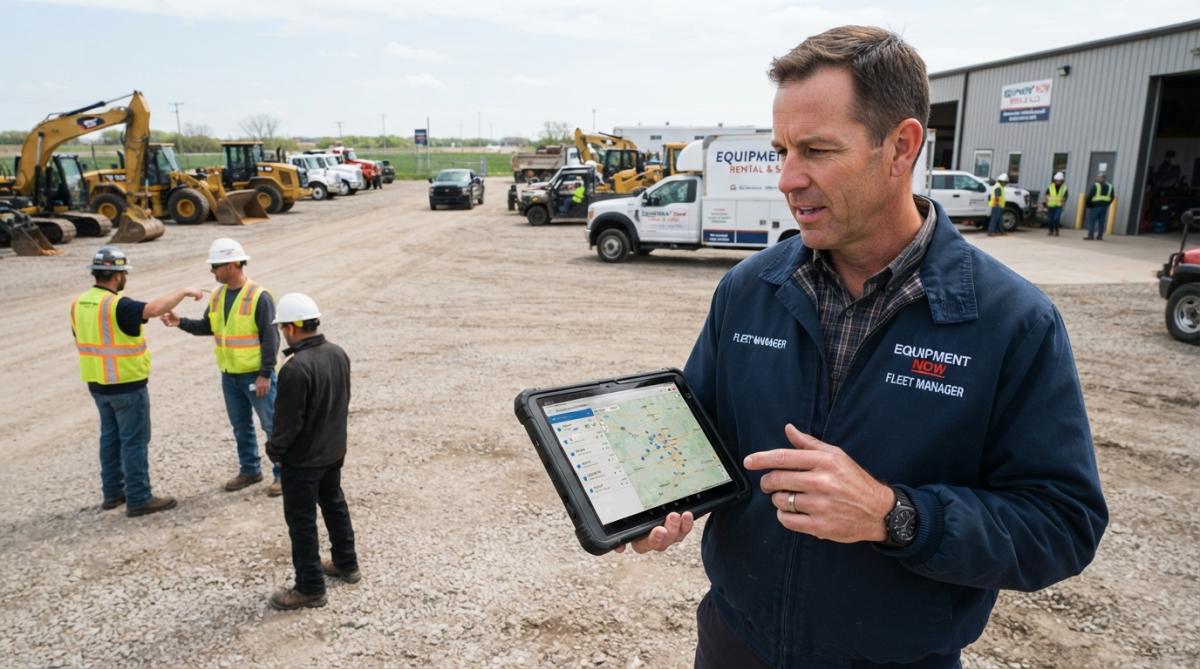
Reduced administrative burden. Maintenance scheduling, compliance documentation, and asset tracking are handled by the service, freeing your team to focus on projects.
Better visibility and predictability. You know exactly what equipment is available, when it will need service, and what it costs to operate. This eliminates surprises and makes budgeting more accurate.
Equipment Consignment vs Auction: Why Consignment Wins
When you have equipment to sell, you face two paths: consignment or auction. Most equipment owners think auctions are faster. They're not always the better choice.
Auction approach: You list equipment, buyers bid, and you sell to the highest bidder. Sounds efficient. But auctions attract dealers and resellers looking for bargains, not end-users willing to pay fair market value. You often leave money on the table. Auctions also require you to prepare equipment for sale, handle logistics, and deal with buyer disputes.
Consignment approach: A professional consignment service lists your equipment, markets it to qualified buyers, and handles the sale process. You keep your equipment in service longer while it's being marketed. When a buyer appears, the sale happens at a fair price because the consignment service targets actual users, not resellers.
Equipment consignment aligns incentives. The consignment service earns a commission only when equipment sells, so they're motivated to market it properly and negotiate the best price. With auctions, the auctioneer gets paid regardless of the final price.
Equipment Now Rental and Sales manages consignment sales for contractors and fleet managers.
Key differences:
| Factor | Auction | Consignment |
|---|---|---|
| Buyer Type | Dealers, resellers | End-users, contractors |
| Timeline | Fast but lower price | Longer but better value |
| Your Involvement | Minimal | Minimal |
| Final Price | Often below market | Market rate or better |
| Best For | Quick liquidation | Fair-value sales |
Implementing Fleet Management: What to Expect
Month 1: Assessment and planning. Your team audits current equipment and identifies which assets need tracking. If maintenance records live in spreadsheets or notebooks, plan a data-cleaning strategy before the system can learn from history. The first 60 days will focus on building a clean baseline.
Common implementation pitfalls and how to avoid them:
- Scope creep. Avoid trying to track every piece of equipment in month one. Start with your highest-utilization or highest-cost assets. Expand once the team is comfortable.
- Underestimating driver and technician resistance. Plan for skepticism. Show early wins (a prevented breakdown, a fuel savings, a theft prevented) to build credibility.
- Insufficient mobile app adoption. If field staff can't easily log work orders or report issues from their phone, they'll default to calling the office. Make the mobile experience frictionless.
- Ignoring data quality. Garbage in, garbage out. Spend time in month one ensuring equipment IDs, maintenance histories, and asset locations are accurate in the system.
Conclusion: The ROI Case for Modern Fleet Management
Fleet management software and professional fleet services pay for themselves through reduced downtime, lower maintenance costs, better asset decisions, and improved compliance. Contractors managing 5 vehicles or 50 equipment units benefit from real-time visibility and preventive maintenance tracking.
Frequently Asked Questions
How does fleet management software improve preventive maintenance schedules?
Fleet management software tracks vehicle diagnostics and maintenance history automatically, triggering work orders before breakdowns occur. By monitoring engine hours, mileage, and component wear, the system schedules maintenance at optimal intervals. This reduces unexpected downtime, extends equipment life, and prevents costly emergency repairs on job sites. Real-time alerts ensure maintenance never gets overlooked, keeping your fleet operational and reliable.
Why is equipment consignment a better alternative to auctions for fleet turnover?
Equipment consignment gives you control over pricing and timing, unlike auctions where you accept whatever the market offers that day. With consignment, your equipment reaches qualified buyers through professional channels, typically generating better returns. You avoid auction fees and commissions that cut into proceeds. Consignment also handles the logistics and marketing for you, freeing your team to focus on operations rather than managing the sale process.
What are the main benefits of professional fleet management services?
Professional fleet management services handle equipment acquisition, preventive maintenance, GPS tracking, regulatory compliance, and cost analysis, eliminating the operational burden from your team. You gain visibility into fleet utilization and idle time, reduce fuel costs through route optimization, and improve driver safety monitoring. Services also manage asset retirement and equipment disposal efficiently. The result is lower operational costs, better compliance, and the ability to focus on your core business instead of fleet administration.
Is GPS tracking and telematics a standard feature in modern fleet management software?
Yes, real-time GPS tracking and telematics are now standard in fleet management platforms. These features provide fleet visibility, track vehicle location and movement, monitor driver behavior, and capture vehicle diagnostics. Telematics data helps identify idle time, fuel inefficiency, and unsafe driving patterns. The data feeds into predictive analytics to forecast maintenance needs and optimize routes. Most cloud-based platforms integrate dashcam data and automated alerts, giving you comprehensive oversight of your entire fleet operation.
The challenge most fleet managers face is choosing between managing equipment internally or outsourcing to a professional service. Equipment Now Rental and Sales handles the complexity, maintenance coordination, compliance tracking, real-time monitoring, and strategic asset decisions, so your team can focus on delivering projects. Get started with Equipment Now Rental and Sales and see how professional fleet management reduces costs and improves operational visibility.