 blog
7 Best Construction Site Safety Practices for 2026
Table of Contents
- 1. Build a Comprehensive Safety Program That Covers Every Task
- 2. Master Job Hazard Analysis and Fall Protection on Every Site
- 3. How to Implement Lockout Tagout Procedures Step by Step
- 4. The Benefits of Construction Fleet Management for Safety and Compliance
- 5. Consignment Sales vs Equipment Auctions: Which Protects Your Bottom Line?
- 6. Digital Safety Tech, Mental Health, and Subcontractor Alignment
- 7. Post-Incident Analysis and Data Feedback Loops That Prevent Repeat Accidents
- Frequently Asked Questions
Last Updated: September 25, 2026
1. Build a Comprehensive Safety Program That Covers Every Task
A construction site safety program is a written plan that spells out how your crew identifies hazards, controls them, and responds when something goes wrong, and it is the foundation of construction site safety. The best programs cover every task, not just the dangerous ones, because most injuries happen during routine work nobody planned for.
Start with these core pieces:
- A written safety policy signed by leadership
- Site-specific hazard assessments before each job
- Clear roles for who reports what
- A process for updating the plan as the job changes
Daily Toolbox Talks and Site Hazard Assessments
Toolbox talks are short, daily meetings where the crew reviews that day's hazards. Ten minutes is enough, the point is catching problems before someone gets hurt. Pair each talk with a quick site hazard assessment: walk the site, note what's changed, flag anything new, and document both. A paper trail protects your crew and your business.
2. Master Job Hazard Analysis and Fall Protection on Every Site
Job hazard analysis is the process of breaking a task into steps and identifying what could go wrong at each one. It's the single most effective tool for preventing injuries on a construction site.
Your fall protection plan should cover:
- Guardrails, safety nets, or personal fall arrest systems
- Anchor points rated for the load
- Regular inspection of harnesses and lanyards
- Training for everyone who works at height
PPE Standards and High-Visibility Gear
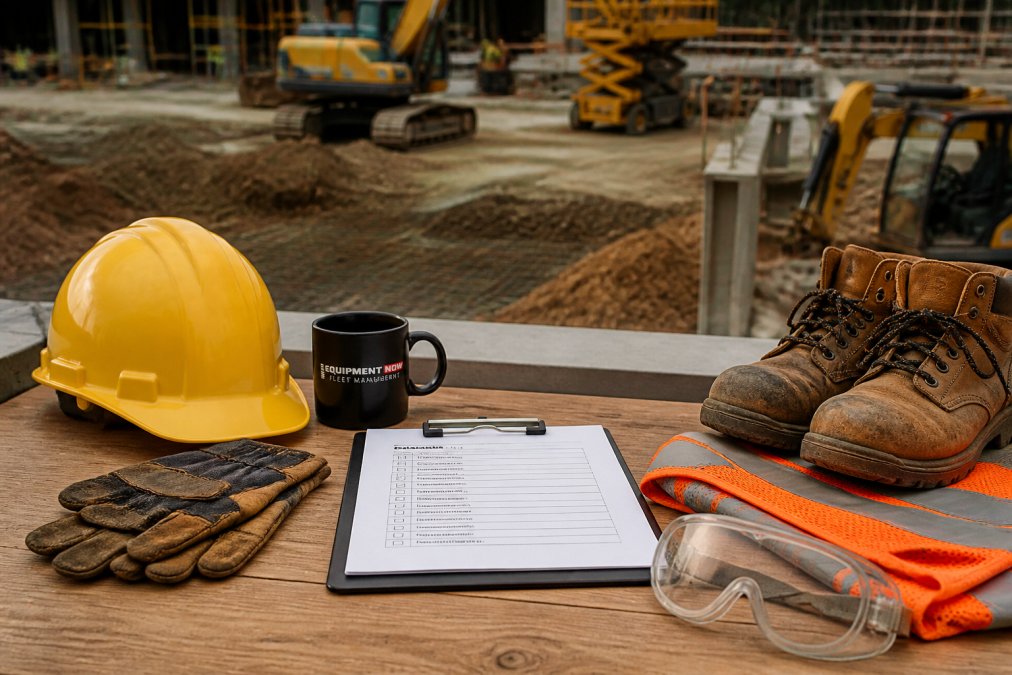
Personal protective equipment is your last line of defense. Hard hats, safety glasses, gloves, and steel-toe boots are the basics, and high-visibility gear matters even more when equipment is moving around the site. Match the gear to the task, trench work needs different protection than work near heavy machinery, and check it before every shift.
3. How to Implement Lockout Tagout Procedures Step by Step
Lockout tagout stops equipment from releasing stored energy while someone services it. It's required for any machine that could start up or move during maintenance.
- Identify every machine that needs servicing and could hurt someone
- Write a written procedure for each one
- Buy locks, tags, and lockout devices for each energy source
- Train every worker who services equipment
- Require each worker to apply their own lock
- Verify the equipment is fully shut down before starting work
- Remove locks only when the work is done and the area is clear
4. The Benefits of Construction Fleet Management for Safety and Compliance
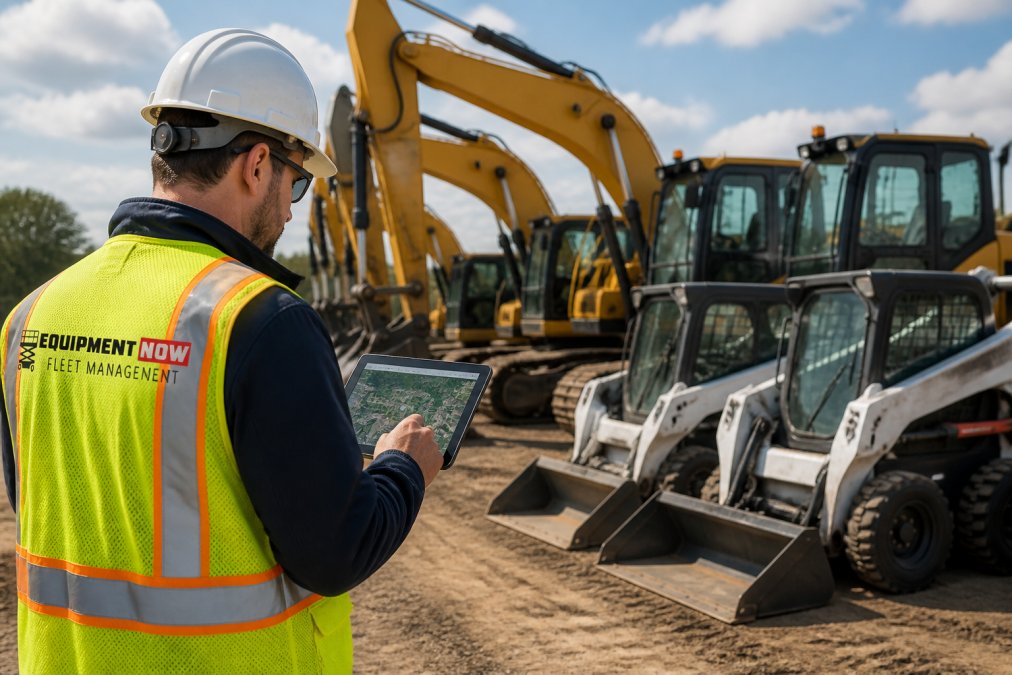
The benefits of construction fleet management go far beyond saving money. A managed fleet means equipment gets inspected, maintained, and tracked on a schedule instead of when something breaks, and on a construction site, a machine that fails mid-task is a hazard, not just an inconvenience.
Why Fleet Management Is a Safety System, Not Just a Budget Line
Most contractors think of fleet management as a way to control spend. But the same practices that lower cost per operating hour also lower injury exposure, because both problems share a root cause: equipment running outside its designed parameters.
Here's how the safety benefits actually work:
- Preventive maintenance catches worn parts before they fail. A hydraulic hose that blows under load can whip a worker or drop a boom; a brake that fades on a loaded dump truck can roll through a spotter. Scheduled service intervals based on engine hours replace guesswork with a documented trigger.
- Telematics and GPS tracking show how equipment is actually used. Idle time, hard-braking events, overspeed, and after-hours movement all show up in the data, that's how you catch an operator running a machine past its rated capacity or a unit moved by someone untrained on it.
- Compliance records stay current and inspection-ready. Registration, annual inspections, and maintenance logs live in one place, so you produce documentation in minutes instead of scrambling.
- Cost analysis and asset retirement reveal which machines to keep. A unit with rising repair frequency and falling utilization is a candidate for retirement, and every year a worn machine stays in service, the odds of a breakdown-related incident climb.
Preventive Maintenance and Equipment Oversight in Practice
Preventive maintenance is scheduled service that happens before a breakdown, not after, oil changes, brake checks, hydraulic inspections, undercarriage wear measurements, and tire rotations. Drive the schedule by manufacturer intervals and adjust for your actual duty cycle; a skid steer on a demolition site works harder than the same model on a landscaping job.
A practical oversight routine looks like this:
- Assign every unit to a named operator for each shift.
- Require a pre-shift walkaround with a written checklist.
- Log defects immediately, don't wait for the end of the week.
- Pull telematics reports weekly and review exceptions with the crew.
- Schedule service based on hours, not on when something breaks.
The Downtime-to-Injury Connection
On unmanaged sites, the machines that break down most often are the ones involved in near-misses. That's not coincidence: a machine that's limping along gets operated in ways it wasn't designed for, bypassed guards, improvised repairs, rushed inspections. Fleet management removes that pressure by keeping equipment ready so nobody cuts corners to hit the day's production target. That's the real case for fleet management on a construction site: not just lower cost, but fewer opportunities for a preventable incident.
5. Consignment Sales vs Equipment Auctions: Which Protects Your Bottom Line?
Consignment sales vs equipment auctions is a choice that affects how much you keep when you sell equipment, how long the process takes, and who ends up owning your machine. Both have a place, but for most contractors with mid- to high-value iron, consignment protects the bottom line better.
How Auctions Actually Work
An auction sells fast, but you give up control. The auction house sets the terms, the buyer pool is whoever shows up on sale day, and fees come out of both sides, a seller's commission, a buyer's premium, and sometimes listing, loading, or transportation charges. Those line items stack, and the seller often doesn't see the full deduction until after the hammer falls.
Other trade-offs:
- No reserve flexibility on many lots. If the bidding stalls, the machine sells at whatever the market will bear that day.
- No buyer vetting. You don't know whether the buyer will maintain the machine, flip it, or part it out.
- Fixed sale date. If your machine isn't ready or the market is soft that week, you sell anyway or pull the lot and eat the listing cost.
- Condition disclosure is compressed. Bidders inspect quickly, so they discount for uncertainty, which lowers your realized price.
How Consignment Sales Actually Work
A consignment sale puts you in the seller's seat. You and the consignment partner agree on an asking price and a floor; the partner markets the machine, handles inquiries, schedules inspections, manages paperwork, and screens buyers. You approve the final buyer before the deal closes.
Key mechanics that protect your return:
- Reserve pricing. You set a minimum. If the market won't meet it, the machine doesn't sell, and you keep it rather than dumping it.
- Buyer vetting. You see who's buying and can decline a buyer whose plans for the machine don't match your terms.
- Time on market. Consignment lets you wait for the right buyer instead of accepting the auction-day crowd.
- Presentation. Detailed photos, service records, and a clean maintenance history command a higher price than a quick auction lot.
- Fee transparency. Consignment fees are agreed upfront, so you know your net before the machine sells.
Side-by-Side Comparison
| Factor | Consignment Sale | Auction |
|---|---|---|
| Price control | You set the asking price and a reserve | Determined by bidders on sale day |
| Timeline | Flexible, sell when the price is right | Fixed sale date |
| Fees | Agreed upfront, deducted from proceeds | Seller commission plus buyer premium, often with listing and loading charges |
| Buyer vetting | You approve the buyer | Open to anyone with a bidder number |
| Condition disclosure | Full service records and inspection reports | Compressed pre-sale inspection |
| Best for | Higher-value, well-maintained equipment | Quick clearance of low-value or surplus units |
Which One Protects Your Bottom Line?
Equipment Now Rental and Sales works with contractors on consignment sales as part of our broader fleet management service. If you're retiring a unit, we can help you market it, vet buyers, and close the deal on terms you set, so the value you built into that machine stays with you.
6. Digital Safety Tech, Mental Health, and Subcontractor Alignment
Digital safety tools are changing how crews spot and report hazards. Wearable sensors warn a worker who's too close to moving equipment, drones inspect scaffolding and roofs without putting anyone at risk, and mobile apps let crews report near-misses in seconds.
7. Post-Incident Analysis and Data Feedback Loops That Prevent Repeat Accidents
Post-incident analysis reviews what happened after an accident and finds the root cause, turning a single event into a lesson that protects the whole crew. The feedback loop matters more than the report: collect the data, look for patterns, and change the plan. If three near-misses happen at the same spot, that's not bad luck, that's a hazard nobody fixed.
A simple review process looks like this:
- Document what happened within 24 hours
- Interview everyone involved, not just witnesses
- Identify the root cause, not just the trigger
- Update the safety plan and toolbox talks
- Share the lesson across every crew and sub
Frequently Asked Questions
What are the most critical construction site safety practices for 2026?
The most critical practices include a written safety program, daily toolbox talks, job hazard analysis, fall protection, PPE enforcement, lockout tagout, and equipment maintenance. In 2026, contractors are also adding digital safety tech, mental health and fatigue management, and subcontractor alignment. Pairing these with construction fleet management keeps equipment compliant and reduces incident prevention gaps across every phase of the project.
How does fleet management improve construction site safety?
Fleet management improves construction site safety by scheduling preventive maintenance, tracking equipment location and usage, and flagging compliance gaps before they cause failures. Well-maintained machines are less likely to break down mid-task, which reduces struck-by and caught-between hazards. It also creates an audit trail for site inspections and incident reporting, helping you meet safety standards without adding administrative burden to your crew.
What are the OSHA requirements for construction site safety in 2026?
OSHA requires employers to provide a workplace free of known hazards under the General Duty Clause, plus specific standards for fall protection, scaffolding, trenching, PPE, and lockout tagout. In 2026, expect continued emphasis on written programs, training documentation, and incident reporting. Contractors should review 29 CFR 1926 regularly and keep records ready for site inspections. State plans may add requirements, so check your local rules.
Why is equipment maintenance vital for accident prevention?
Equipment maintenance prevents accidents by catching worn brakes, hydraulic leaks, and damaged guards before they fail on site. A single neglected defect can cause a struck-by or caught-between incident that injures a worker and halts the project. Preventive maintenance schedules, daily inspections, and lockout tagout during repairs keep machines safe to operate. Fleet management software makes this consistent across every unit you own or rent.