 how-to
Skid Steer vs Compact Track Loader: How to Choose
Table of Contents
- Skid Steer vs Compact Track Loader: The Core Differences
- Skid Steer vs Track Loader for Landscaping and Grading
- Compact Loader Attachment Compatibility: What Fits Both Machines
- Equipment Fleet Management: Why It Beats Buying and Selling at Auction
- A Simple Decision Tree for Choosing Your Machine
- Rent or Buy? How to Match the Machine to Your Project Timeline
- Conclusion: Pick the Machine That Fits the Job, Not the Hype
- Frequently Asked Questions
Last Updated: October 5, 2026
Skid Steer vs Compact Track Loader: The Core Differences
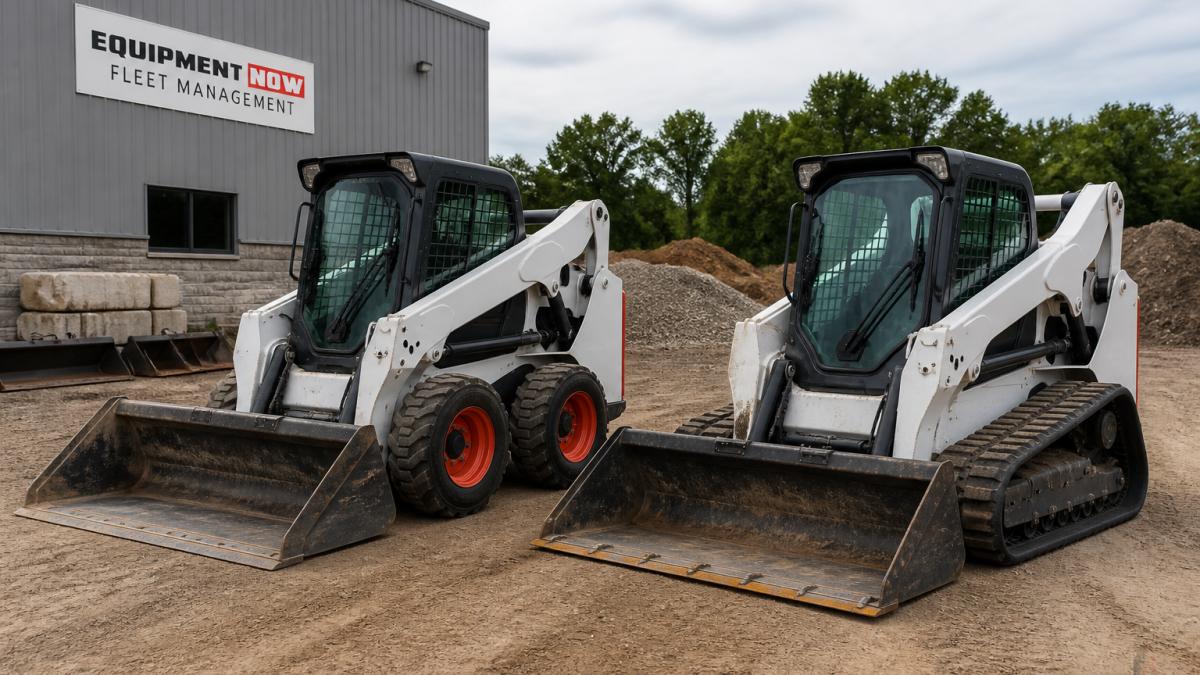
Choosing between a skid steer and a compact track loader comes down to one question: what surface are you working on? A skid steer runs on four tires and turns by dragging its wheels. A compact track loader runs on rubber tracks and spreads its weight over a wider footprint. That single design difference changes traction, turf damage, and cost of ownership. At Equipment Now Rental and Sales, we help crews across Southern Wisconsin and Northern Illinois match the right machine to the job, so here is how to determine if you need a skid steer or compact track loader before you commit.
The OSHA guidance on powered industrial truck and earthmoving equipment safety applies to both machine types, so training and site rules stay the same either way.
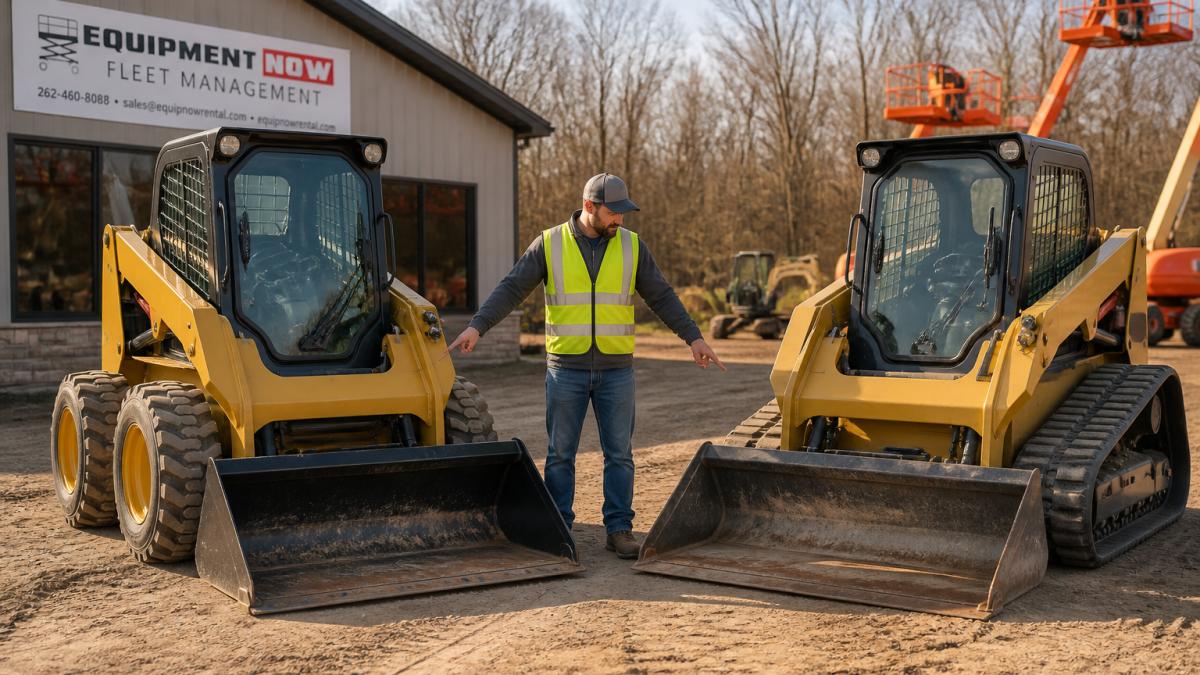
How Each Machine Moves
A skid steer steers by locking one side of wheels while the other side drives, which is where the name comes from. It is fast, simple, and cheap to keep running.
A compact track loader drives on two rubber tracks. It turns more gently and keeps traction on soft ground.
- Skid steer: four tires, tight turns, lower upfront cost
- Compact track loader: two tracks, smoother turns, better grip in mud
- Skid steer: lighter footprint on hard, dry surfaces
- Track loader: stays on top of soft ground instead of sinking
Weight, Flotation, and Ground Pressure
Ground pressure decides whether you leave ruts or float across a lawn. A track loader spreads its weight across a larger contact area, so it presses down less per square inch.
That matters on wet turf, sand, and fresh gravel. A skid steer concentrates its weight on four small patches, which digs in faster when the ground is soft.
Skid Steer vs Track Loader for Landscaping and Grading
For landscaping work, the skid steer vs track loader for landscaping decision usually favors tracks on soft or finished ground and tires on hard, dry sites. Turf damage is the number one complaint we hear from landscaping crews, and it almost always traces back to the undercarriage, not the operator.
Turf Damage and Surface Conditions
A skid steer tears up turf when it turns because the tires scuff the surface. On established lawns, that means repair work and unhappy clients.
A compact track loader turns with less scuffing. The tracks roll rather than drag, so finished grades hold up better.
- Soft, wet lawns: use tracks
- Dry, hard-packed lots: tires work fine
- Freshly seeded areas: tracks, and go slow
- Gravel and demolition: either machine, tires cost less to replace
Grading, Backfilling, and Finish Work
Grading and backfilling reward stability more than speed. A track loader keeps a steadier blade angle on loose fill, which means fewer passes to hit grade.
A skid steer still wins on tight, hard surfaces where you need to spin in place. For finish work near a building or a curb, that agility saves time.
Compact Loader Attachment Compatibility: What Fits Both Machines
Most attachments fit both machines, which is the good news. The standard coupler pattern is shared across the two machine types, so buckets, pallet forks, grapples, and augers usually swap straight over.
Compatibility comes down to two things: hydraulic flow and machine size. A high-flow attachment needs a high-flow machine, and a heavy attachment needs enough rated capacity to lift it safely.
- Buckets and forks: fit almost everything
- Grapples and root rakes: check hydraulic flow first
- Augers and breakers: match flow and pressure ratings
- Brooms and sweepers: confirm coupler style before you book
Always check the attachment's flow requirement against the machine's rating. Mismatched flow is the most common reason a rental does not perform the way a crew expects.
Equipment Fleet Management: Why It Beats Buying and Selling at Auction
Equipment fleet management beats the auction cycle for most crews, and the reason is simple: auctions cost you time and money you never budget for. Buying at auction means paying to transport a machine you have not inspected, then paying again to fix what the listing did not show. Selling at auction means paying fees and waiting for a buyer while your capital sits idle.
Consigning through a dealer keeps the machine working or moving while it sells, and it puts a professional between you and the paperwork. Our fleet management service covers equipment acquisition, preventive maintenance, GPS tracking, compliance, cost analysis, and asset retirement, so you are not juggling all of it yourself.
The auction route looks cheaper on the sticker. It rarely is once you add transport, repairs, and downtime.
- Auction: unknown condition, transport costs, no warranty
- Auction: fees on both the buy and the sell side
- Consignment: inspected machine, professional listing, faster turnaround
- Fleet management: planned maintenance and tracking instead of surprise breakdowns
For IRS guidance on business equipment depreciation and Section 179, how you acquire and retire equipment affects your tax picture, which is another reason to plan the fleet rather than react at auction.
A Simple Decision Tree for Choosing Your Machine
Use this decision tree to pick a machine in under a minute. Start with the surface, then work through ground conditions and the task.
- Is the ground soft, wet, or freshly finished? If yes, choose a compact track loader.
- Is the ground hard, dry, and stable? If yes, a skid steer works well.
- Do you need to spin in place in tight space? If yes, lean skid steer.
- Is turf damage a dealbreaker for the client? If yes, choose tracks.
- Will the machine run on the same site all season? If yes, fleet management may beat renting.
| Job Condition | Best Machine | Why |
|---|---|---|
| Wet, soft turf | Compact track loader | Spreads weight, less rutting |
| Hard, dry lot | Skid steer | Lower cost, tight turns |
| Finish grading | Compact track loader | Steadier blade control |
| Tight demolition | Skid steer | Spins in place |
| Mixed surfaces | Either, plan ahead | Match undercarriage to the day |
Rent or Buy? How to Match the Machine to Your Project Timeline
Renting wins for short, seasonal, or one-off projects. Buying wins when the machine runs most weeks of the year. The break-even point is not about price alone; it is about how many hours the machine actually works.
A weekend warrior should rent. A landscaping crew running three machines through a full season should look at fleet management, which spreads cost across the year and keeps maintenance on schedule.
- Under a few weeks of use: rent
- Seasonal, recurring use: rent or consign-buy
- Year-round, multiple machines: fleet management
- One job, one machine: rent, then return it
Our online booking and payment system shows real-time availability, so you can reserve the exact machine for your project window. If you need help planning a fleet instead of a single rental, our team can map it out with you.
Conclusion: Pick the Machine That Fits the Job, Not the Hype
The right machine is the one that matches your ground, your timeline, and your budget, not the one with the loudest reputation. Skid steers and compact track loaders each win in different conditions, and fleet management or consignment usually beats the auction cycle for crews that run equipment all year.
Equipment Now Rental and Sales offers online booking with real-time availability, many earth moving and landscaping equipment, and full fleet management that covers acquisition, maintenance, GPS tracking, and asset retirement. Get started with Equipment Now Rental and Sales and put the right machine on your next job.
Frequently Asked Questions
What is the difference between a skid steer and a compact track loader?
A skid steer runs on four tires and steers by varying speed between left and right wheels. A compact track loader uses rubber tracks instead of tires, which spreads the machine's weight over a larger area. That difference changes where each machine works best: skid steers handle pavement and firm ground with less damage, while track loaders float over mud, sand, and soft turf. Both accept the same style of front-mounted attachments, so the undercarriage is the main decision point.
Is a skid steer or compact track loader better for muddy ground?
A compact track loader wins on muddy ground. The tracks distribute weight across a wider footprint, so the machine sinks less and keeps moving where a tire-equipped skid steer would spin and dig in. If your site turns to soup after rain or you work in low-lying areas, the track loader keeps you productive. A skid steer can still work in mud with the right tires, but expect more slipping and more cleanup afterward.
How do attachments affect the choice between a skid steer and a compact track loader?
Most attachments for compact loaders use a universal mounting plate, so buckets, pallet forks, grapples, and augers fit either machine. The real limits are hydraulic flow and machine size. High-flow attachments like trenchers or brush cutters need a machine rated for that flow, and heavy attachments need enough lift capacity. Check the attachment's requirements against the machine's specs before you commit, and confirm compatibility with your rental provider.
Should I rent or buy a skid steer or compact track loader?
Rent when the machine is needed for a short project or a seasonal push, because you avoid storage, maintenance, and resale risk. Buy when you use the machine most weeks and can justify the upkeep. For mixed or growing fleets, equipment fleet management through a rental and sales provider handles acquisition, preventive maintenance, and asset retirement, so you get the right machine without tying up capital. Consignment sales also let you move equipment you no longer need without auction fees eating your return.