 how-to
Choosing the Right Stump Grinder for Residential Work
Table of Contents
- Start With the Stump, Not the Machine
- Walk-Behind Stump Grinder: The Default Choice for Most Yards
- Stump Grinder Access Width: Measure the Gate Before You Commit
- Stump Grinder Safety: Gear, Zones, and Kickback
- Stump Grinder Rental or Purchase: Run the Numbers First
- Fleet Management and Consignment: Smarter Than Auction for Equipment
- Frequently Asked Questions
Last Updated: October 8, 2026
Start With the Stump, Not the Machine
Choosing the right stump grinder for residential work starts with one question: how big is the stump? A 12-inch maple stump and a 40-inch oak stump are two very different jobs, and the machine that handles one may stall out on the other.
So before you look at a single machine, measure three things: stump diameter, root spread, and the tightest gap between your driveway and the stump. Those numbers decide everything else.
This guide covers the machine types, the access math, safety basics, and the rental-versus-buy call. We also explain why fleet management and consignment can be a smarter approach than auction for anyone selling equipment later.
Walk-Behind Stump Grinder: The Default Choice for Most Yards
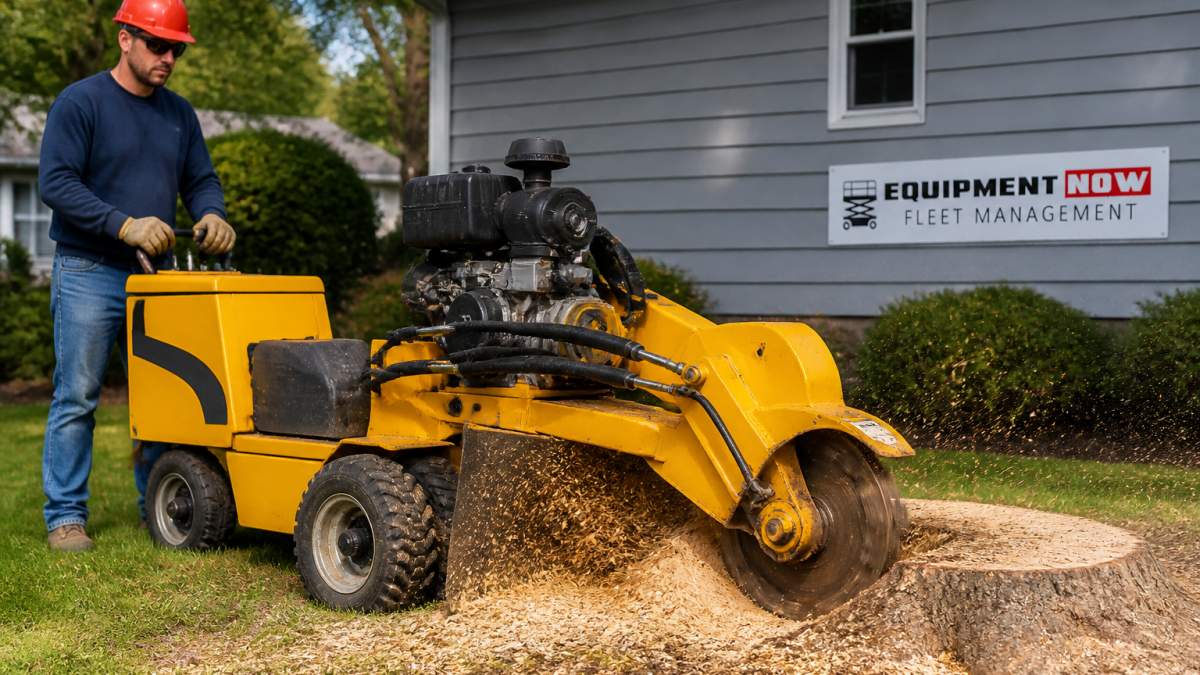
A walk-behind stump grinder is a push-style machine with a rotating cutting wheel on an arm. The operator walks behind it, guiding the wheel across the stump in slow passes.
For most residential jobs, this is the right pick. Here's why:
- Fits through standard gates and side yards
- Handles stumps up to roughly 12 to 18 inches in a few passes
- Runs on gas or diesel and needs no trailer for small units
- Cheaper to rent than a tow-behind or self-propelled rig
Larger tow-behind grinders cut faster, but they need vehicle access and a wide path. If your only route to the stump is a narrow gate, the walk-behind is your machine.
The trade-off is speed. A walk-behind takes longer per stump, and you'll feel it in your shoulders by the end of the day. For one or two stumps, that's fine. For a full lot clearing, it isn't.
Stump Grinder Access Width: Measure the Gate Before You Commit
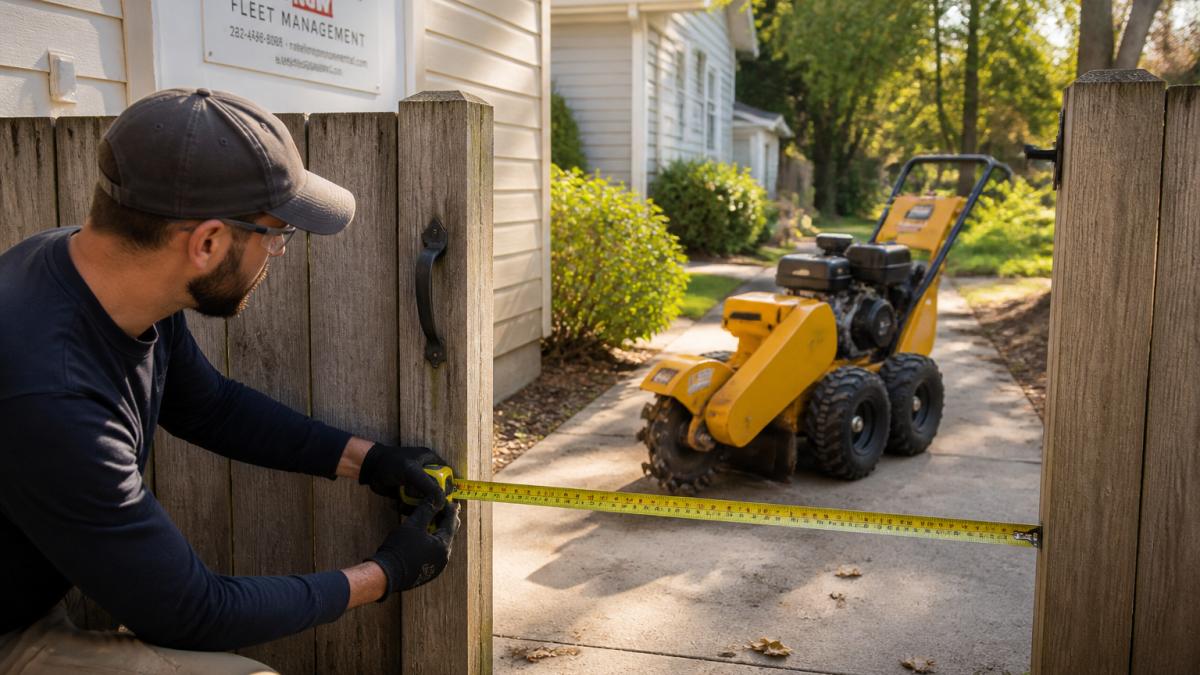
Stump grinder access width is the narrowest gap a machine can pass through, measured at the widest point of the machine body and handlebars. If the gate is narrower than that number, the grinder stays on the truck.
Do this instead:
- Measure the gate at its narrowest point, not the opening
- Add a few inches of clearance for the handlebars and wheel guards
- Check for steps, slopes, and soft turf along the route
- Measure the stump's distance from fences and foundations
A grinder needs room to work, not just room to pass. The cutting wheel swings side to side, so you need clearance around the stump too.
Stump Grinder Safety: Gear, Zones, and Kickback
Stump grinder safety comes down to three things: protective gear, a clear work zone, and respect for kickback. The cutting wheel spins fast and throws debris hard.
Wear the right gear every time:
- Safety glasses and a face shield
- Hearing protection
- Steel-toe boots
- Gloves that fit snug
- Long pants, never shorts
Set up a work zone before you start. Keep bystanders back at least 50 feet. Mark the area so nobody walks into the debris path.
Kickback happens when the wheel grabs a root or rock and jerks the machine. Keep both hands on the controls, stand to the side of the wheel, and never reach into the cutting area while it spins.
The Occupational Safety and Health Administration guidance on machine guarding covers the guarding principles that apply to rotating cutting equipment. Read it before your first job if you're new to this kind of machine.
A few more habits that keep you safe:
- Let the wheel reach full speed before touching the stump
- Feed the wheel slowly, let the teeth do the work
- Shut the machine down before clearing debris
- Never grind with a dull or damaged wheel
Stump Grinder Rental or Purchase: Run the Numbers First
Stump grinder rental wins for most homeowners. If you have one or two stumps and no plans to do this again, renting is the clear call.
Buying only makes sense when you grind often. Think about:
- How many stumps per year, honestly
- Storage space and maintenance costs
- Transport, since most grinders need a trailer
- Fuel, teeth replacement, and repairs
The break-even point sits far out for most people. A machine that sits idle in a garage still costs money in storage, fuel stabilizer, and eventual repairs.
Renting also gets you the right size for each job. One stump this spring, a bigger one next fall, and you pick the machine that fits each time.
At Equipment Now Rental and Sales, our online booking system shows real-time availability for your rental dates. You reserve the exact machine you need, and it's held for your project. No phone tag, no guessing whether it's in stock.
If you do buy, plan for maintenance from day one. A grinder that sits unused for months is a grinder that won't start when you need it.
Fleet Management and Consignment: Smarter Than Auction for Equipment
Here's the part most equipment owners get wrong. When it's time to sell a machine, they default to auction. That's usually the worst option.
Auction means you hand over control. You don't set the price, you don't pick the buyer, and you pay fees on both ends. If the timing is bad, you may sell low and walk away with less than the machine is worth.
Consignment works differently. You keep ownership while a dealer markets the equipment for you. You agree on a price, the dealer finds a buyer, and you may keep more of the sale. The machine sells on its merits, not on the mood of an auction crowd.
Fleet management takes this further. For businesses running multiple machines, a managed fleet keeps equipment maintained, tracked, and ready. That means:
- Preventive maintenance on a schedule, not after a breakdown
- GPS tracking so you always know where each unit is
- Compliance records kept current
- Cost analysis that shows which machines earn their keep
- Asset retirement planned, so you sell at the right time
When retirement is planned, consignment can be a more advantageous option than auction. You're not dumping a machine in a panic. You're selling a maintained, documented unit to a buyer who values it.
That's the real benefit of fleet management: you stop reacting and start deciding. Equipment gets sold when it makes sense, at a price that reflects its condition.
For businesses across Southern Wisconsin and Northern Illinois, our Fleet Management Service handles acquisition, maintenance, tracking, compliance, cost analysis, and asset retirement. You focus on the work. We handle the machines.
Most equipment owners lose money the same way: they buy without a plan and sell in a hurry. Auction may reward that panic, and consignment may reward patience.
Equipment Now Rental and Sales makes both sides simple. Reserve a stump grinder online with real-time availability, or let our Fleet Management Service track maintenance, GPS location, compliance, and cost analysis across your whole fleet. When it's time to sell, consignment can help you achieve a fair price instead of an auction floor.
Get started with Equipment Now Rental and Sales and put the right machine on the job, then sell it the smart way when the work is done.
Frequently Asked Questions
What size stump grinder do I need for residential work?
For most residential stumps up to 12 inches in diameter, a walk-behind stump grinder with a 13 to 14 horsepower engine handles the job. Larger stumps, 18 inches or more, need a machine with a wider cutting head and more horsepower, often a self-propelled unit. Measure the stump diameter at ground level, then match it to the grinder's cutting width so you can sweep across the stump in fewer passes.
What should I measure before renting a stump grinder?
Measure four things: the stump diameter at ground level, the narrowest gate or path the machine must pass through, the distance from the street or driveway to the stump, and any slope or obstacle along that route. Stump grinder access width decides whether a walk-behind unit fits at all. If the gate is narrower than the machine, you will need a smaller model or a different approach, and it is better to know that before the equipment arrives.
What safety gear do I need to operate a stump grinder?
Wear ANSI-approved eye and hearing protection, a hard hat, steel-toe boots, and close-fitting work clothes with no loose cuffs or drawstrings. Stump grinder safety also means keeping bystanders at least 50 feet back, never reaching into the cutting area while the engine runs, and shutting the machine down before clearing debris. Inspect the teeth and guards before every use, and never operate on wet, unstable ground where the machine can shift.
Should I rent or buy a stump grinder for one project?
If you have one or two stumps, stump grinder rental is almost always the better call. You avoid the purchase price, storage, fuel, and maintenance, and you get a machine that is inspected and ready to work. Buying makes sense when you grind stumps regularly, run a landscaping business, or plan to consign the machine later through a fleet management program as an alternative to selling it at auction.