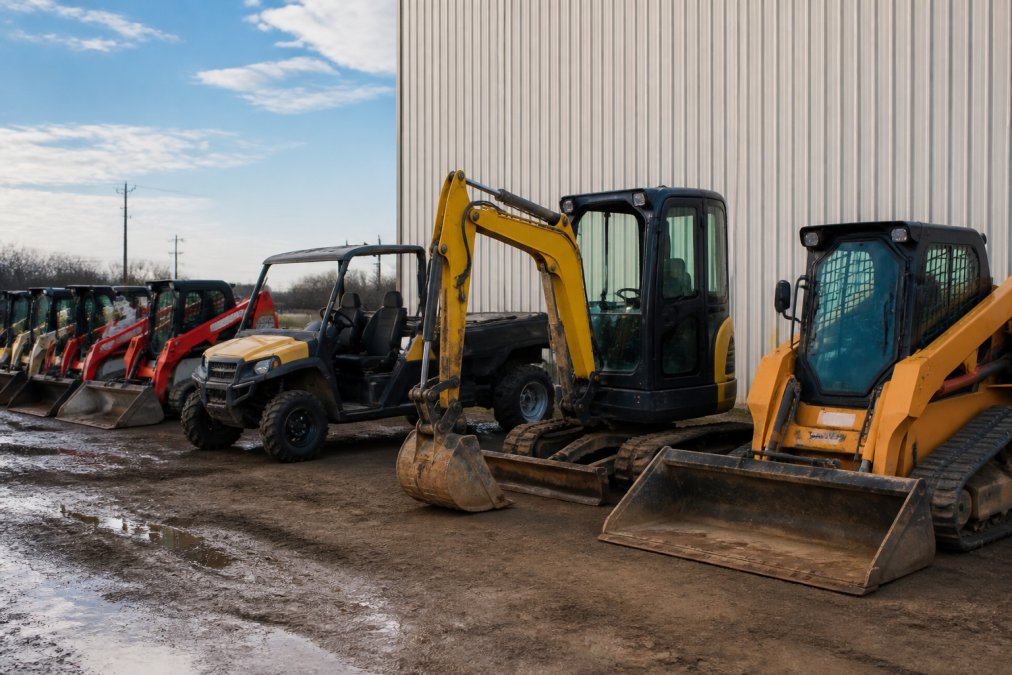
 comparison
EquipmentShare Alternative for Local Fleets: 2026 Guide
Table of Contents
- Why Local Fleets Need an EquipmentShare Alternative
- Quick Comparison: Top Alternatives for Local Fleets
- Equipment Now Rental and Sales: Full-Service Rental and Fleet Management
- Sunbelt Rentals: Specialized Equipment and 24/7 Support
- Fleetio: Software-Only Fleet Management for Small Fleets
- Gearflow: A Marketplace for Sourcing Equipment
- How to Choose the Right Alternative for Your Fleet
- Conclusion
- Frequently Asked Questions
Last Updated: September 17, 2026
Why Local Fleets Need an EquipmentShare Alternative
An EquipmentShare alternative for local fleets is a rental or fleet management provider that offers the same core capabilities, equipment access, telematics, and maintenance support, but with terms and service models built for smaller operations rather than national accounts. For contractors running five to fifty machines, the national platforms often feel oversized: pricing is quote-based, onboarding takes weeks, and support routes through a call center instead of a local branch.
Quick Comparison: Top Alternatives for Local Fleets
The table below summarizes the four options covered in this guide by service model, best-fit fleet size, pricing structure, and core strength. Use it as a first filter before reading the detailed sections.
| Provider | Model | Best For | Pricing Structure | Core Strength |
|---|---|---|---|---|
| Equipment Now Rental and Sales | Rental, sales, and managed fleet service | Local contractors and mixed fleets | Rate-based rental plus managed-service fee | One partner for rental and fleet management |
| Sunbelt Rentals | National rental with specialized equipment | Contractors needing niche machines | Quote-based; long-term structures vary by branch | 24/7 support and safety training |
| Fleetio | Software only | Fleets under 20 vehicles | Per-vehicle subscription tiers | Preventive maintenance scheduling |
| Gearflow | Marketplace | Sourcing hard-to-find equipment | Free to browse; dealer pricing per request | Multi-dealer price comparison |
What the Table Does Not Tell You
Three variables decide whether an alternative actually fits a local fleet, and none of them show up cleanly in a feature grid:
- Onboarding time. Software-only platforms can be live in days if you already have clean asset data. National rental accounts often take longer because of credit setup and contract review.
- Hardware compatibility. If your fleet includes older heavy machinery, pre-telematics excavators, skid steers, or boom lifts, confirm whether the provider supports aftermarket GPS or CAN-bus adapters. Software-only tools depend on the hardware you already own; rental and managed-service providers usually supply the telematics themselves.
- Support model. A call center and a local branch are not the same thing when a machine is down at 6 a.m. Ask who answers, how fast they dispatch, and whether the same person handles your account over time.
Equipment Now Rental and Sales: Full-Service Rental and Fleet Management
Equipment Now Rental and Sales combines equipment rental, sales, and full-service fleet management in one operation, which is the combination most local fleets actually need. Instead of stitching together a rental house, a software subscription, and a maintenance vendor, you get a single point of contact for acquisition, preventive maintenance, GPS tracking, compliance, cost analysis, and asset retirement.
Fleet Management Services for Contractors
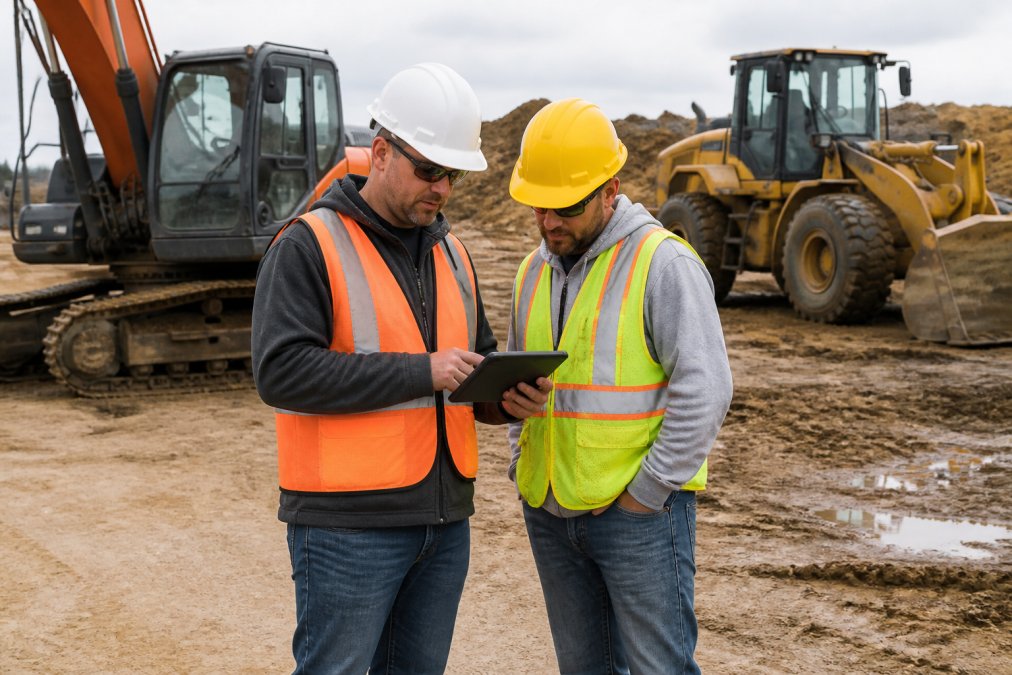
Fleet management services for contractors cover the administrative work that eats into billable hours: tracking where each machine is, scheduling service before a breakdown, and knowing when a unit costs more to repair than to replace. Equipment Now handles acquisition, preventive maintenance, GPS tracking, compliance, and cost analysis as a managed service, so a small crew does not need to hire a dedicated fleet administrator.
Preventive Maintenance for Heavy Equipment
Preventive maintenance for heavy equipment is scheduled service performed at fixed intervals, based on hours or mileage, to catch wear before it causes a failure. It is the single highest-use habit for downtime reduction, because a hydraulic hose replaced on a Friday costs far less than a jobsite shutdown on a Monday.
Sunbelt Rentals: Specialized Equipment and 24/7 Support
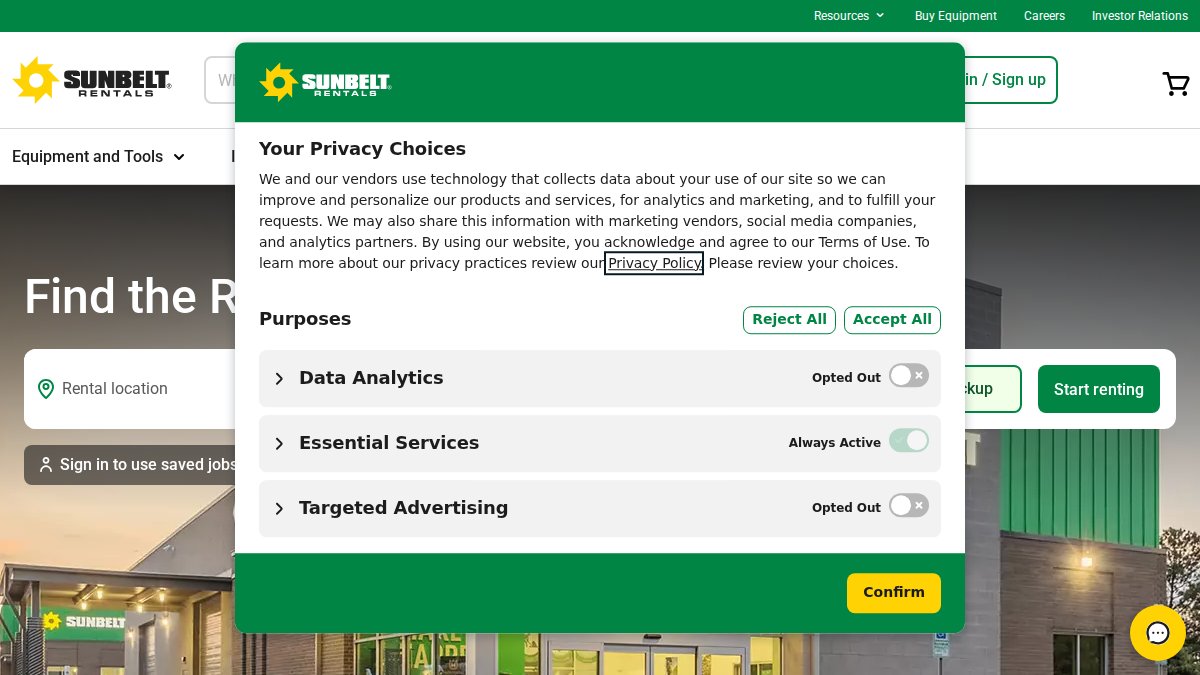
Sunbelt Rentals is a national rental company with a broad catalog that includes specialized categories such as climate control, power generation, and pump solutions, backed by 24/7 emergency support and operator safety training programs. For contractors who need a niche machine that a general rental yard does not stock, Sunbelt's depth of inventory is a genuine advantage.
Fleetio: Software-Only Fleet Management for Small Fleets
Fleetio is a fleet management software platform that tracks, analyzes, and improves fleet operations without supplying any physical equipment. Its strengths are automated preventive maintenance scheduling, fuel card integration, driver inspection reports through a mobile app, and GPS tracking with telematics integration.
Gearflow: A Marketplace for Sourcing Equipment
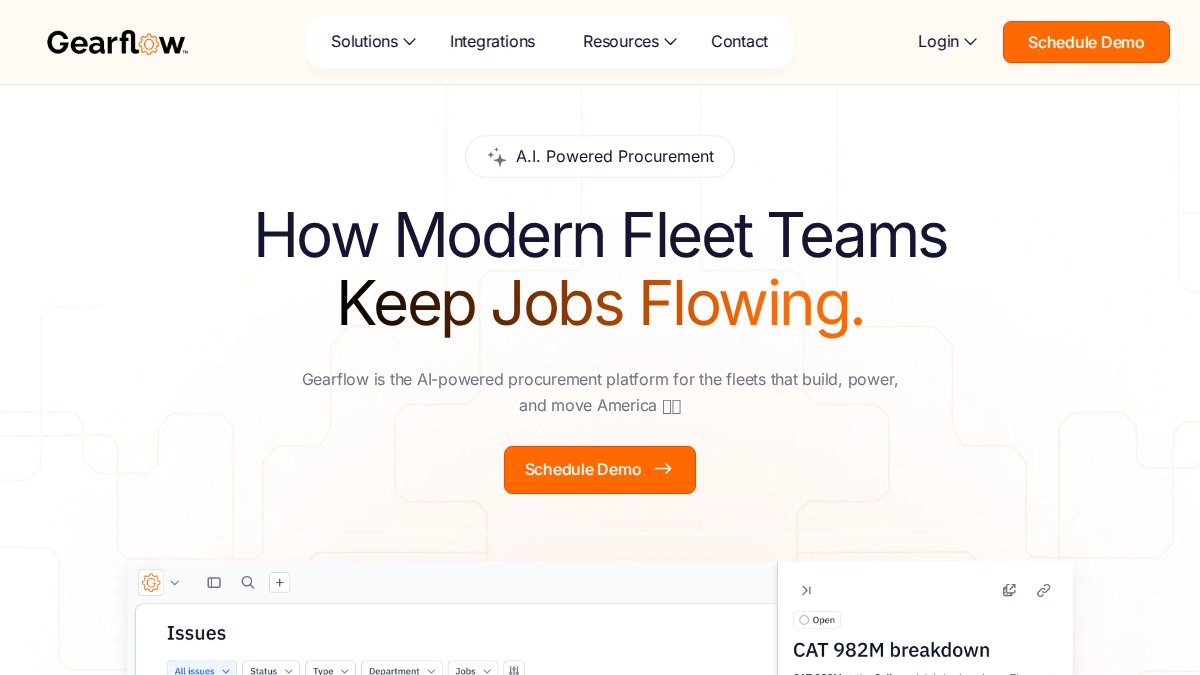
Gearflow is an online marketplace that connects contractors with a network of equipment dealers and rental houses, centralizing procurement requests and letting you compare pricing across local vendors. It solves a specific, real problem: finding a hard-to-locate machine without calling six rental shops in one afternoon.
How to Choose the Right Alternative for Your Fleet
Choosing the right alternative comes down to four questions: do you own or rent most of your equipment, how many machines are in your fleet, who handles maintenance today, and what does the switch actually cost you in time and money? Answer those honestly and the shortlist narrows fast.
Use this decision framework:
- If you rent frequently and own little: prioritize a rental partner with real-time availability and delivery. Equipment Now Rental and Sales fits here.
- If you own 10-50 machines and need tracking: prioritize software with maintenance scheduling. Fleetio fits here.
- If you need specialized machines occasionally: prioritize a national catalog with 24/7 support. Sunbelt Rentals fits here.
- If you struggle to source equipment at all: prioritize a marketplace. Gearflow fits here.
- If you need rental, maintenance, and tracking from one vendor: prioritize a full-service provider. Equipment Now Rental and Sales fits here.
Build a Total Cost of Ownership Model Before You Switch
Most guides compare daily rental rates and stop there. That is the wrong number. The figure that decides whether an alternative actually saves you money is total cost of ownership (TCO) across a 12-month horizon, and it has five line items that rarely appear on a rate card:
- Acquisition or rental cost, daily, weekly, or monthly rate multiplied by realistic utilization, not the rate you hope to hit.
- Downtime cost, the billable hours lost when a machine is down. A common pattern is to value this at your crew's loaded hourly rate times the hours the machine would have run.
- Maintenance and repair, scheduled service plus the unplanned repairs that preventive maintenance is supposed to prevent.
- Administrative overhead, the hours your office staff spends on scheduling, invoicing, and compliance paperwork. This is where software-only tools and full-service providers diverge sharply.
- Switching cost, onboarding time, data migration, and retraining, which we cover below.
The Migration Path From Your Current System
Switching providers is a technical project, not a phone call, and the difficulty depends on what you are leaving.
- From spreadsheets and paper logs: the easiest path. Export or re-key your asset list, service history, and warranty dates into the new system. Expect a few days of data entry for a fleet under 50 machines.
- From a legacy telematics or fleet platform: the hard part is data. Ask the new provider whether they can import historical service records, meter readings, and asset IDs, and whether they support standard export formats. If they cannot, you will run two systems in parallel for a billing cycle.
- From a national rental account: the friction is contractual, not technical. Check notice periods, minimum spend commitments, and whether unused rental credits transfer. Onboarding a new rental partner typically takes days, not weeks, when the provider handles delivery and setup.
Finding Equipment Rental Near Me
Finding equipment rental near me searches usually return national directories first, which is unhelpful when you need a machine delivered tomorrow. The practical approach is to filter by real-time availability rather than by brand recognition.
Conclusion
Equipment Now Rental and Sales was built for exactly that middle ground: online booking with real-time availability, many aerial, earth moving, and landscaping equipment, and a fleet management service covering acquisition, preventive maintenance, GPS tracking, compliance, cost analysis, and asset retirement. Get started with Equipment Now Rental and Sales and keep your machines running instead of chasing vendors.
Frequently Asked Questions
Who are EquipmentShare's competitors?
EquipmentShare competes with national rental chains like Sunbelt Rentals and United Rentals, as well as software platforms like Fleetio and marketplaces like Gearflow. For local fleets, regional providers such as Equipment Now Rental and Sales offer an alternative by combining physical rental with fleet management services, giving contractors a single source for equipment and support.
What should contractors look for when comparing equipment rental companies?
Focus on equipment availability, maintenance records, delivery and pickup policies, and whether the company offers fleet management services for contractors. Check if they provide preventive maintenance for heavy equipment and GPS tracking. Also ask about hidden fees for fuel, delivery, or environmental charges. A local provider that knows your area can often respond faster and offer more flexible terms than a national chain.
How does local fleet management support differ from national software-only solutions?
National software-only solutions like Fleetio provide tools to track maintenance and utilization, but they don't supply physical equipment or on-site service. Local fleet management services, such as those from Equipment Now Rental and Sales, combine software with actual equipment rental, preventive maintenance, and compliance support. This means you get a working machine when yours is down, not just a notification that it needs repair.
Are there regional alternatives to EquipmentShare for construction equipment?
Yes. Regional providers like Equipment Now Rental and Sales serve Southern Wisconsin and Northern Illinois with rental, sales, and fleet management. Other options include Sunbelt Rentals for specialized equipment and Gearflow for sourcing from multiple dealers. The best choice depends on whether you need software, physical equipment, or a mix of both. Local providers often offer more personalized service and quicker response times.
How can local fleet management services improve equipment uptime?
Local fleet management services improve uptime by scheduling preventive maintenance for heavy equipment, tracking utilization rates, and providing real-time monitoring. They can also supply backup equipment if a machine fails, reducing downtime. With GPS tracking and telematics, they identify underused assets and help you right-size your fleet. This hands-on approach keeps projects on schedule and reduces costly delays.