 listicle
Rental Equipment for Landscaping Businesses: 2026 Guide
Table of Contents
- Top Rental Equipment for Landscaping Businesses Compared
- Understanding Landscaping Equipment Rental Rates
- The Benefits of Equipment Fleet Management for Landscaping
- How to Choose a Landscaping Equipment Rental Company
- Rental vs. Purchase: ROI for Landscaping Businesses
- Maintenance, Safety, and Logistics for Rental Equipment
- Frequently Asked Questions
Last Updated: September 14, 2026
Top Rental Equipment for Landscaping Businesses Compared
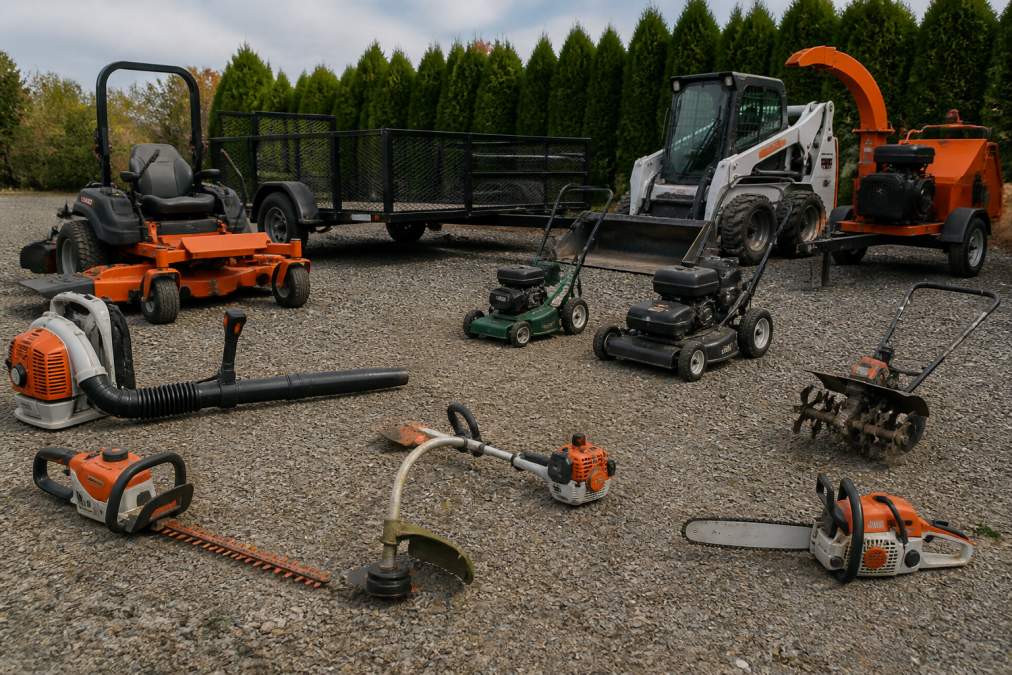
Rental equipment for landscaping businesses means leasing specialized machinery, from mini skid steers to stump grinders, daily, weekly, or seasonally instead of buying. This guide from Equipment Now Rental and Sales breaks down the major providers and how to decide between renting and buying.
| Provider | Best For | Pricing Model | Standout Feature |
|---|---|---|---|
| Equipment Now Rental and Sales | Online booking and fleet management | Quote-based | Real-time availability by rental period |
| MacAllister Rentals | Brand-name heavy equipment | Varies by machine and duration | Caterpillar and Vermeer fleet access |
| Vandalia Rental | Landscaping startups | Customized project quotes | Flexible short-term terms |
| Mustang Cat | Site grading and excavation | Quote-based | Heavy dozers and track loaders |
| RentAlex | Rate comparison | Free to use | Delivery fee transparency |
| Metuchen Mower | Small power equipment | Daily and weekly rates | Commercial mower specialization |
Equipment Now Rental and Sales
Equipment Now Rental and Sales pairs a wide catalog with fleet management solutions. Online booking confirms a specific machine for a specific period before you commit a crew's day.
For businesses running multiple properties, the Fleet Management Service covers acquisition, preventive maintenance, GPS tracking, compliance, cost analysis, and asset retirement, the difference between renting reactively and planning a season.
MacAllister Rentals
Vandalia Rental
Mustang Cat
RentAlex
Metuchen Mower
Understanding Landscaping Equipment Rental Rates
Landscaping equipment rental rates depend on machine class, duration, delivery distance, and season. Daily and weekly rental rates for equipment vary. Pricing depends on quantity, dates, and delivery. For current prices, check our website.
Rates also shift with season. Spring and fall are peak windows for aerators, dethatchers, and sod cutters, so booking early protects price and availability.
The Benefits of Equipment Fleet Management for Landscaping
The benefits of equipment fleet management come down to visibility and cost control: knowing what you own, what you rent, and what each machine costs per project stops the guessing at job pricing.
A common mistake is treating rentals as a line item instead of an asset strategy. Preventive maintenance schedules, GPS tracking, and cost analysis turn a scattered rental habit into an operational plan that keeps timelines honest.
How to Choose a Landscaping Equipment Rental Company
Knowing how to choose a landscaping equipment rental company starts with matching inventory to your actual work mix. A maintenance-focused crew needs different machines than a land clearing operation.
Work through this checklist:
- Confirm the provider stocks your core categories: mowers, aerators, trenchers, mini skid steers
- Ask how availability is confirmed and whether you can book online in real time
- Request a full fee breakdown, including delivery and fuel surcharges
- Verify the maintenance and inspection record for the specific unit
- Check insurance and liability coverage requirements in the rental agreement
- Confirm backup equipment if your reserved machine goes down
Rental vs. Purchase: ROI for Landscaping Businesses
Most rental marketplaces stop at inventory. The decision that moves your margin is whether a machine belongs on your balance sheet. Rental wins when use is low, seasonal, or unpredictable; purchase wins when a machine runs near-daily for years. Break-even is about use rate, not sticker price, build the full cost stack on both sides to find it.
The ownership cost stack
Sticker price is the smallest part of owning a machine. Load these categories:
- Acquisition: purchase price, sales tax, financing interest, or opportunity cost of cash tied up
- Depreciation: annual decline in resale value, steepest in the first two years
- Maintenance and repair: routine service, wear parts (blades, teeth, belts, filters), and unplanned breakdowns that scale with hours
- Insurance: a commercial policy rider for owned equipment, separate from general liability
- Storage and security: yard space, fencing, locks, or an idle trailer
- Fuel and consumables: diesel, gas, DEF, hydraulic fluid, grease
- Labor for upkeep: washing, servicing, and moving the machine, time that is not billable
- Downtime risk: a broken owned machine is your problem; a broken rental is usually a phone call
The rental cost stack
Rental looks simpler, but the all-in number is rarely the posted daily rate:
- Base rate for the rental period (daily, weekly, or monthly)
- Delivery and pickup, often priced per mile beyond a radius
- Fuel or refueling charge if you return the tank short
- Damage waiver, which is not the same as insurance
- Environmental and cleaning fees
- Overtime charges if you keep the unit past the return window
- Lost productivity from availability gaps in peak season
A simple break-even method
You do not need a spreadsheet model. Use this sequence:
- Estimate annual usage hours based on your actual job mix, not your best-case season.
- Add up the annual ownership cost stack and divide by those hours for a cost-per-hour of ownership.
- Divide the all-in rental cost for a typical period by the hours you would actually run the machine for a cost-per-hour of rental.
- Compare. If rental cost-per-hour is lower, rent. If ownership is lower and you can keep the machine busy, buy.
A common pattern: a stump grinder used a few times a month rarely justifies ownership once storage, maintenance, insurance, and depreciation are added. A mower running every working day usually does. The same logic applies to trenchers, aerators, and mini skid steers, the answer changes with your job mix, not the machine.
Where the tax treatment tilts the math
Depreciation treatment affects the true cost of ownership, and it is the piece most contractors skip. IRS guidance on depreciating business equipment is worth reviewing before you decide, because how you depreciate an asset changes its after-tax cost relative to renting. Rental payments are generally deductible as a business expense in the year paid, while purchased equipment is typically capitalized and depreciated over time (Publication 527 (2025), Residential Rental Property). The gap between those two treatments can flip a close call. Confirm your specific situation with a tax professional, the rules depend on your entity structure and how the machine is used.
When renting is the clear answer
- The machine is seasonal (aerators, dethatchers, sod cutters in spring and fall)
- You need it for a single project or a short window
- The technology changes fast enough that a two-year-old unit is a liability
- You cannot keep it busy enough to cover the ownership cost stack
- You want to test a machine class before committing capital
When buying is the clear answer
- The machine runs most working days across most of the year
- You have the storage, insurance, and maintenance capacity to support it
- Financing cost is low relative to the rental rate you would otherwise pay
- Downtime risk is manageable because you have backup capacity or a service relationship
The honest answer for most landscaping businesses is a mix: own the core machines that run daily, rent the seasonal and specialty units that would otherwise sit idle. That mix is a strategy, not a default, revisit it every season as your job mix changes.
Maintenance, Safety, and Logistics for Rental Equipment
Maintenance, safety, and logistics are where rental operations quietly fail, and where most rental listings never explain. Getting them right separates a machine that earns its rate from one that sits on the trailer.
Maintenance: whose job is it, and what does it cover
On most commercial rentals, the company handles major service and repairs; you handle daily checks and consumables (osha.gov). That split is where disputes start, so document it.
- At pickup: photograph or video the unit from every angle, including the hour meter, tires or tracks, hydraulic lines, and any existing damage. Note fuel level and warning lights.
- Daily before use: check engine oil, hydraulic fluid, coolant, fuel, tire pressure or track tension, and air filters. Grease fittings per the operator manual.
- During use: watch for leaks, unusual noise, overheating, or loss of hydraulic power. Stop and report, do not run a failing machine.
- At return: clean the unit, refuel to the level it was rented at, and document condition again before it leaves your possession.
Safety: certifications and site rules
Operator requirements vary by machine class and rental agreement. Confirm before your crew arrives, not after.
- Heavy machinery: mini excavators, compact track loaders, and dozers typically require documented operator training. Many rental companies will not release the unit without proof.
- Aerial and lifting equipment: lifts and telehandlers usually require specific certification and a pre-use inspection log.
- Small power equipment: mowers, trimmers, and chainsaws usually require only basic PPE, eye protection, hearing protection, gloves, and steel-toe boots, but check the agreement.
- Site-specific rules: some commercial and municipal sites require additional training, badges, or insurance certificates on file before equipment enters.
A practical habit: keep a one-page safety sheet per machine class in the truck, listing required PPE, pre-use checks, and the rental company's emergency contact. New crew members get it on day one.
Logistics: towing, trailers, and delivery
Logistics determines whether a machine is productive or parked. Two paths: self-transport or arranged delivery.
Self-transport requires matching the machine to your tow vehicle and trailer:
- Confirm the machine's operating weight, not just shipping weight, attachments and fuel add pounds.
- Check your trailer's GVWR and your tow vehicle's towing capacity against the loaded weight.
- Verify hitch class, ball size, and working trailer brakes and lights.
- Secure with rated chains and binders, not straps, for heavy equipment.
- Know your state's towing and CDL thresholds if you cross weight limits.
Arranged delivery is often better for heavy units, but has its own requirements:
- Schedule around site access hours, many residential and commercial sites restrict delivery windows.
- Check for low branches, soft ground, narrow gates, and overhead wires before the truck rolls.
- Confirm who unloads and whether a spotter is required.
- Ask about drop-off and pickup fees, and whether they are per mile or flat.
Insurance and liability on rented equipment
Your general liability policy may not cover rented heavy machinery. Before you sign, confirm:
- Whether the rental company requires you to add them as an additional insured
- Whether you need a separate equipment rental rider or inland marine policy
- What the damage waiver actually covers, usually a fee that limits liability, not full insurance
- Who pays if the machine is stolen from your site, a common exclusion
A single incident on site without coverage becomes your bill.
Frequently Asked Questions
What is the best equipment for a landscaping business?
The best equipment depends on your services. For maintenance, commercial mowers, trimmers, and blowers are essential. For installation and site prep, a mini skid steer, stump grinder, and tiller are key. For land clearing, you need a wood chipper, brush cutter, and chainsaw. Most landscaping businesses rent specialized equipment like trenchers, aerators, and sod cutters as needed to avoid large capital outlays.
How much does it cost to rent a landscape rake?
Landscape rake rental rates vary by size and location. Weekly rates often offer a discount. For accurate pricing on specific models, check with your local rental provider, as rates depend on availability and project duration.
What are the benefits of renting landscaping equipment versus buying?
Renting eliminates large upfront costs, maintenance expenses, and storage requirements. It gives you access to the latest models and allows you to scale equipment to each project's needs. For seasonal businesses, renting avoids idle equipment during off-months. Renting also shifts the burden of repairs and compliance to the rental company, keeping your operational efficiency high.
How does fleet management help landscaping businesses reduce costs?
Fleet management services track equipment usage, schedule preventive maintenance, and monitor fuel and labor costs. This reduces downtime, extends asset life, and prevents costly emergency repairs. By analyzing utilization data, you can identify underused machines and adjust your rental or purchase strategy. Many providers offer GPS tracking and compliance support, which lowers insurance premiums and avoids fines.
What should I look for when choosing a landscaping equipment rental provider?
Look for a provider with a diverse inventory, transparent pricing, and a clear rental agreement. Check maintenance records and safety certifications. Confirm delivery and pickup logistics, especially for heavy machinery. Ask about insurance and liability coverage. A provider with online booking and real-time availability can save you time. Local knowledge of your area's soil and terrain is also valuable.